









News

Share
Published 17:24 29 Aug 2025 BST
Updated 18:18 29 Aug 2025 BST
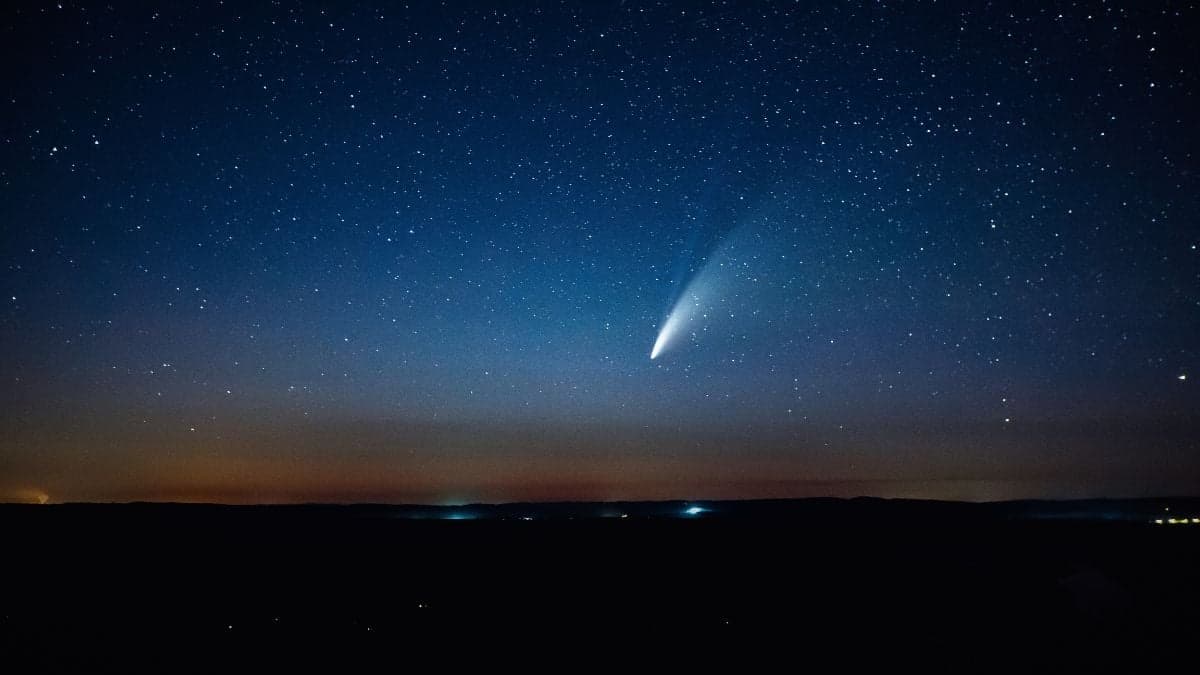
Astronomers have found 'something strange' when capturing the first images of interstellar comet 3I/Atlas, which is hurtling towards the sun at 130,000 mph.
Scientist working with the James Webb Space Telescope are trying their best to learn all they can about the rare space rock, which they discovered in July.
This rock is the third ever confirmed interstellar comet and is due to shoot past our sun in October.
With the help of near-infrared technology, the comet's physical properties can be interpreted from the light it emits.
Scientists estimate the comet to be around 3.5 miles wide, making it one of the largest interstellar objects ever seen.
The comet is moving at a speed of 130,000 mph in an unusually flat and straight line, resulting in the highest velocity recorded of an interstellar object.
This suggests the comet has been travelling for billions of years, being slingshotted by gravitational pull.
One study also notes that the rock is approximately 3 billion years older than our 4.6 billion-year-old solar system.
Imaging collected by the scientists revealed a carbon dioxide atmosphere around the comet. This could be due to where the comet was formed near the CO2 ice line of the swirling gas from which it was formed.
"Our observations are compatible with an intrinsically CO2-rich nucleus, which may indicate that 3I/Atlas contains ices exposed to higher levels of radiation than Solar System comets, or that it formed close to the CO2 ice line in its parent protoplanetary disk," as reported by the researchers, per Metro.

News

News

News

News
Piers Morgan urges Trump to side with Ukraine against ‘modern-day Hitler’ Putin
‘Give this guy the support he needs to defeat the modern-day Hitler.’ Piers Morgan has urged Donald Trump to side with Ukraine and Volodymyr Zelensky in their war against Russia. There have been strained tensions this week between Ukraine and the US as Trump has cosied up to Vladimir Putin with diesel deals and sham […]
News
2 days ago
Execution of mass killer will not be livestreamed, Trump says
The US president has done a U-turn The execution of a Nidal Malik Hasan will no longer be livestreamed, US President Donald Trump has said. Last week, it was announced that the execution of Hasan, the man behind the Fort Hood shooting, would be livestreamed. The shooting, which happened in Texas in 2009, killed 13 […]
News
2 days ago
Royal Mail ‘on brink of collapse’ as 400 workers reportedly quit every week
News