









News

Share
Published 20:15 13 Jul 2022 BST
Updated 20:18 13 Jul 2022 BST
 The large radio telescope that picked up the FRB. (Photo: CHIME, with background edited by MIT News)[/caption]
Daniele Michilli, a postdoc at the Massachusetts Institute of Technology (MIT) Kavli Institute for Astrophysics and Space Research, described it as "unusual".
He said: "Not only was it very long, lasting about three seconds, but there were periodic peaks that were remarkably precise, emitting every fraction of a second - boom, boom, boom - like a heartbeat.
"This is the first time the signal itself is periodic."
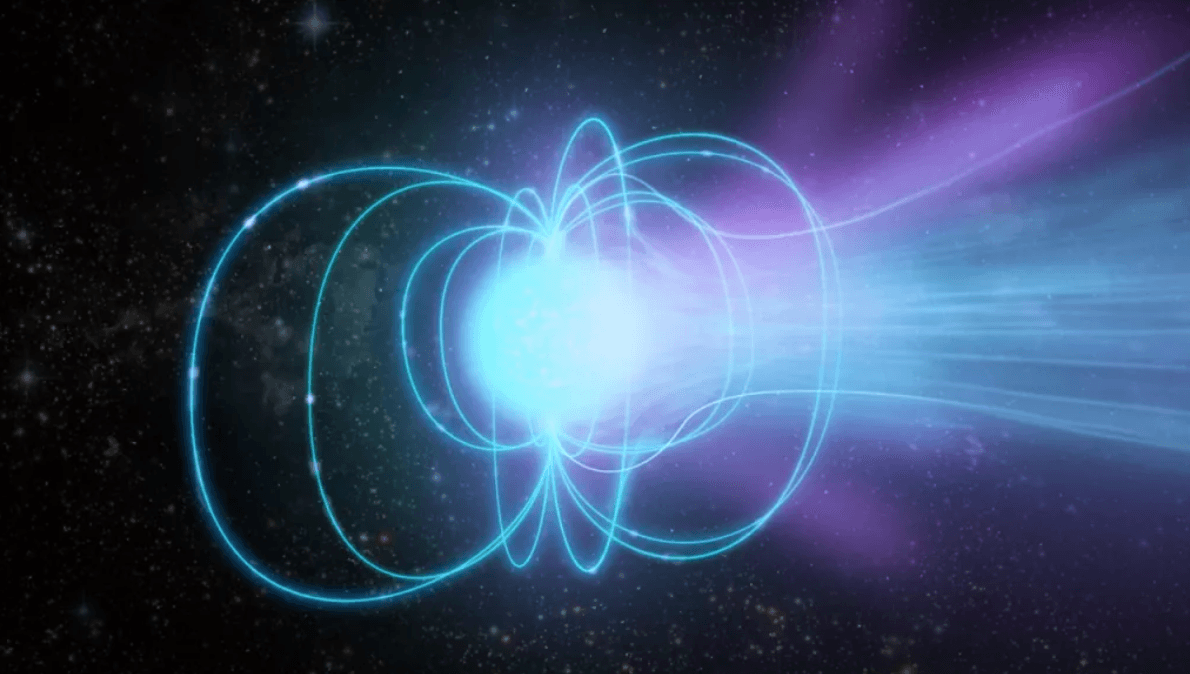
The source of this blast remains unknown - all scientists know is that it lies in a faraway galaxy located somewhere several billion light years away from planet Earth. It is thought that it could come from a radio pulsar or a magnetar, which are both types of neutron stars. These are dense, spinning collapsed cores of giant stars. What's more, is that FRB 20191221A could be used as an 'astrophysical clock', meaning scientists can use it to analyse at what rate the universe is expanding. Researchers from the Canadian Hydrogen Intensity Mapping Experiment (CHIME), the team behind the discovery, will attempt to identify more bursts from the same source, which could help confirm what is causing these FRBs. Related stories:
News

News

News
News
Wainwright fire kills several at Canada military base
A nearby hospital declared a mass-casualty emergency A fire at a Canadian military base has caused the deaths of several people and left dozens of others injured. The fire broke out at Canadian Forces Base Wainwright on Saturday evening, as per the BBC. According to Canadian broadcaster Global News, which cited unnamed military sources, at […]
News
5h
Store closures confirmed as HMV and Typo shut UK shops
More high street closures as retailers battle rising rents The UK retail landscape is set for another shake-up, with four familiar names preparing to close stores as businesses grapple with expensive leases and changing sales. Stationery retailer Typo is withdrawing from the British market altogether, putting its remaining 13 shops at risk of closure. Meanwhile, […]
News
23h

News
Government plans to expand BBC licence fee with proposed ‘YouTube Tax’
News