






News

Share
Published 12:46 14 Sept 2026 BST
Updated 12:46 14 Sept 2026 BST
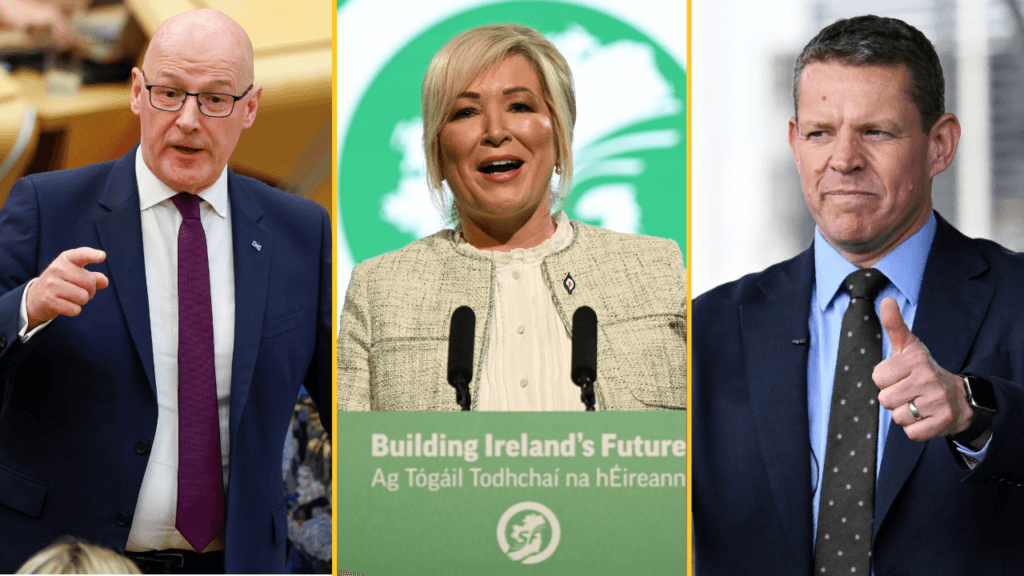
Leaders of Scotland, Wales and Northern Ireland have signed an agreement of cooperation today in Cardiff calling on the "right to self-determination".
The leaders of the SNP, Plaid Cymru and Sinn Fein also called for the UK government to "prepare for, plan and facilitate constitutional change in each jurisdiction".
They demanded a "stronger, fairer economy", as well as being able to expand "our own energy resources".
All three nations expressed that their respective nations' futures "belongs in the European Union".
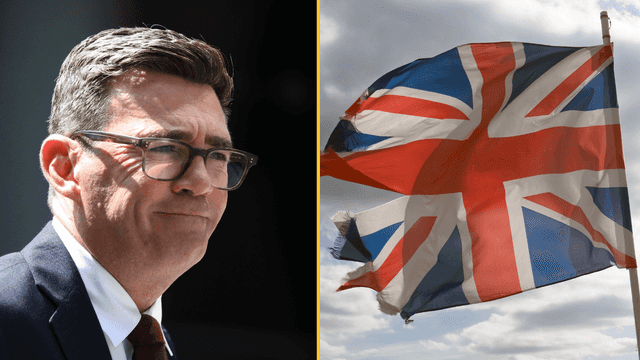
It has been reported that Prime Minister Andy Burnham suggested to MPs that he could entertain another Scottish referendum if there was a "clear consensus" in favour of holding one.
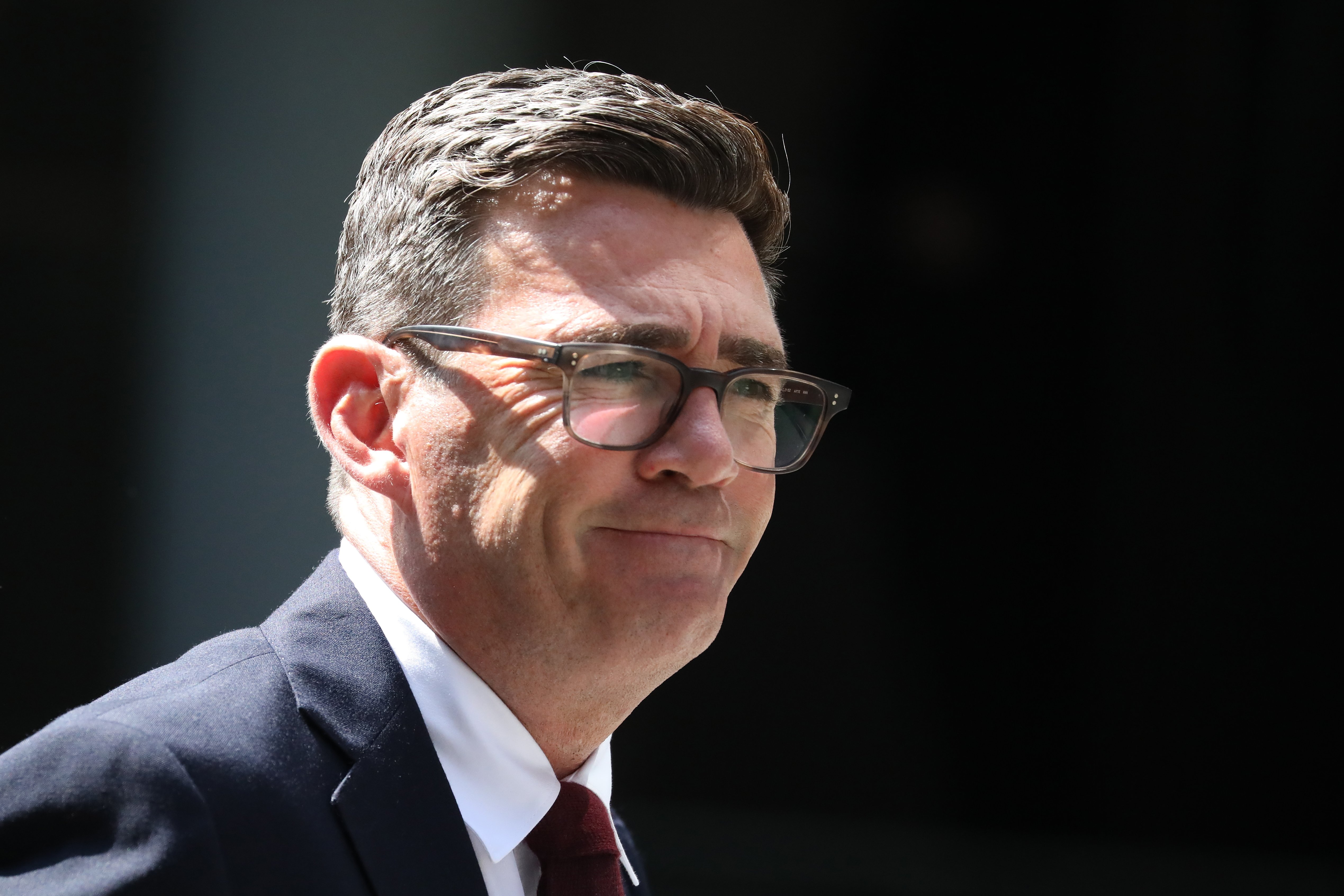
Burnham could permit independence referendums. Image: Getty.
The last Scottish referendum took place almost 12 years ago to the day, on 18 September 2014.
These developments mark a watershed moment for the United Kingdom, which has existed in its current state for 104 years.
While Scotland and England have shared a monarch since James I in 1603, the Union has been official since 1707 under Queen Anne.
Meanwhile, Wales was legally joined to England between 1535 and 1542, but was previously under English rule since 1283.
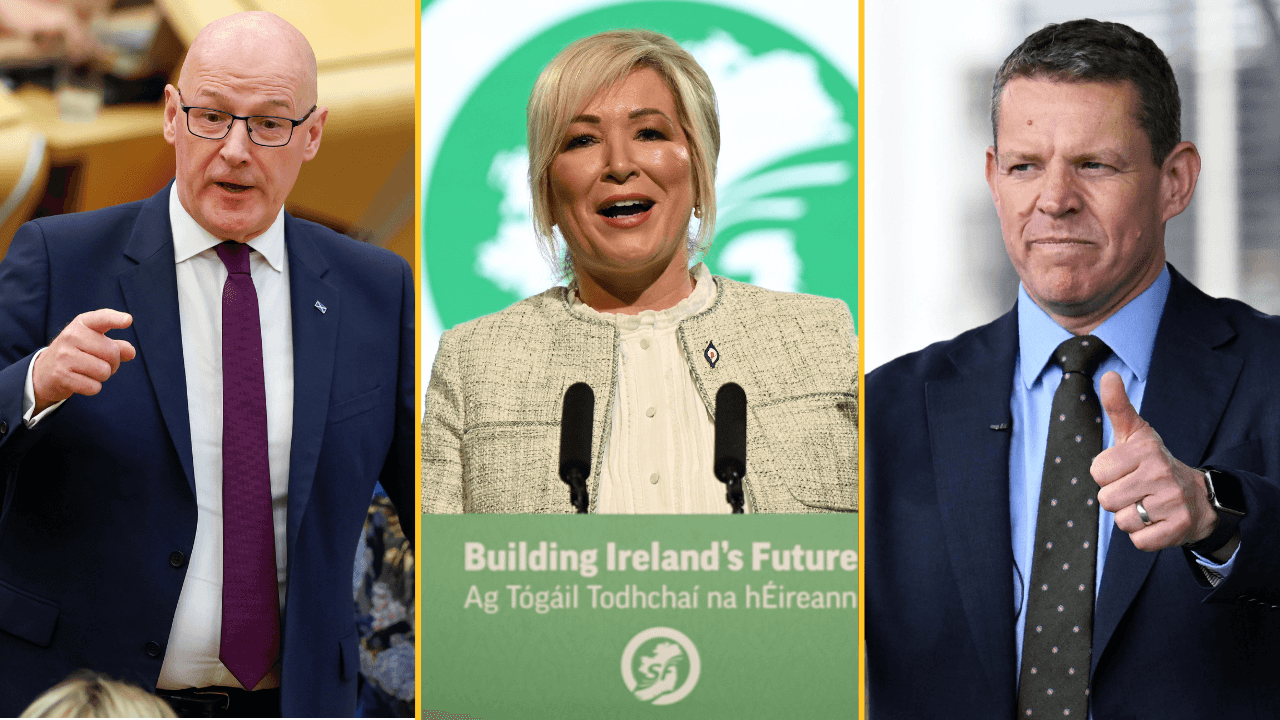
For the first time, all three first ministers of all the devolved nations represent pro-independence movements, with John Swinney of the SNP in Scotland, Rhun ap Iorwerth of Plaid Cymru in Wales and Michelle O'Neill of Sinn Féin in Northern Ireland.
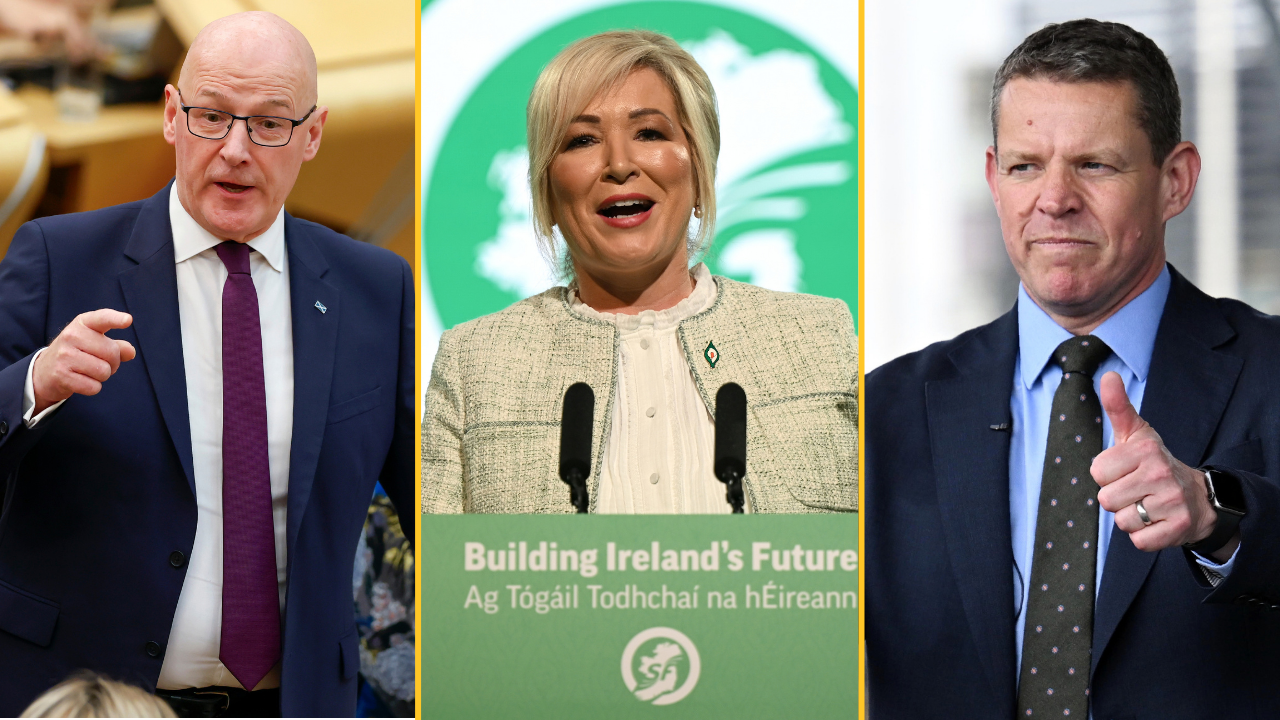
Swinney (left), O'Neill (middle), Ap Iorwerth (right). Image: Getty.
Swinney said on Sunday: “For the first time ever, Scotland, Wales and Northern Ireland are led by pro-independence first ministers. There could be no clearer sign that the status quo is not sustainable – and that Westminster must prepare for a post-UK future.
“The momentum behind serious constitutional change is undeniable. Andy Burnham must now be facing up to the idea that he will go down in history as the final prime minister of the United Kingdom."
The PM confirmed to Commons that for Northern Ireland to trigger a vote, it was “exactly the same situation in Scotland".
As per the Good Friday Agreement, a vote to leave the UK can be held in Northern Ireland if it “appears likely” that a majority of people desire it.
A Welsh independence referendum could prove harder, with the nation holding less devolved powers than Scotland and Northern Ireland, having a joint single legal jurisdiction and core legal system with England.
While polls can only ever give a flavour of how an electorate is feeling, they can be a useful indicator ahead of any official vote.
And, when it comes to the independence of the devolved nations, there are plenty of up-to-date polls to go round, such is the gravity of the matter.
Scotland, of course, has the most precedent, previously holding an independence referendum in 2014 in which 55.30% of Scots voted to remain part of the UK.
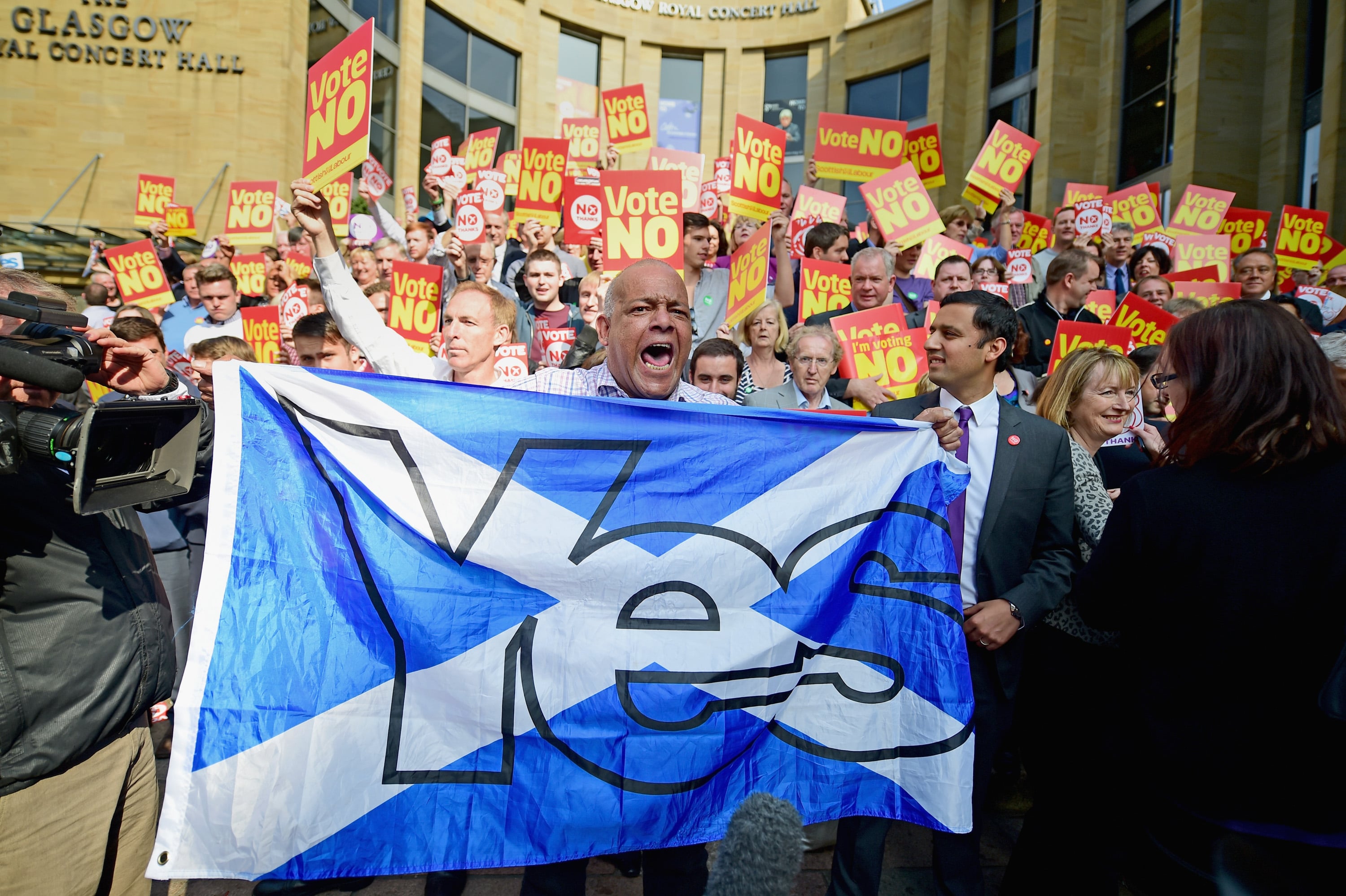
Scotland last had the chance to vote on independence in 2014. Image: Getty.
However, it has been 12 years since then and, notably, the UK has left the European Union, a decision that Scotland was heavily against.
A 2026 poll carried out by findoutnow for The National, found that 48% would say yes to independence while 45% would say no, with 7% saying they don't know.
However, excluding 'don’t knows', the split would read 'Yes' at 52% and 'No' at 48%.
Meanwhile, tracked data from Statista suggests the gap could be wider, showing 56% against independence and 44% for it, as of March 2026.
Opinion polls on a unified Ireland can often be harder to discern a concrete outcome from, but most tend to weigh on the side of no.
The most recent poll from The Institute of Irish Studies found 36% of people were in favour of a United Ireland if a vote was put forward to them tomorrow, with 45% against and the rest undecided or unwilling to vote.
A poll from late 2025 ran by Northern Ireland Life and Times Survey found 41% were in favour while 48% were against and the rest undecided or unwilling to vote.
Out of the three nations, Wales remains the least in favour of leaving the UK, with polls suggesting only 26% would be in favour, although a YesCymru poll puts this number at 32%.
This is fairly in line with Wales' position which isn't quite as hard-line on leaving the UK as Scotland and Northern Ireland.
While the first ministers of all three devolved nations attended the summit to push forward "self-determination", all three want different things.
Scotland, under SNP leadership and as the most economically robust of the three nations, will be looking for eventual independence - plain and simple.
Those who are pro-independence in Northern Ireland will of course be looking to reunify with the Republic of Ireland.
Meanwhile, Wales' position is less hard line than the other two, using the summit to put pressure on Westminster to receive more devolved powers and money which could eventually afford Wales the economic strength to one day leave the UK.
Welsh First Minister leader Rhun ap Iorwerth said at the summit in Cardiff that he's "never been interested in the break-up of the UK," but is "interested in building up Wales."
However, he did add: "We have a very close and important relationships culturally across these islands that we want to maintain.
"We're talking here about having the tools to build a future for our people through the right of self-determination. It is a wholly positive outlook and vision that we have."
Wales wants revenues from the Crown Estate, including the seabed on which offshore wind farms are built, which currently go to the Treasury.
Where all the nations are unified, is in their stance on the European Union, on which they agree they should be part of with Scotland and Wales as new members and Northern Ireland as part of the Republic of Ireland.
However, to hold a referendum in the first place, special powers must be granted by Westminster to allow it, which is what happened in 2014.
With Prime Minister Andy Burnham's stance on increased devolution in the UK, and all three first ministers pro-independence, the perfect storm may have been brewed.
However, while further devolution may have slightly left the door ajar for self-determination, it is also possible that the carrot may be large enough to tempt the nations into staying with England, if the benefits outweigh the price of independence.
Only time will tell how the electorate in these nations will feel.
Just don't get any ideas, Cornwall...
Explore more on these topics:

News
News

News

News
Leaders of devolved nations say ‘Westminster’s time is coming to an end’ as they sign agreement
The leaders met in Cardiff today Leaders of Scotland, Wales and Northern Ireland have signed an agreement of cooperation today in Cardiff calling on the “right to self-determination”. The leaders of the SNP, Plaid Cymru and Sinn Fein also called for the UK government to “prepare for, plan and facilitate constitutional change in each jurisdiction”. […]
News
7 min
WATCH: Moment Russian drone strikes close to Boris Johnson’s train in Ukraine
Dramatic footage shows moment of attack Shortly after former UK Prime Minister Boris Johnson and top European security officials passed through, a Russian drone hit a train near the Ukraine – Poland border. While no casualties were reported after the strike at Yahodyn in the early hours of Sunday (13 September), the train’s engine was […]
News
1h

News
Michael O’Leary doubles down and accuses Dublin Rape Crisis Centre of defamation
News