









News

Share
Published 16:38 29 Oct 2026 GMT
Updated 16:38 29 Oct 2026 GMT
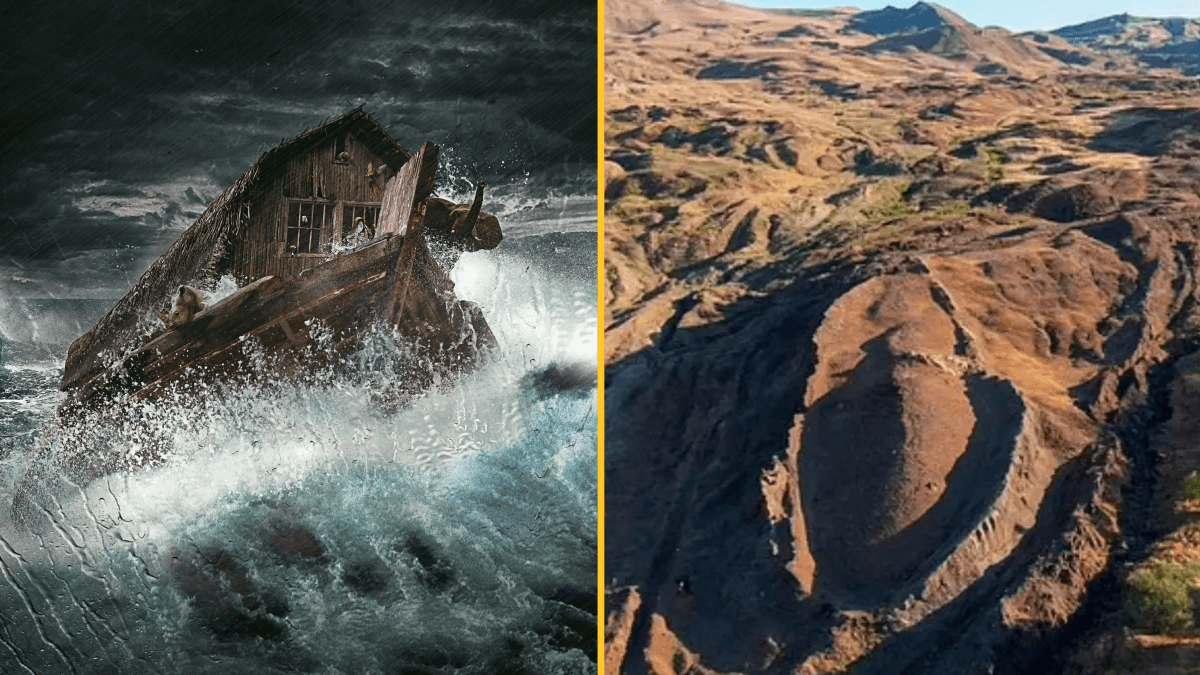
Wood from Noah’s Ark has potentially been discovered in Eastern Turkey, researchers have revealed.
According to researchers, the so-called discovery was made in the Durupınar Formation.
This is a roughly 538-foot-long geological structure near Mount Ararat.
The site, which was discovered in 1959, for decades has fascinated Ark hunters.
That’s due to its ship shape and proximity to the Biblical events.
In the Bible, this legendary vessel sheltered Noah, in addition to his family and animals of the Earth.
As per the religious text, the apocalyptic flood occurred some 4,300 years ago.
Following study of the repository for years, evidence has been found that the site is indeed the ark’s final resting place.
Researchers claim that this dispels theories that it was naturally formed.
Speaking to the Daily Mail, project head and founder of Noah’s Ark Scans, Andrew Jones, said that they’ve discovered both charred and uncharred wood nearly 30 feet underground.
Potentially, it could potentially be the “the charred remains of Noah’s Ark.”
Last month, a first look inside the "real site" of Noah's Ark was published following warnings from activists that the discovery “will dismantle Darwinism”.
The investigation itself has been under way since 2021 and involves archaeologists and geologists from several countries.
Lauren Witzke, a Christian activist and former US Senate candidate who has described herself as a “flat-earther” and previously called Covid vaccines a “Satanic plot”, is involved in the project as its marketing and fundraising director.
In an update on Tuesday, Witzke celebrated the start of core drilling, writing: “Good morning from the outer rims of Noah's ark.”
She also claimed that the expedition has been approved and is being overseen by local universities, with “some of the most brilliant minds in the world” working on it.
Witzke has made much bigger claims about what the investigation could ultimately prove, stating: “When we are done, university curricula will need to be rewritten, and Darwinism will be dismantled. This is the place where creation began anew.”
While the project has attracted optimism from those involved, the scientific community has long questioned whether the Durupinar formation has any connection to the Ark described in Genesis, and there is currently no established evidence proving that it does.
Explore more on these topics:

News

News

News

News
Major UK store files for administration with thousands of jobs at risk
It would be among the biggest retailers to go bust A British variety store chain has thousands of jobs at risk as it files a notice to appoint administrators just days after reports that the company is on the brink of collapse. Earlier this week it was reported that the directors appointed to the Poundland […]
News
2h
NHS worker wins tribunal after colleagues give him humiliating ‘Invisible Employee’ award
NHS trust criticised over handling of ‘Invisible Employee’ complaint A pharmacy worker who was made to pose for photographs with a mock award labelling him an “Invisible Employee” has won a victimisation claim, after a tribunal found serious failings in the way his complaint was handled. Manchester University NHS Foundation Trust took around 95 days […]
News
2h

News
Tommy Robinson found guilty of harassing two journalists
News