








News

Share
Published 11:23 21 Jul 2024 BST
Updated 11:41 21 Jul 2024 BST
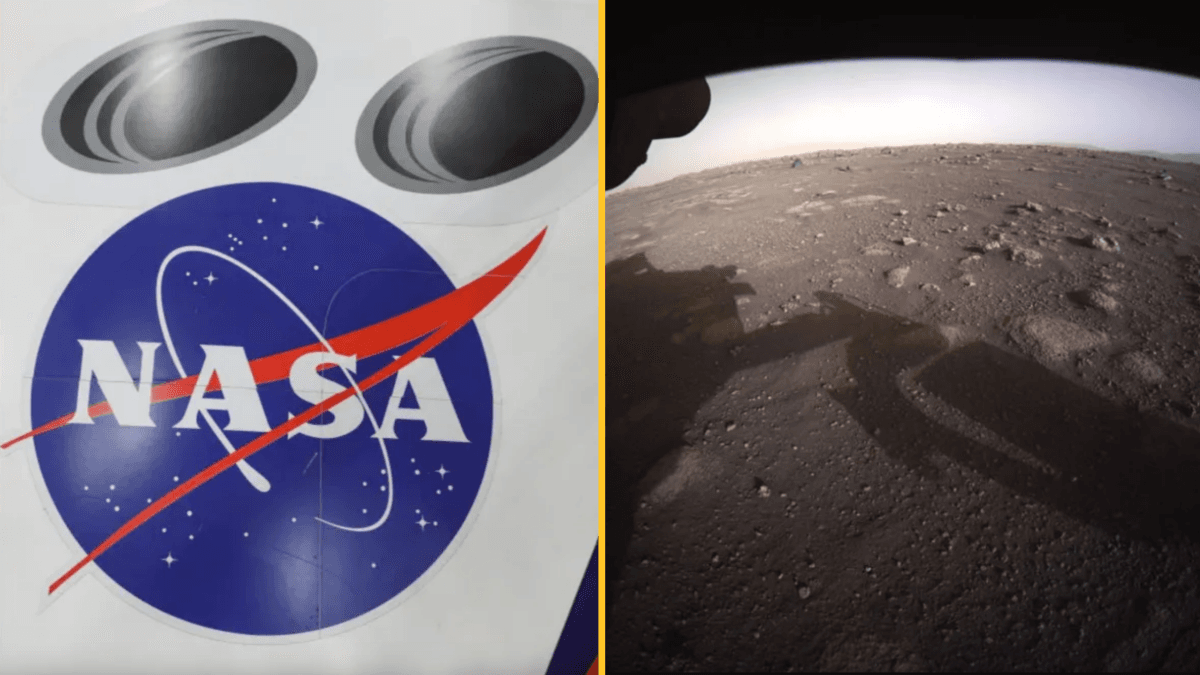
NASA’s Curiosity rover made a “mind-blowing” discovery on Mars after driving over a pile of rocks and accidentally cracking one open.
The revelation occurred while the one-ton vehicle was probing the deep and winding Gediz Vallis channel, believed to have been formed by water 3 billion years ago.
When astronauts investigated the split rock, they discovered yellowish-green crystals of pure sulfur which has never before been seen on Earth’s mysterious red neighbor, according to scientists.
"I think it’s the strangest find of the whole mission and the most unexpected," Ashwin Vasavada, Curiosity project scientist at NASA’s Jet Propulsion Laboratory [JPL] in Pasadena, California, told CNN.
"I have to say, there’s a lot of luck involved here. Not every rock has something interesting inside," he added.
Curiosity captured this close-up image of a rock nicknamed 'Snow Lake' on June 8. It's similar in appearance to the rock crushed by the rover that contained elemental sulfur.
Curiosity has made numerous previous discoveries, such as lakes that lasted millions of years and the presence of organic materials, that have played into the rover’s ultimate mission goal: trying to determine whether Mars hosted habitable environments.
Vasavada described the unearthing as “mind-blowing,” and commented on the “gorgeous texture and color inside” of what had initially appeared to be a typical Martian rock.
They were even more shocked when analysis proved it was completely sulfur.
“No one had pure sulfur on their bingo card,” Vasavada added.
Sulfur rocks are usually “beautiful, translucent and crystalline,” according to Vasadava — but the millions of years of weathering sandblasted the rocks’ exterior, blending them with the rest of the orange Martian landscape.
Vasavada's team continues to analyse the data Curiosity collected to determine how and when each mineral formed.
"Maybe this rock slab has experienced multiple different kinds of environments," Vasavada said, "and they’re sort of overprinting each other, and now we have to unravel that."
Curiosity continues to explore the channel to look for more surprises.
Despite 12 years of wear and tear, including some “close calls” such as wheel issues and mechanical problems, Curiosity remains in 'great health', Vasavada said.
"I feel very lucky, but also we all feel cautious that the next one may not be only a close call, so we’re trying to make the most of it, and we have this landing site that’s been so wonderful," he said. "I’m glad we chose something that was 12 years’ worth of science."

News

News

News

News
Rejoining EU could boost UK economy by £150bn – Goldman Sachs
Analysts from the bank reckon a ‘Breturn’ would boost the UK economy by 2-5% by the start of the next decade. Goldman Sachs has said rejoining the European Union could boost the UK economy by as much as £150 billion. In a note to clients, the Wall Street bank voiced its support for Andy Burnham’s […]
News
1 day ago
Travel chaos across Italian airports after air traffic control failure
Air traffic management capacity has been slashed in half Travel chaos has struck Italy’s major airports after an air traffic control failure left capacity halved on Friday. Hundreds of flights across Italy have been delayed and over 100 cancelled due to “anomalies” with air traffic control (ATC) services. The Italian air navigation service provider, ENAV, […]
News
1 day ago

News
Abu Dhabi Royal was found passed out on street in London after ‘cocaine binge’
News