








News

Share
Published 13:10 12 Sept 2025 BST
Updated 13:23 12 Sept 2025 BST
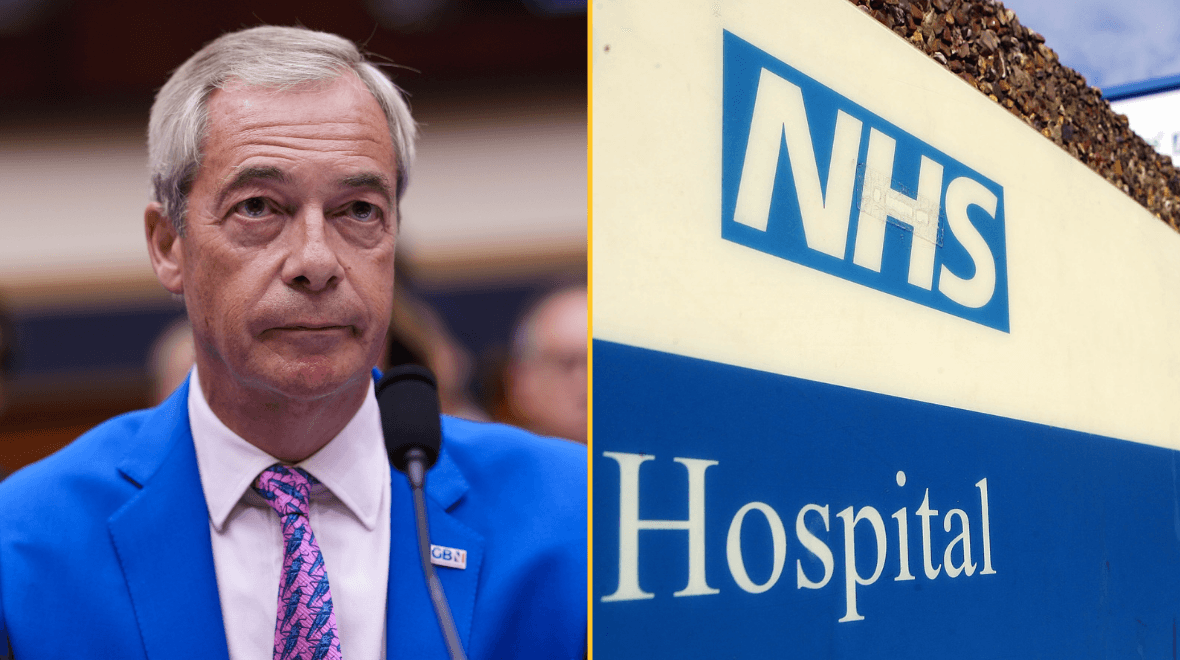
Most Brits reject Nigel Farage's plans and remain in favour of the current NHS system, a poll finds.
The annual poll by the Health Foundation found that 85% of participants insisted that the service should remain comprehensive for all, with 83% agreeing that it should remain funded from general taxation.
The survey was undertaken by polling agency Ipsos who questioned a sample of 2,286 Brits, 1,804 of whom were from England.
This comes after Reform leader Nigel Farage called for an 'if you can afford it, you pay; if you can’t, you don’t,' system.
Farage's party looks to be way ahead of Labour in opinion polls but is facing increased scrutiny over what they would implement if they were to win the next general election.
A report by the Health Foundation stated: “There are no significant changes in support for these founding principles, with the proportion thinking the NHS should provide a comprehensive service available to everyone remaining stable.”
Farage insisted that he is confident of becoming the next Prime Minister following the next general election, which could occur any time from 2027 to 2029.
In a previous interview, he commented: “The funding of the NHS is a total failure. The French do it much better with less funding. There is a lesson there. If you can afford it, you pay; if you can’t, you don’t. It works incredibly well.”
Speaking to The Mirror, health secretary Wes Streeting told them: “With Labour, when you fall ill you will never have to worry about the bill. I am a cancer survivor who owes his life to the health service. Nigel Farage will get his hands on our NHS over my dead body.
“Thanks to Labour’s investment, we’ve delivered five million extra appointments, cut waiting lists, and recruited 2,000 more GPs. The NHS is finally on the road to recovery – Reform would crash it into a ditch.”
Furthermore, the new polling shows that public confidence in NHS care in England has improved, with positive ratings rising from 8% to 13%, the highest since 2020.
Additionally, fewer people have said the NHS provides a poor local service.
While researchers said that the public perceptions of the NHS 'remain negative overall', they ackowledges that views are 'slowly improving.'
Assistant director of policy at the Health Foundation and one of the authors of the report, Tim Gardner said: "Overall, the public mood on health and care remains largely downbeat but there are signs that perceptions are slowly improving.
"The challenge for government will be convincing the public that their plans will deliver tangible improvements in the areas they care most about.”

News

News

News
News
Virgin Atlantic flight declares midair emergency over UK minutes after take off
The plane squawked 7700 A Virgin Altantic flight has declared a midair emergency over the UK minutes after taking off. The A330 aircraft, registered G-VSXY, departed Manchester Airport at 15:10 with New York as its destination. The flight did multiple loops in the Merseyside area, to the west of Manchester, before landing back at the […]
News
21h
81-year-old woman spends £50,000 in battle with council to walk through her own back garden
Derbyshire resident won costly legal battle over garden gate Helene Ball, 81, has just come out victorious of a costly legal battle against Derbyshire County Council over garden gate access rights, in her own garden, setting her back £50,000 in the process. The 81 year-old resident is celebrating her victory over the council after three […]
News
22h
Radio station removes Ed Sheeran from airwaves following Macklemore dispute
News