








News

Share
Published 16:01 31 Mar 2026 BST
Updated 16:01 31 Mar 2026 BST
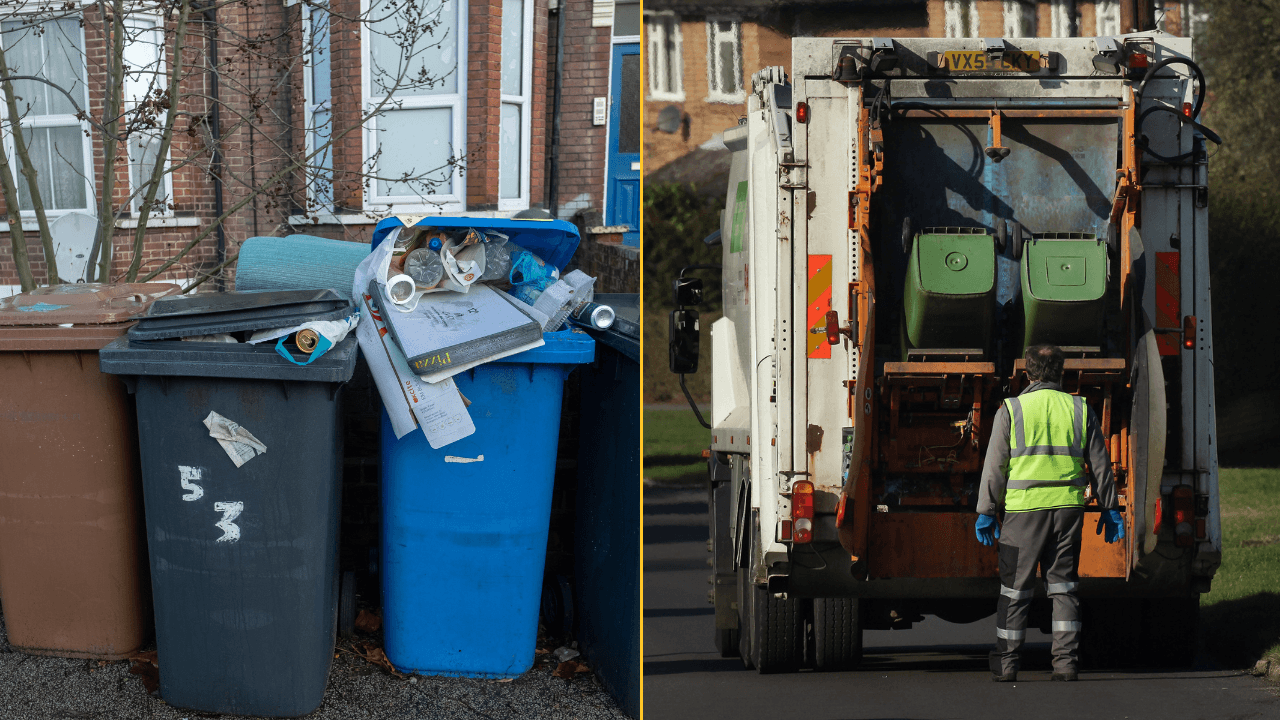
From today, March 31, a set of new bin rules comes into effect as the government rolls out its Simpler Recycling scheme to homes in England.
This comes a year after the scheme was introduced, as it has been long in the works.
The recycling scheme was launched by Labour in 2025, under the Department for Environment, Food and Rural Affairs (DEFRA).
It aims to streamline waste collections in England initially for businesses, requiring glass, metal, plastic, paper and card to be collected separately from general waste.
According to the government, the new rules will end what it calls a “postcode lottery” impacting the country with a set of universal rules across England.
British recycling is set to receive a boost through this initiative, as observance has fallen in recent years, initially just for businesses but now for regular households.
From today, March 31, local authorities will implement standardised core recycling collections.
The new rules are set to make recycling easier for millions of people.
As per the new rules, households in England are required to divide waste between four separate bins.
This way, it will separate out food with paper, card, recyclables and general rubbish.
The bins include:
Food and Garden Waste
Paper and Card
Dry Recyclables (Glass, Metal, Plastic)
General Rubbish
As DEFRA advises refuse collectors that there are materials “you do not need to collect” under the Simpler Recycling scheme, Brits should make a note of the kinds of materials that cannot be deposited in standard household recycling.
These include several items many people might otherwise assume can be disposed with their typical waste.
According to DEFRA, the items that can't be collected include:
Glass
• Candles
• Drinking glasses
• Flat glass
• Glass cookware (such as Pyrex)
• Light bulbs and tubes
• Microwave plates
• Mirrors
• Vases
• Window glass
• Ceramics, such as crockery or earthenware
Metal
• Laminated foil, like pet food pouches and coffee pouches
• Electrical items and batteries
• General kitchenware like cutlery, pots and pans
• Kettles
• Irons
• Pipes
• Metal packaging that has contained white spirits, paints, engine oils or antifreeze
Plastic
• Any plastic packaging or non-packaging items labelled as 'compostable' or 'biodegradable’, including coffee pods
• Plastic bottles that have contained white spirits, paints, engine oils or antifreeze
• Bulky rigid plastics such as garden furniture, bins and plastic toys
• Polystyrene (expanded and high impact) packaging such as packing beads
• Polyvinyl chloride (PVC) packaging
Paper and card
• Food and drinks cartons made of a fibre-based composite (these should be collected in the plastic stream)
• Absorbent hygiene products (AHPs) including nappies, period products and incontinence products
• Cotton wool or makeup pads
• Tissue or toilet paper
• Wet wipes
• Food waste
• Any plastic packaging or non-packaging items labelled as 'compostable' or 'biodegradable', including coffee pods
Garden waste
• Animal bedding
• Bulky waste (including garden furniture and fencing)
• Garden tools or other gardening equipment
• Plant pots
• Plastic
• Sand
• Sawdust
• Stone, gravel or bricks
• Tea bags or coffee grounds
• Branches and trees over a certain size may have to be cut into smaller pieces to follow local guidance
While there are no strict new enforcement rules to come with the Simpler Recycling changes, Brits can still be stuck with fines for “incorrect presentation of household waste”.
This is a civil penalty and can result in the issuance of a Fixed Penalty Notice, worth between £60 and £80.
However, this only happens after a written warning is provided, and where incorrect presentation “is causing a nuisance”.
Explore more on these topics:

News

News

News

News
Here’s everything we know as rumours circulate that Kim Jong-un ‘has died’
Unconfirmed rumours have spread around the world suggesting that North Korean leader Kim Jong-un may have died after suffering a brain haemorrhage. Rumours have circulated on social media claiming that North Korean leader Kim Jong-un may have died after reportedly suffering a brain haemorrhage and falling into a coma. However, the claims remain unverified. Much […]
News
11h
Priest dies after massive crucifix falls onto him during livestreamed mass
There were gasps and screams inside the church A priest in Ecuador has died following fall of a massive crucifix onto his head, as the mass was being livestreamed. The large wooden cross fell onto Father Sánchez Molinari, 53, while he was giving a sermon inside the church. The incident, in which Molinari was crushed […]
News
14h

News
Brits are apologising for their dodgy Wi-Fi almost twice a week, new research reveals
News