






News

Share
Published 16:24 15 Jan 2025 GMT
Updated 16:24 15 Jan 2025 GMT
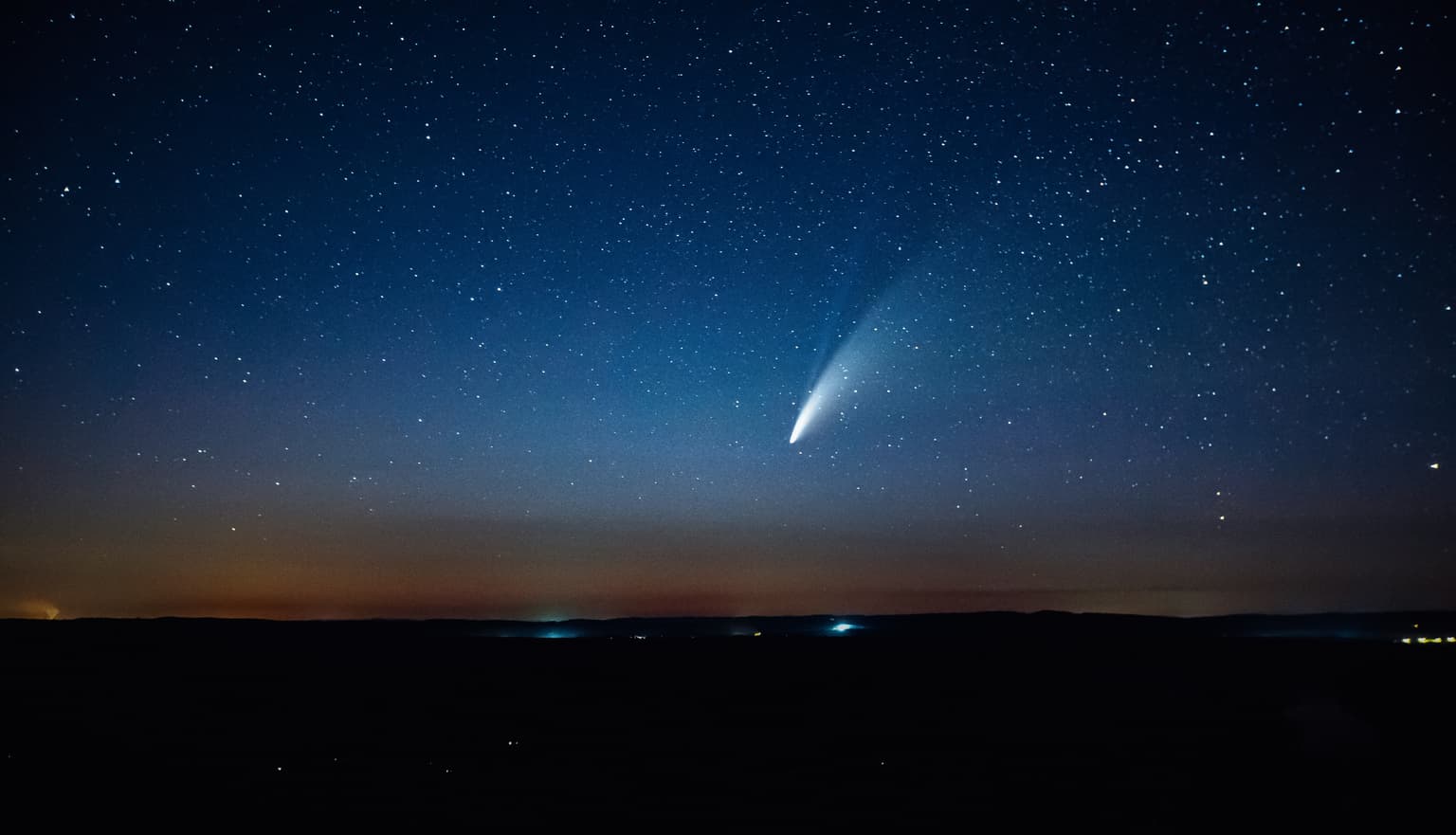
A once-in-a-lifetime comet is expected to be visible in the sky over the UK tonight, and here's how you can make sure you get to witness it.
Comet C/2024 G3 (ATLAS) is predicted to be as bright as Venus in the night sky and will reach its closest point to Earth later this evening.
It will also pass extremely close to the sun, just 8.3 miles away.
Comet C/2024 G3 (ATLAS) meets the sun. Taken by SOHO LASCO C3. pic.twitter.com/3DEkyed0nS
— IZ Reloaded (@izreloaded) January 14, 2025
It follows on from the once-in-a-lifetime comet that flew by Earth last October, providing humans on earth with a spatial time capsule last seen by our Neanderthal ancestors 80,000 years ago.
Those with good memories will of course remember it as comet C/2023 A3 Tsuchinshan–ATLAS (or A3 for short) which flew past Earth at about 44 million miles away which, for reference, is quite close when you consider Mars is 38.6 million miles from Earth at its closest point.
As reported by Sky & Telescope, those in the Northern Hemisphere have been instructed to look towards the horizon in the southwestern sky on the night of 15 January.
While tonight is deemed the best chance to catch a glimpse, the astronomy magazine gave a window of 15-18 January to see the rare display.
Because C/2024 G3 has an orbit of 160,000 years, seeing this bit of space ice is truly a once-in-a-lifetime event, so if you get the chance, try and catch it in the sky!
A comet is a large ball of frozen gas, rock and dust that orbits the sun.
Meanwhile meteors come from debris that is shed from comets that then hit the earth’s atmosphere expulsing bright streaks of light as the friction burns up the particles high in the sky.
A meteor is a meteoroid that burns up in the Earth’s atmosphere while a meteorite is a meteoroid that reaches the Earth’s surface.
Meteoroids are typically 2mm to 1m in size while an asteroid is anything larger.
Comets have bright burning tails because as they get closer to the sun, its heat vaporises some of its ice and dust releasing gases that are pushed away by solar radiation and wind forming tails that can reach up to hundreds of kilometres long.
News

News

News

News
Cyprus hotel fall: Essex dad fined after son’s death
The toddler plunged almost 40ft from the hotel window A father has been fined €3,000 (£2,500) by a court in Cyprus after his young son died in a fall from a hotel window during their family getaway. Joshua Foster, 37, from Essex, appeared at Paphos District Court on Friday. He admitted an offence relating to […]
News
1 day ago
Homes evacuated after ‘pipe bomb’ explosion in Belfast
Police have asked the public to avoid the area A number of homes have been evacuated after an explosion at a property in north Belfast. The incident is reported to have happened in the Stanhope Street area of the city. Belfast Live report that it is believed that a pipe bomb exploded at a property […]
News
1 day ago

News
Severe drought declared in six UK counties
News