






News

Share
Published 12:38 3 Dec 2025 GMT
Updated 12:38 3 Dec 2025 GMT
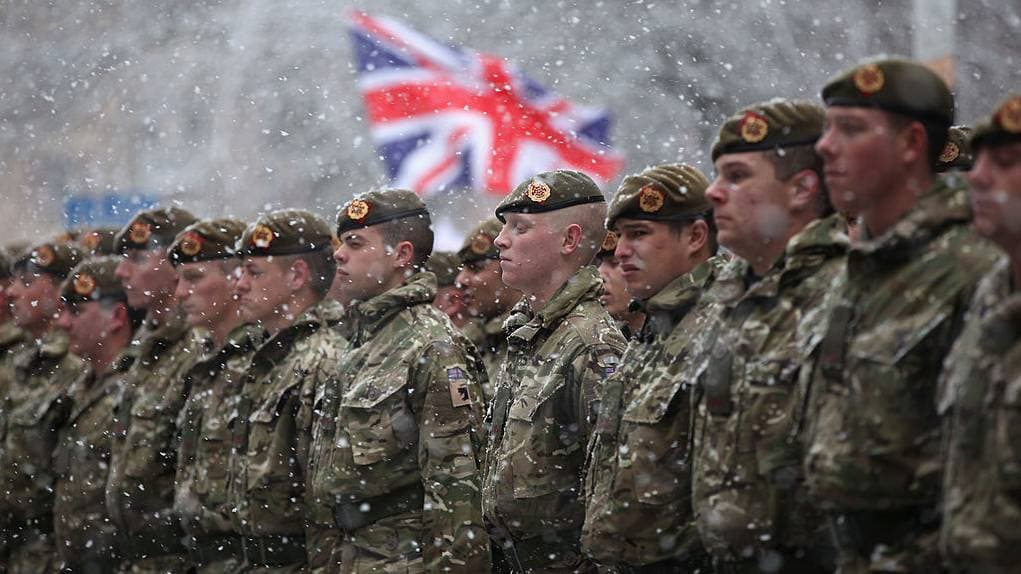
Although the government has so far ruled out the possibility of national service or conscription, it has been widely argued by experts that if tensions were to escalate and Britain found themselves in a war, the armed forces would need to enforce conscription to bolster their ranks.
Fears are growing that ongoing Russian aggression could spark major conflict across Europe, as well as the expansion of tensions between Iran and Israel, and conscription in the UK has been a hotly discussed topic nationwide.
This is notably more true that ever following the latest threat from Russian president Vladimir Putin saying that "if Europe wants war" then Russia is "ready".
Meanwhile, earlier this year a government strategy claimed that the UK must "actively prepare" for war on homeland territory.
In a foreword to the report, Prime Minister Keir Starmer said: “Extremist ideologies are on the rise. Technology is transforming the nature of both war and domestic security.
“Hostile state activity takes place on British soil. It is an era of radical uncertainty, and we must navigate it with agility, speed and a clear-eyed sense of the national interest.”
The last conscription in the UK was more than eight decades ago during World War 2 and, just like then, certain call-up exemptions would occur if another global war was to break out.
Back in the 1940s, profession, age and medical conditions were all factors in determining who was exempt from military service and who was not.
People employed across certain industries vital to keeping the country running would be exempt from the draft and it is likely the same rules would apply if WW3 was to break out.
When could conscription happen?
Mike Martin, an Afghanistan Veteran and the Lib Dem MP for Tunbridge Wells previously said if we were to go to war with Russia, the country would have to bring back conscription.
He said: "There’s a significant chance that it [war with Russia] might happen so we must be prepared.
"Obviously, if we get involved in a general war with Russia, we’ll be conscripting the population – there’s no question about that."
However, former British Military Intelligence Colonel Philip Ingram MBE previously told JOE the country is a long way from bringing back mandatory military service.
He said: "There would have to be a massive deterioration in the geopolitical environment across the world [for us to bring in conscription].
"That massive deterioration suggesting that, not just the UK, but multiple organisations are on a path to war, possibly a declaration of war, or us getting directly involved in some heavy shooting conflicts.
"Now, I've been at this game for over 40 years, up until last year, I never saw a clear path. There's always barriers in the way to there being a large conflict. I can now see clear paths. So that's the slightly worrying thing."
The former Army officer, who joined the forces as an 18-year-old in the Royal Electrical Mechanical Engineers before transferring to the Intelligence Corps, set out what would need to happen first before the general population would be asked to step up.
"Before we start to see any emergency legislation being put into parliament, we'd see the regular forces have their increased readiness.
"We'd see elements of them being deployed overseas, and we'd see the reserve forces starting to be called up, and not just in the way that they’ve been called up to support operations beforehand in Iraq, Afghanistan, the Balkans and the rest of it. It would be a massive call up of the reserve forces.
"Then you've got an additional element to the reserve, which are those regular military who have recently retired and still remain with a liability for call up, and we start to hear discussions about them being called in. This is all before there'd be anything that would say to the general population, ‘right folks, you’re next!’"
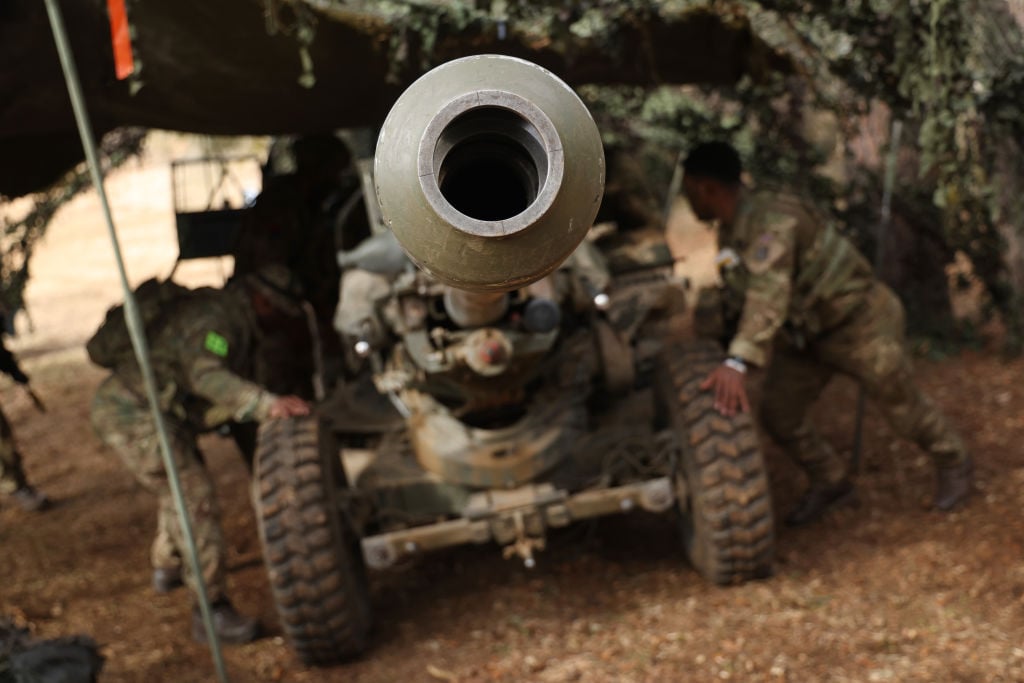
Professions
During WW2, professions such as baking, farming, medicine, coal mining and engineering were exempt from conscription.
However, any professions exempt today would likely reflect the modern era.
Colonel Ingram said: "It's getting that balance between getting sufficient people to come and fill the armed forces and having sufficient people to keep the essential industries of the country running.
"Individuals that are running our critical national infrastructure, so our nuclear power plants, our other power plants, running our railways, because they're needed to transport logistics and goods.
"People who are in the emergency services, police, doctors, nurses, unless they've got a reserve commitment.
"But there'd be exemptions for people working in the defence industry - there's no point in calling someone up who's critical to manufacturing tanks or ammunition or other bits and pieces.
"So it's a very wide ranging list that would be put together, but that would have would be something that has to be included in any legislation and every government will have, as part of this contingency planning, draft legislation that's there, so they're not starting off with a blank sheet of paper. That will already be drafted."
Age
Conscription in WW2 initially only applied to men aged between 20 and 21. However, it was quickly expanded to include all men between the ages of 18 and 41.
The British government introduced the National Service Act in 1948 to cover conscription in peacetime.
That meant that men aged between 17 and 21 had to do military service for 18 months and were also put on the reserve list for four years.
Medical
Certain medical conditions could also make you exempt from conscription. Currently, the British Army has a long list of medical conditions which make you ineligible for military service including eyesight problems and hearing impairments.
Neurological conditions, severe skin conditions, psychiatric and cardiovascular issues could also provide grounds for exemption. Those with bone or joint problems, such as chronic knee injuries, shoulder problems and a history of bone fractures, could also dodge the draft.
Current recruitment problems
According to the latest data covering the 12 months to 30 September 2024, the average time between application and starting basic training was 249 days for the Army, 279 days for the Royal Navy and 301 days for the Royal Air Force.
Colonel Ingram gave insight into how the Ministry of Defence are trying to combat that problem going forward.
He said: "There's a massive delay because there was a very big contract given to an organisation called Capita. They were not proactive. They brought in delays that were unnecessary, and the government recognised that.
"What the government has done is it's taken the contract and it's now given it to Serco.
"They've brought in a new Armed Forces recruitment service that's launching in 2027 but the work's going on now to replace the individual schemes that were being run by the Navy, the Army and the Air Force - you weren't getting the coherence between all of them.
"They've set themselves some quite stringent targets, from people applying, to getting them in. So for example, if someone applies, they're to get a conditional offer within 10 days, and they're to get a date when they're going to start training within 30 days of their application.
"Now that's from 2027 but it's like anything in defence, it is a super tanker. It takes time to change things. So between now and 2027 we've got this handover between Capita and Serco where we have to find sticking plasters."
Colonel Ingram said the Army is putting 400 troops in recruitment centres, as they look at ways of encouraging people to come through the doors but claims low unemployment rates and negative news stories about the services are impacting the recruitment drive.
"Whenever you have got very low unemployment and high job opportunities, then getting people to come and join the military is really quite difficult.
"It is also affected by a lot of the negative stories that we hear and the way they're being dealt with. For example, the RAF - the sexual scandals around the red arrows last year, in the Royal Navy - the rape scandal that went on, the army - the suicide of Jaysley Beck, those have a very negative impact on recruitment.
"What the government is trying to do is deal with that through policy. Policy has failed, but what they're now bringing in is an armed forces commissioner to try and deal with a lot of these issues. But it will take time, that's the difficulty, and the global geopolitical situation is becoming more unstable very quickly."
This article contains affiliate links. We may earn a commission on any sales generated from it.
Households are being urged to buy one appliance to prepare for the potential outbreak of WW3, or other mass disruptions like another pandemic, internet outages, and extreme weather conditions.
In a new security strategy published last month, ministers said the UK now finds itself in “an era in which we face confrontation with those who are threatening our security”.
Ministers are calling for people to become more resilient, and plan to carry out a cross-government exercise on how to deal with crises.
The strategy said: “Some adversaries are laying the foundations for future conflict, positioning themselves to move quickly to cause major disruption to our energy and or supply chains, to deter us from standing up to their aggression.
“For the first time in many years, we have to actively prepare for the possibility of the UK homeland coming under direct threat, potentially in a wartime scenario,” as reported by the Express.
The government runs a website to prepare the public for national disruptions including war, extreme weather and cyber attacks.
As part of its list of advice for households, people are being told to buy one crucial item – battery or wind-up radios.
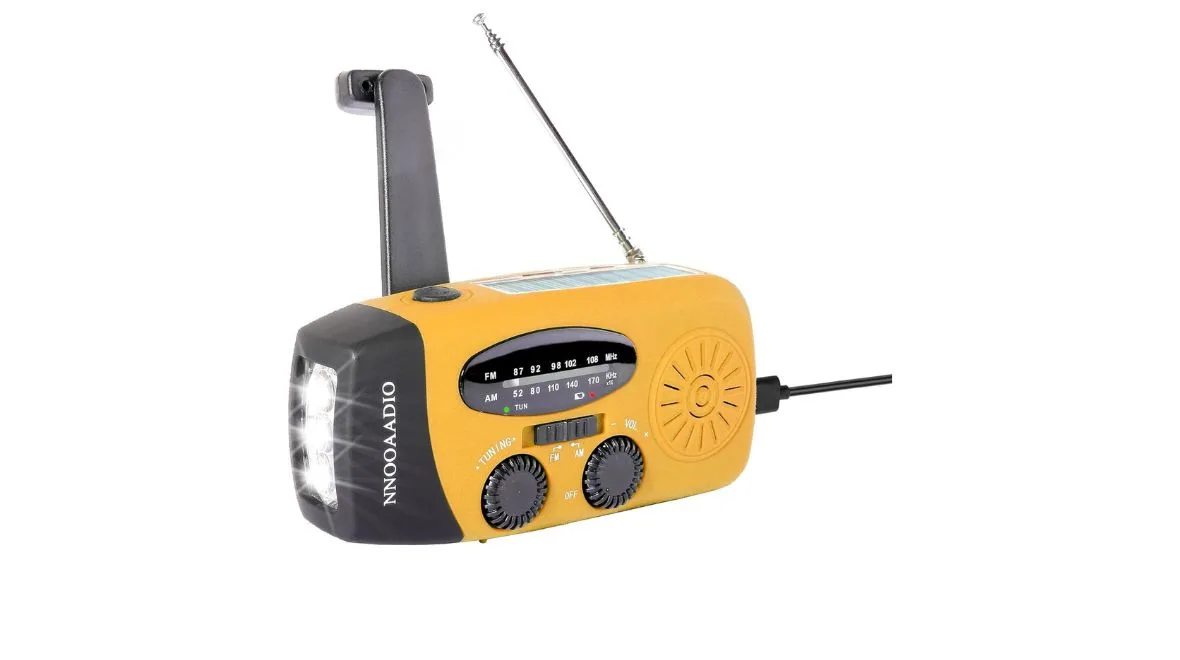
This is because this type of radio doesn’t need power from the National Grid, which may be disrupted during a crisis.
So households can use the radio to receive emergency information from the government during a national disruption.
The advice reads: “Battery or wind-up radio to get updates during a power cut – a car radio can be used, however, in severe weather it might be safer to stay inside.”
Other items suggested on the UK Prepare website include a battery or wind-up torch, portable power bank, spare batteries, hand sanitiser, wet wipes, bottled water, non-perishable food, and if applicable, baby supplies.
The government advice adds: “Consider what supplies you and your household might need during an emergency lasting a few days, such as a power cut or water outage, or situations where you are advised to stay at home or to leave your home (evacuate) for safety reasons.
“It can be helpful to keep these items in one place in your home and ideally somewhere easy to find if the lights aren’t working – if you are escaping your house due to a fire, you should not take anything with you at all. You could consider keeping items you might need to take with you if asked to leave your home quickly in a spare bag – you might hear some people call this a ‘grab bag’.”
You can get a wind-up radio from Amazon here for your home emergency kit. And it can be used for activities such as hiking and camping.
Explore more on these topics:

News
News

News
News
Leaders of Scotland, Wales and Northern Ireland to meet tomorrow in plan to break up UK
The Union could soon be over… Leaders of Scotland, Wales and Northern Ireland are to meet tomorrow to plan on gaining independence from the UK. This comes following a report from The Telegraph which said that leaders are set to sign a “memorandum of understanding” at a summit in Cardiff. The leaders are also expected […]
News
1 day ago
Reform land second £36m donation in the space of 24 hours
Christopher Harborne has matched Ben Delo’s donation Reform UK have landed their second £36m donation in the space of 24 hours after Christopher Harborne matched Ben Delo’s £36m donation. Last night, it was revealed in The Telegraph that crypto billionaire Ben Delo had given £36m to Reform, a donation he announced under his own byline […]
News
2 days ago

News
Swiss Alps coach crash leaves multiple dead as emergency rescue launched
News