






News

Share
Published 13:10 16 Jul 2025 BST
Updated 16:43 16 Jul 2025 BST
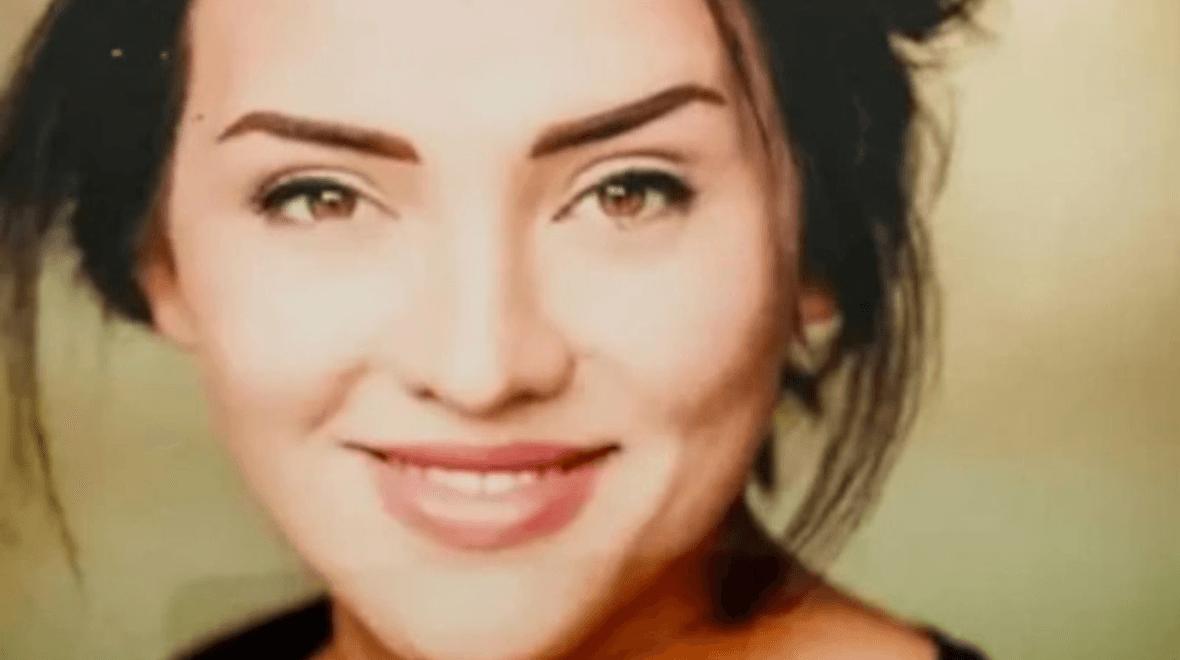
The parents of a woman who died after her blood clot was misdiagnosed as anxiety have criticised the findings of a new NHS report.
Marion and Brendan Chesterton’s 30-year-old daughter Emily died in 2022 after suffering a pulmonary embolism.
They revealed their concerns in an interview with Sky News.
Emily had twice attended her local GP in the weeks before her death but was seen by a physician associate (PA) rather than a doctor.
Her father Brendan told Sky News: "If she come out and said I've seen someone called the physician's associate I'm sure we would have insisted that, you know, let's go back and insist that you see a doctor. She never knew."
The PA prescribed her with the drug propranolol for anxiety instead of following up on the issue.
Their comments come just as a new review released today reveals that the NHS have been using associate physicians — who receive considerably less training than doctors — as substitutes for doctors.
The review, led by the president of the Royal Society of Medicine Prof Leng, says that all patients must be seen by a doctor before they can be diagnosed with a condition.
The review was ordered by Labour Health Secretary Wes Streeting in response to calls to increase the number of PAs working in the NHS to help reduce wait times for patients.
Prof Leng added: "Crucially I'm recommending that PAs should not see undifferentiated or untriaged patients.”
"If (patients) are triaged, they (PAs) should be able to see adult patients with minor ailments in line with relevant guidance from the Royal College of GPs."
"Let's be clear, (the role of PAs) is working well in some places, but there indeed has been some substitution and any substitution is clearly risky and confusing for patients."
She also recommended a renaming of Physician Associates to Physician Assistants, which should help make their role less confusing for patients.
Emily Chesterton’s parents — who are one of six families to have lost someone as a result of misdiagnosis by a physician associate — say the reforms don’t quite go far enough.
Marion Chesterton said: "We feel it's a missed opportunity. It could have gone all the way there and cleared things up totally.
“Our daughter died. She was prescribed a drug that she should not have been prescribed. And it had absolutely catastrophic circumstances. She died for goodness sake."
They accept that if these changes were initiated before Emily’s tragic death, it is likely she would still be alive, but added they hope the role of PAs is further limited.
Those concerns are shared by the UK’s biggest medical union, the BMA.
A spokesperson said: "It is definitely a problem that the roles of doctors and now physician assistants has been blurred and it's positive that their name is going to change, that there will be a uniform.
"But whilst they continue to be deployed in a way that mimics doctors at the behest of any local employer decision, we have to have ongoing concerns about their safety."
The union that represents PAs themselves has suggested the changes may lengthen wait times across the NHS.
Health Secretary Wes Streeting is expected to implement all the changes of the report.
Explore more on these topics:
News
News
News

News
Here’s everything we know as rumours circulate that Kim Jong-un ‘has died’
Unconfirmed rumours have spread around the world suggesting that North Korean leader Kim Jong-un may have died after suffering a brain haemorrhage. Rumours have circulated on social media claiming that North Korean leader Kim Jong-un may have died after reportedly suffering a brain haemorrhage and falling into a coma. However, the claims remain unverified. Much […]
News
4h
Priest dies after massive crucifix falls onto him during livestreamed mass
There were gasps and screams inside the church A priest in Ecuador has died following fall of a massive crucifix onto his head, as the mass was being livestreamed. The large wooden cross fell onto Father Sánchez Molinari, 53, while he was giving a sermon inside the church. The incident, in which Molinari was crushed […]
News
7h

News
Brits are apologising for their dodgy Wi-Fi almost twice a week, new research reveals
News