









News

Share
Published 14:00 14 Aug 2025 BST
Updated 14:00 14 Aug 2025 BST
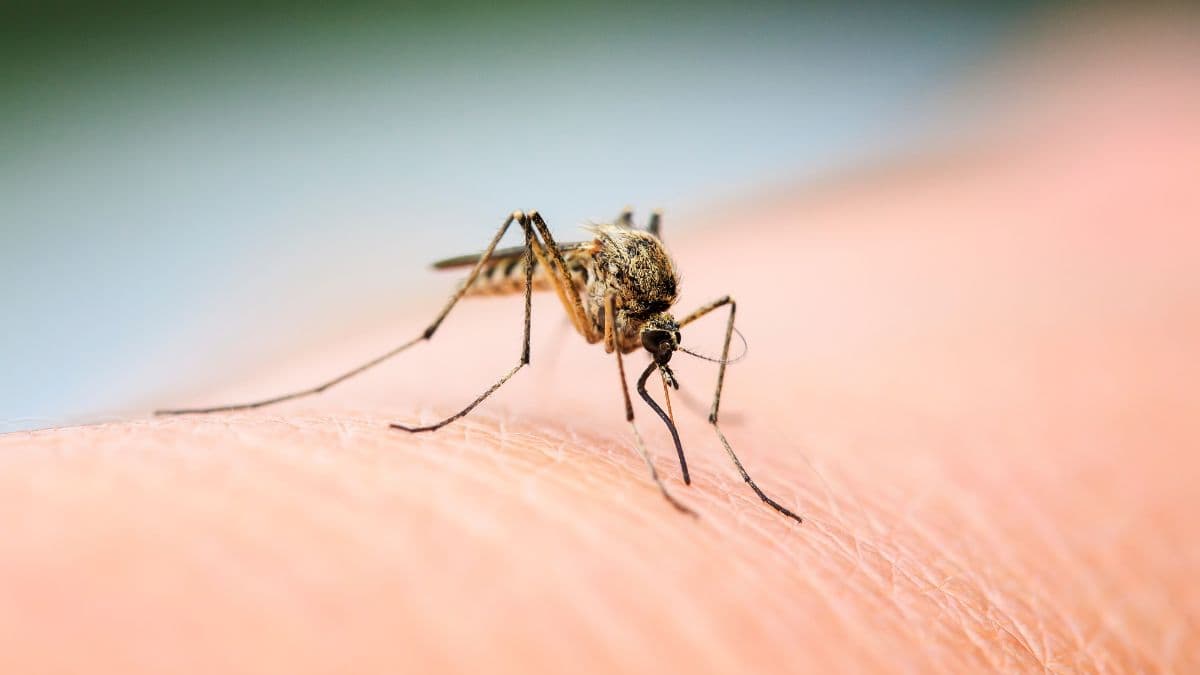
The UK Health Security Agency (UKHSA) claims that over 70 cases of the chikungunya virus were reported in the first six months of this year.
The mosquito-borne virus can cause sudden fever and joint pain and is usually only found in Africa and southern Asia, however, according to the UKHSA, there has been a significant increase in UK cases.
More than double last year's cases have been reported, and all of them are linked to travel.
Fortunately, chikungunya is rarely life-threatening, though it can leave people with joint pain for years on end.
In most cases, people tend to recover within a couple of weeks, but for some, pain can last for months or even years.
Many people may think that 73 infections in the UK during the first six months of 2025 is not a lot, but it is more than double the 27 cases over the same period last year.
Therefore, the UKHSA has issued a warning to travellers to take precautions regarding mosquito bites.
The Indian Ocean region is not far off an outbreak, and it has been reported that almost all of the infections were linked to travel in Sri Lanka, Mauritius, and India.
The mosquito-borne virus is spread by two types of mosquito, neither of which is present in the UK, so there is no risk of onward infection.
However, Dr Philip Veal, Consultant in Public Health at UKHSA, still warns travellers to take precautions against mosquito bites if they're planning on travelling anytime soon.
"Chikungunya can be a nasty disease, and we're seeing a worrying increase in cases among travellers returning to the UK.
"It is essential to take precautions against mosquito bites when travelling.
"Simple steps, such as using insect repellent, covering up your skin and sleeping under insecticide-treated bed nets, can greatly reduce the risk.
"Before you travel, check the Travel Health Pro Website for the latest advice on your destination.
"A chikungunya vaccine may also be considered for those travelling to higher-risk regions."

News


News

News
News
Sainsbury’s ‘held talks’ with major supermarket rival about potential merger
Sainsbury’s to potentially merge with competing grocer Sainsbury’s are said to have ‘held talks’ with a major competing supermarket in what could become the most significant coalition in the grocer sector, as reported by Sky News. Although talks are not believed to be currently active, industry sources say that a wave of top grocery market […]
News
36 min
The top 10 ‘best’ cities in the world have been revealed
Five factors determined the ‘best’ and ‘worst’ It’s that time of the year again when the brain boxes at some large, academic institution create a fancy index full of number of buzz-word measures to make the ultimate tier list of planet Earth’s cities. This time it’s the turn of the boffins at Oxford Economics to […]
News
43 min

News
Pensioner sepsis death: Coroner warns over unmonitored transfer
News