








News

Share
Published 15:10 9 Aug 2025 BST
Updated 15:10 9 Aug 2025 BST
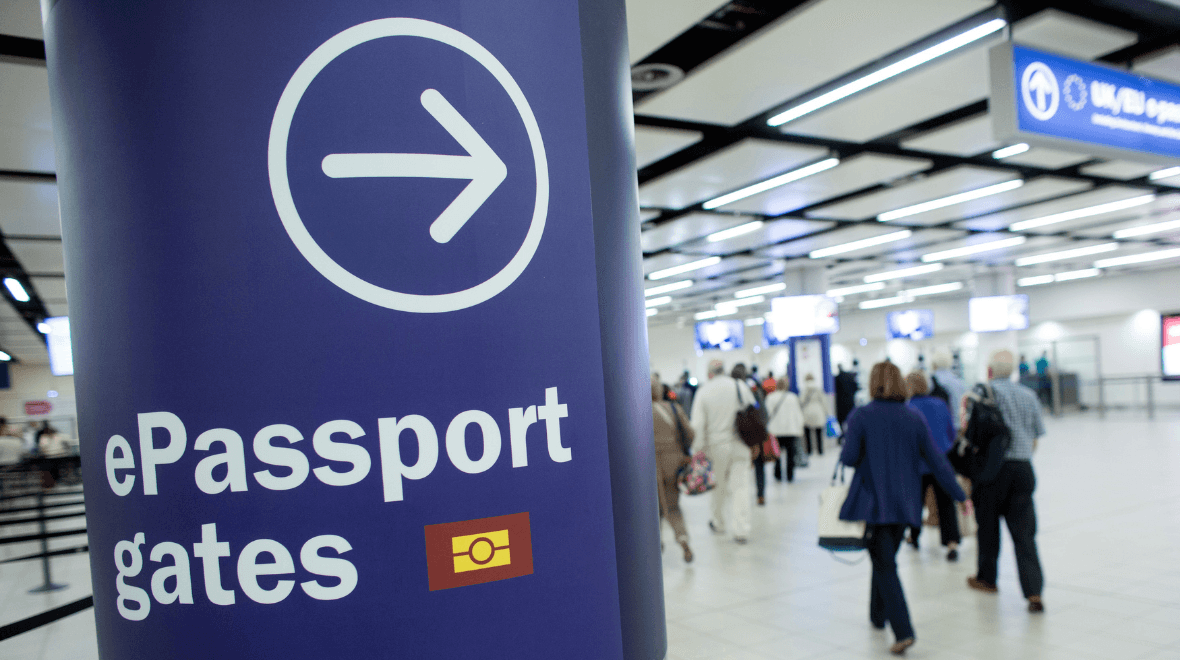
British passengers travelling to Europe on holiday this autumn may have to prove they have both medical insurance and a return flight to the UK if they want to enter EU countries.
The changes make up part of a strict new set of border rules that are set to be imposed by the European Union.
The new rules, which come into force on 12 October, also include requirements for British travellers to provide their fingerprints — and facial scans — if they wish to pass into the EU.
It's all part of a new scheme that aims to modernise border control across the union, while limiting illegal migration.
The plan is for physical stamps in passports to be fully replaced with biometric data by April 2026.
The data will be collected at dedicated booths installed at airports, ports and train stations, where travellers will be able to scan their fingerprints and have their photo taken.
The scheme will be rolled out gradually over six months.
Once the system is fully established, anyone who refuses to provide biometric data will be denied access to the EU.
As first reported by The Times, under the new rules, border control officers will be able to ask UK travellers a series of questions to confirm details of their trip.
These could include, providing some proof of accommodation, whether they have sufficient funds, as well as details of their medical insurance and proof of a return or onward ticket.
While these details will be mostly confirmed at automatic kiosks at the airports, any passengers who answer “no” to the new questions, will then be referred to a border officer for further checks.
Although border officers have been legally able to ask these questions ever since Brexit was finalised, they seldom actually did so.
Industry experts expect this to change from October.
Luke Petherbridge, director of public affairs at the travel trade body Abta, said: “More people are going to be asked these questions in the future than were in the past because most EES checks [entry/exit system] will be done at a kiosk.
“Its primary function is digitising the border. If you were to answer one of these questions in a way that you know wasn’t aligned with the answer they were looking for, you would be sent to a border guard. You wouldn’t necessarily be denied entry.”
Longer queues at airports are expected during the first few weeks of the scheme.
However, once the data has been provided it will stay within EU systems for three years.
Explore more on these topics:

News

News

News

News
Government rejects an AI kill switch because you cannot simply turn AI off
Experts warn a British AI kill switch has a major flaw The government is questioning whether Britain could do much to control the most serious AI risks on its own, even if ministers were given the power to shut down systems during an emergency. The idea has been under discussion in Parliament in recent weeks. […]
News
2 days ago
Michael O’Leary doubles down and accuses Dublin Rape Crisis Centre of defamation
Ryanair boss Michael O’Leary has refused to back down on comments he has made likening airline rivals to “rapists”. Comments by Ryanair boss Michael O’Leary have drawn widespread criticism from victims and advocates for trivialising rape. Now, the controversial figure has sent an open letter to Rachel Morrogh, the chief executive of the Dublin Rape […]
News
3 days ago
Council rejects plans to erect Ali G statue in UK town
News