






News

Share
Published 17:46 2 Jan 2026 GMT
A travel guide has revealed the locations that tourists should be looking to avoid in 2026.
The annual list by Fodor’s serves as a travel guide which encourages travelling, but at the same time also warns about restraint by tourists.
It must be said, however, that a boycott is not what this annual list is calling for.
Its main purpose is to make you really consider your next destination as a tourist, and skip the places which most definitely need a break from people.
So, whereabouts is affected?
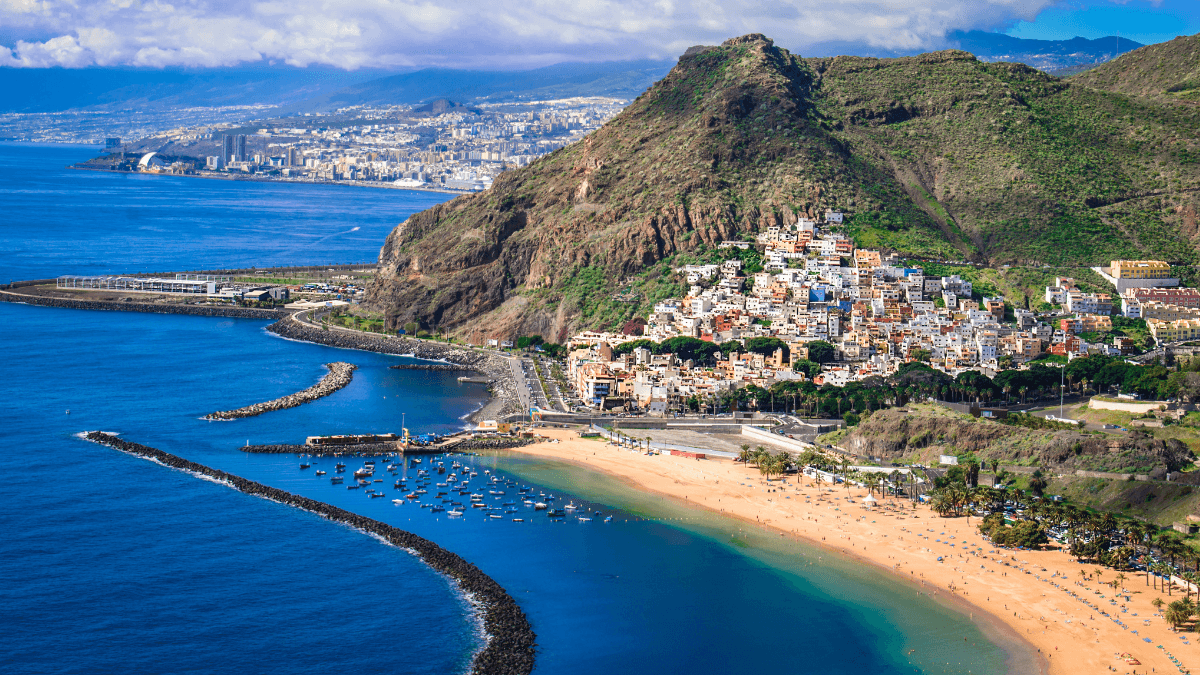
The Canary Islands are a well known hotspot for British tourists, but it's looking like you should give it a miss in 2026.
During the first six months of 2025, the eight islands saw more than 7.8 million tourists visiting and there were more than 27 million airport passengers. Compared with 2024, this was a 5% increase.
Some 35% of GDP is accounted for by the tourism in the archipelago of 2.2 million people, and 40% of the population is employed because of it. However, the popularity can prove costly.
Unregulated property development, in addition to mass tourism, has led to thousands of people protesting in the streets of Tenerife, Gran Canaria and Lanzarote, over the past two years.
Locals have said that they have had enough, while marching under the banner ‘Canarias tiene un límite‘ (The Canaries have a limit).
Residents can now rent properties on sites such as Airbnb and Booking.com thanks to new government regulations, but rental prices and property values have risen to such a level that young locals can’t afford their own homes anymore.
Beaches, too, are often closed as a result of sewage runoff and pollution.
According to a report published by France24 earlier this year, wastewater with the amount equaling 40 Olympic-sized swimming pools is discharged each day into the sea around the Canary Islands, alarming environmental groups in Tenerife.
ATAN, one of the oldest such groups, told Fodor’s that “they are losing their identity, culture, and, ultimately, their right to exist as a community”.
If you were looking for a trip to Antarctica, it's a good idea to think twice.
Although it may seem like a great continent of adventure, the fragile environment is at risk due to the huge influx of tourists it's received in recent years.
From 2023 to 2024, Antarctica received 130,000 visitors, but it's likely this will double by 2033.
Jessica O’Reilly, advisor to Antarctic Treaty Consultative Meetings and associate professor of anthropology at Indiana University, said: “The environment is fragile, and it’s a rare environment. That’s why people want to go there, but it’s also why it can’t really sustain high numbers of tourism.”
Large ships can't land on the continent, but expedition ships carrying tourists give people the chance to experience the rare environment.
Many ships are members of the International Association of Antarctica Tour Operators (IAATO), which has agreed to cap visitor numbers. However, O'Reilly explains that many ships are not members of IAATO.
She said: “These can be personal ships or others that simply don’t want to join. It’s a voluntary organisation, and as we’re seeing different markets in tourism expand, there’s less willingness to join this organisation.”
Looking stateside, there is one national park that is particularly at risk from over-tourism.
Glacier Mountain Park in Montana is known for its incredible ecosystem and stunning glaciers, but as climate change progresses, these are being put at risk.
People have therefore rushed to the park in order to see the glaciers before they disappear completely.
Glacier National Park is warming close to twice as fast as the global average, with only 27 glaciers remaining, of the 150 that were estimated to existed at the turn of the 20th century. Those that are remaining are feared to disappear by 2030.
Michael Jamison, Northern Rockies campaign director for the National Parks Conservation Association, says: “No one has any meaningful data on the extent to which last-chance tourism is motivating travelers here, but anecdotally, there’s no doubt people are racing to see a glacier before they’re gone.
“I get many direct inquiries from folks wanting to do exactly that.”
The influx of visitors, the majority of whom come in July and August, means increased traffic, rubbish and disturbance to wildlife, none of which are doing the park any good.
It's well known that cruise ships can cause ruckus to local communities, despite the economic benefits of the tourists they bring.
However, Italy came up with a solution for this - Fiumicino Waterfront in the quiet coastal district of Isola Sacra.
The plan is to create a port which will allow 1,000 small boats and mega cruise ships to dock, but activists say the plans will destroy 'a delicate ecosystem of dunes, wetlands, agricultural land, unique vegetation, and terrestrial and marine animal species'.
Anna Longo, president of Italia Nostra Litorale Romano, a branch of the non-profit organization Italia Nostra, spoke to Fodor over the concerns.
“The use of sustainability strategies would never eliminate the impact of a project of this magnitude on a delicate environment like that of the Fiumicino coastline,” says Longo. “The scenario that looms appears apocalyptic: the coast will be overturned by piers and docks, hotels, and new commercial buildings.”
Switzerland is a stunning country, known for its mountains and lakes.
However, one region is at risk due to the tourists that are flocking there.
The Jungfrau region encapsulates some of the most beautiful parts of the country, from the Interlaken to the summits of Eiger, Mönch, and Jungfrau.
Featuring Alpine villages including Grindelwald and Mürren, it's not a surprise that more than one million tourists visited the region in 2024.
However, there are fears about how the region is balancing tourism with local life, and the impact on the natural environment.
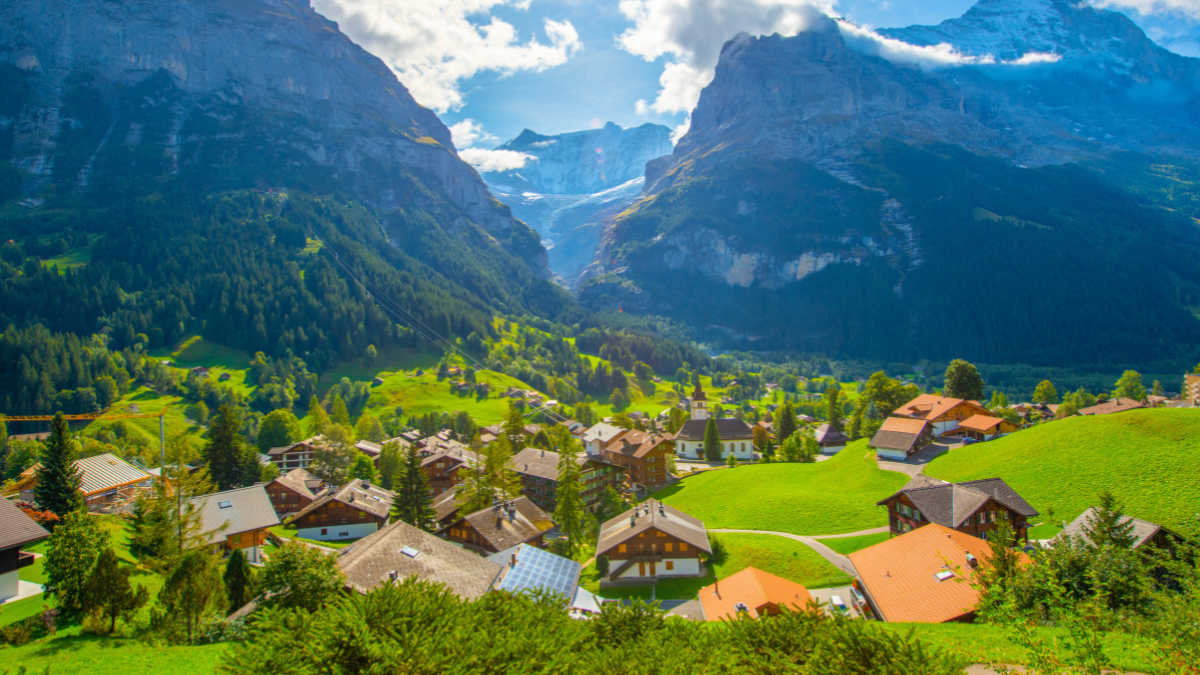
“There are far more day visitors now, and most guests stay only one or two nights before moving on," Mico Witzke, manager of Restaurant Eigernordwand and Alpinhotel Bort near Grindelwald, says.
“I wish visitors would take more time to appreciate nature. Many don’t even realize where they truly are; they just go where all the other tourists go,” Witzke says. “Many only want to go up to the Jungfraujoch, no matter the weather or what they’ll actually see once up there.”
Many tourists only come for the day, and so avoid paying a local tourist tax, and also spend most of their money with the big railway company, the Jungfrau Railways, meaning local residents don't benefit.
Matthias Michel, who runs Hotel Fiescherblick, also explained that housing is becoming scarce.
“Many homeowners are renting out their apartments on Airbnb instead of renting them out to those who need accommodation," he explained.
"It is, in terms of income for the homeowner, an easy decision whether to rent permanently or on a daily or weekly basis, which is just a lot more. Furthermore, when building or renovating and applying for a bank loan, it is a security guarantee for the bank that the apartment can be rented to tourists. ”
Large protests erupted across Mexico City last year, with people demonstrating against gentrification, short-term rentals, and rising rents.
Some of the protests turned violent, with some foreign tourists being harassed by both masked and unmasked protestors.
Mexico City has seen a huge surge in Airbnb listings in recent years, and this is a huge factor in local anger.
“Simply put, Airbnb should be banned from Mexico City,” Mexico City resident and operations leader of Club Tengo Hambre Natalia de la Rosa says.
“It’s a platform that incentivises evictions and tears at the social fabric of communities in neighbourhoods.”
“Deep-pocketed elites and large corporate and international portfolios purchasing entire apartment buildings to convert them into short-term rentals are negatively impacting our city,” she says.
New rules are limiting short-term rentals to no more than 180 nights per year, but this doesn't come into place until after the 2026 FIFA World Cup, when rents are expected to surge as Mexico City hosts five matches.
Kenya's tourism industry started booming during Covid, and has showed no signs of slowing down since.
In 2024, they hit a record 2.4 million international arrivals, marking a 14.6% rise on 2023.
Port traffic has seen a 164% rise in coastal cities of Mombasa and Lamu, thanks to the cruise industry.
Mombasa is home to 70% of visitors to the coast, but overtourism is putting the city at risk. It has seen overcrowding, increased congestion and poor waste management due to the influx of visitors.
It appears that tourism has been prioritised over the needs of locals, with the youth unemployment rate in the city being a staggering 44 per cent.
Dr. Edwin Muinga, a conservationist and founder of Clean Mombasa, points to poor garbage disposal and sewage treatment as a huge issue for the destination.
“Initially, there were stations for cleaning up sewage everywhere, but today people connect raw sewage into drainage systems and flow directly into the ocean, killing the mangrove and fish,” says Dr. Muinga.
“Locals have been complaining and even engaged the various government players like the National Environment Management Authority and the Mombasa county government, but no mitigation has been undertaken.”
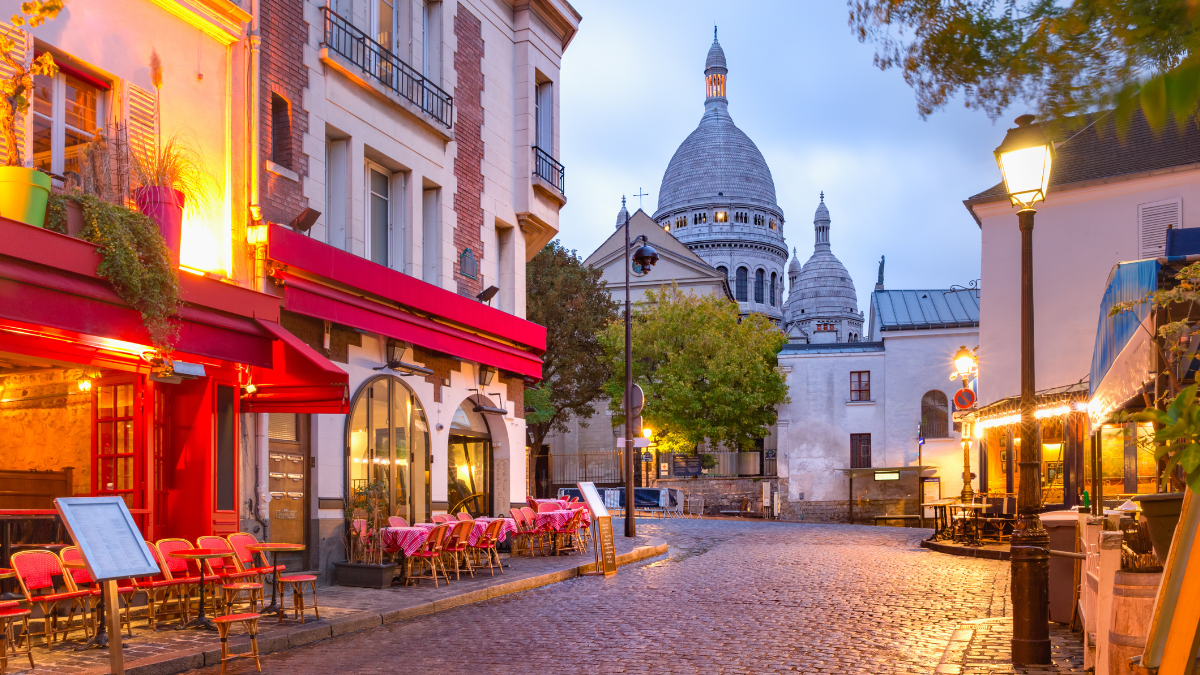
France is one of the world's leading tourist destinations, but the hilltop village of Montmartre in Paris is coming under stress due to the amount of visitors it's receiving
The quaint village sees more than 11 million visitors to its basilica every year, which is more than even the Eiffel Tower.
Considering only 30,000 people live in Montmatre, it's understandable that this is not sustainable.
Real estate prices have risen by 35 per cent over the last year according to BARNES, with residents now saying the location is becoming 'unliveable'.
There are fears Montmatre will be “progressively emptied of its population," according to Rémy Knafou, professor at Paris 1–Panthéon Sorbonne.
“At night, the Place du Tertre is completely invaded by café and restaurant terraces,” he told Fodor's.
"Some of the population living in the area is protesting–discretely, politely, but firmly–its discontent. It is therefore possible to speak of overtourism.”
Explore more on these topics:

News

News
News
News
Rejoining EU could boost UK economy by £150bn – Goldman Sachs
Analysts from the bank reckon a ‘Breturn’ would boost the UK economy by 2-5% by the start of the next decade. Goldman Sachs has said rejoining the European Union could boost the UK economy by as much as £150 billion. In a note to clients, the Wall Street bank voiced its support for Andy Burnham’s […]
News
5h
Travel chaos across Italian airports after air traffic control failure
Air traffic management capacity has been slashed in half Travel chaos has struck Italy’s major airports after an air traffic control failure left capacity halved on Friday. Hundreds of flights across Italy have been delayed and over 100 cancelled due to “anomalies” with air traffic control (ATC) services. The Italian air navigation service provider, ENAV, […]
News
11h

News
Abu Dhabi Royal was found passed out on street in London after ‘cocaine binge’
News