







Lifestyle

Share
Published 07:01 8 Aug 2026 BST
Updated 10:52 8 Aug 2026 BST
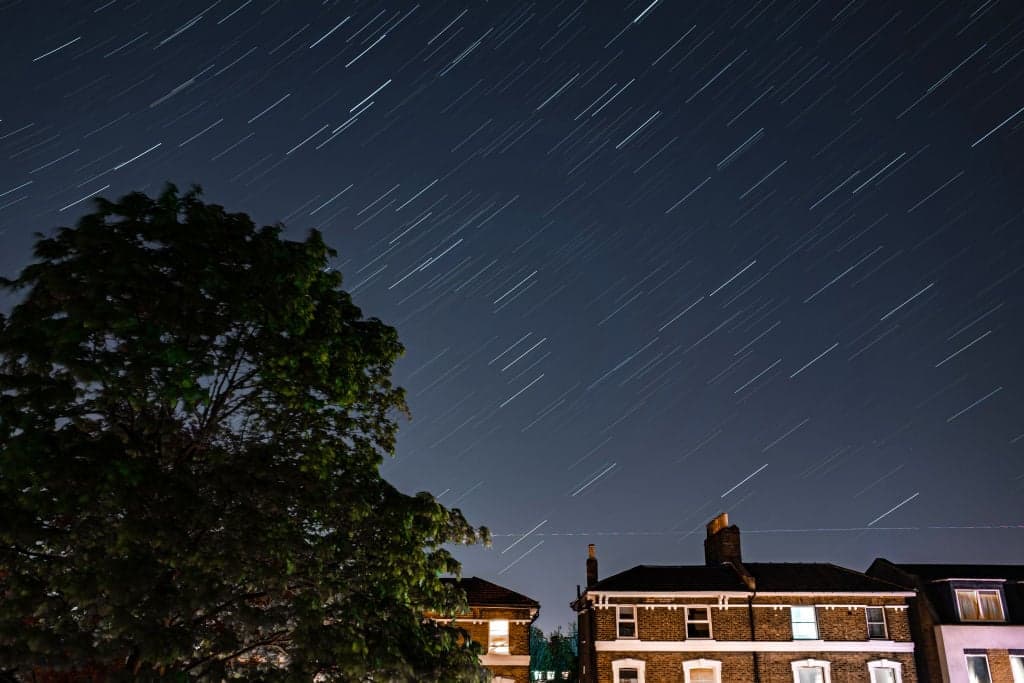
Set an alarm, find a dark patch of sky and look up. Next Wednesday night the UK is in for a rare celestial double bill: a dramatic partial solar eclipse by day, followed just hours later by the peak of the Perseid meteor shower — arguably the most reliable stargazing spectacle of the year, and one you can enjoy with nothing more than your own two eyes (as long as they're protected of course).
The Perseid meteor shower peaks overnight from Wednesday 12 August into Thursday 13 August, just as skywatchers are still buzzing from the most significant solar eclipse visible from Britain since 1999. For once, you will not need a telescope, a long drive or any specialist kit — only clear skies and a little patience.
As the Earth orbits the Sun it ploughs through trails of debris shed by passing comets and, occasionally, asteroids. The Perseids are caused by fragments left behind by Comet 109P/Swift-Tuttle. When those specks slam into the atmosphere at speed they heat up and burn away, and the air around them briefly glows — the fleeting streak of light we call a shooting star. Active this year between 17 July and 24 August, the Perseids are prized by astronomers and casual watchers alike for their sheer volume and their bright, fast-moving trails.
According to NASA, the shower can produce between 50 and 100 meteors an hour at its peak, provided viewing conditions are favourable. The display begins in the early evening of 12 August and continues overnight into the small hours. Earlier that day, the partial eclipse will see the Moon cover up to 95 per cent of the Sun in Cornwall and 94 per cent in Pembrokeshire, with around 90 per cent coverage over London — the UK's best solar eclipse in 30 years. No equipment is needed for the meteors themselves: head somewhere with a clear horizon and as little light pollution as possible, give your eyes a good 20 minutes to adjust to the dark, and resist the urge to check your phone.
The best window runs from late evening on 12 August through to dawn on 13 August, when the sky is at its darkest and the radiant point in the constellation Perseus climbs higher above the horizon. Unlike the winter showers that demand you brave the cold for hours, a warm August night makes the Perseids one of the most comfortable meteor showers to watch from the UK. Wrap up loosely, bring a blanket or a reclining chair, face away from any streetlights, and let your eyes settle before you write the night off — the brightest “fireballs” often arrive in bursts rather than a steady trickle.
It is not often that two headline sky events line up on the same night. Whether you catch the eclipse at dusk, the Perseids after dark, or both, 12 August is shaping up to be one for the diary, as the Mirror reported. Just do not forget the one thing this show really rewards: patience.
Explore more on these topics:
Lifestyle
Lifestyle

Lifestyle
Lifestyle
Vet prescription fees capped at £21 as new rules become law
Why vet prescription fees were capped Vet prescription fees will be capped at £21 under a set of rules that became legally binding on Tuesday, alongside a requirement that practices publish what they charge. Vets must also tell clients if cheaper medicine is available online, provide written estimates ahead of treatment and publish a price […]
Lifestyle
1 day ago
Reports find that a Nordic diet could help you live longer
The Nordic diet could help you live longer, so how can you adapt to it? Despite the high consumption of sugar, salt and convenient foods, Denmark consistently ranks as one of the world’s healthiest nations. Many staple foods and dishes from the region are shown to be correlated with higher standards of living, for both […]
Lifestyle
2 days ago
Lifestyle
What happens to unused annual leave at the end of the year?
Lifestyle