








Lifestyle

Share
Published 11:13 24 Jul 2025 BST
Updated 11:13 24 Jul 2025 BST
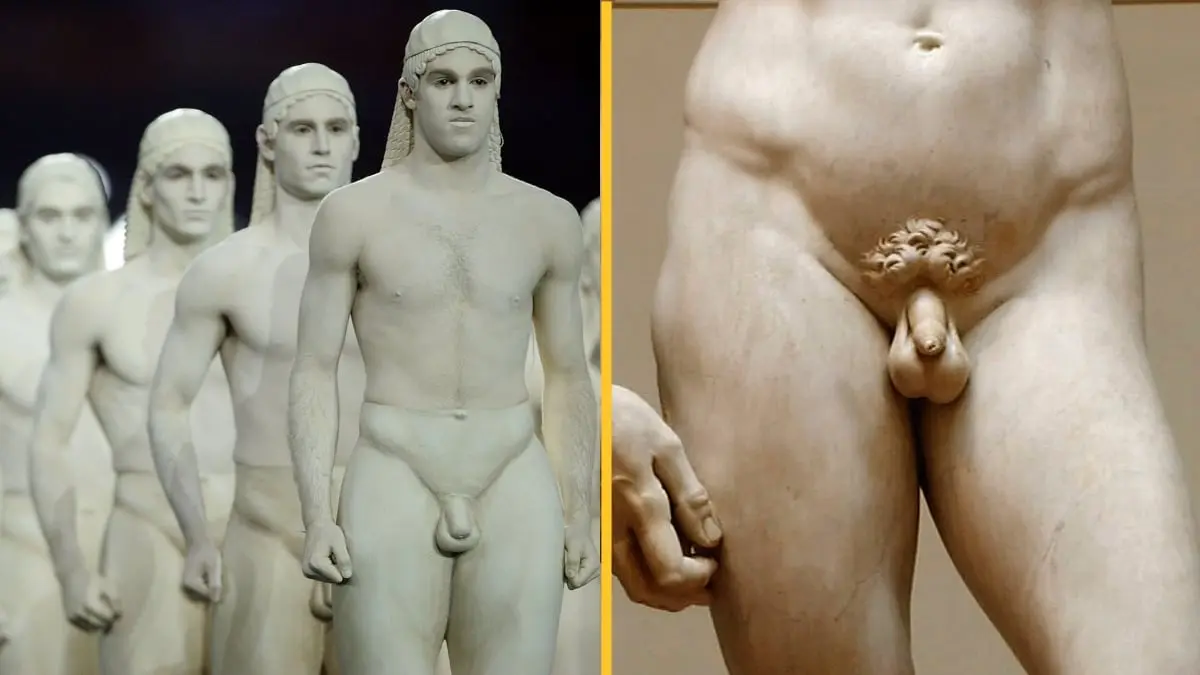
If you've ever been to Athens, or wandered through the Ancient Greece section of a museum, you might have had to squint to see the packages on some of the statues depicting greek gods and warriors.
You can't fault the ancient Greeks when it comes to their muscles and abdomen. Most of them look like they could easily make it as gym influencers in this modern age, with their chiselled figures.
An area of their anatomy that might come as a surprise though, is their slightly underwhelming genitalia.
Take the statue of Poseidon (Zeus) from 46 B.C, which is on display at the National Archaeological Museum in Athens,
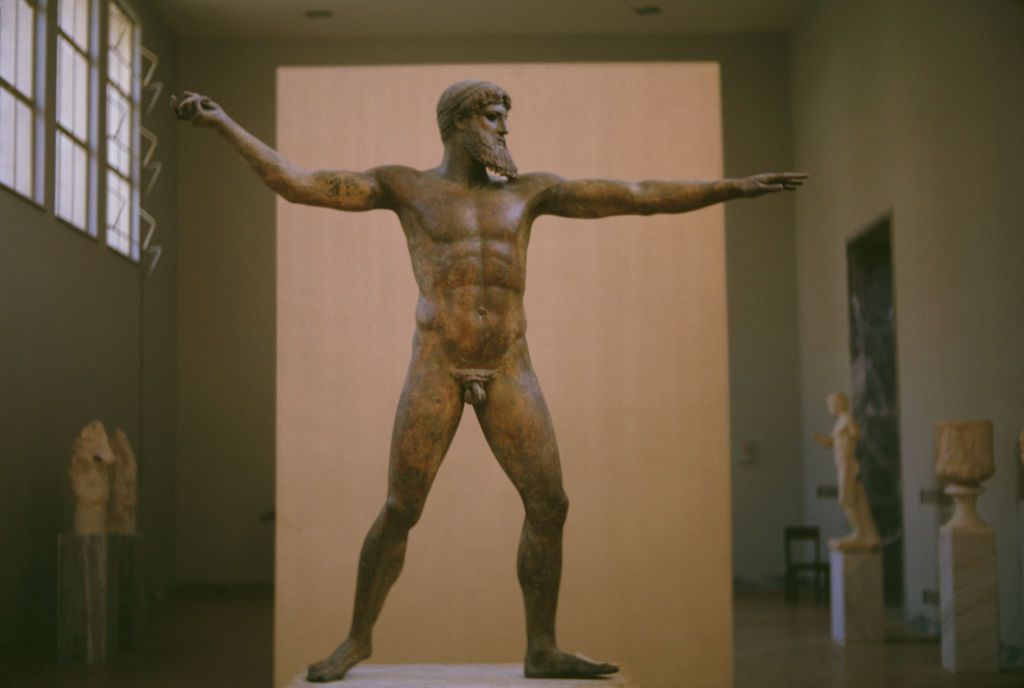
It has never been confirmed whether or not the statue depicts the sky and thunder god Zeus, or the the sea and storms god Poseidon, but either way, it's clear that you don't actually need big 'cojones' to be a warrior.
Countless historians have been struck by the modest nature of the phalluses that feature in classical sculptures of gods, emperors, and other elite men from ancient civilisation, but what's the reason behind it?
If you go back to around 400 B.C, you'll discover that large, erect penises were not desirable in the culture at the time, and that smaller members were symbols of purity and power.
According to Cosmopolitan, stonemasons who constructed the statues shared the belief that small genitalia symbolised a man who made up for his lack of length down below with a broad and potent intellectual mind up top.
They modelled only small genitals because they wanted to make it clear that the men they were depicted were rational intellectuals, and had their urges under control.
The only exception to this rule amongst Greek mythology lies in the depiction of the god of fertility, Priapos. We'll let the image do the talking on this one.

On the flip side, lustful, depraved, villainous men in ancient history were endowed with large, erect genitals in art, in order to symbolise their reckless abandonment of composure and brainpower.
According to mythology, these creatures were part-man, part-animal, and totally lacked restraint.
Nowadays, society's perception of the male genitalia has shifted dramatically.
Smaller penises are no longer perceived as a sign of intellectual eminence, and for many, large penises are considered a sign of masculinity and represent success.
Furthermore, a study conducted by Stanford University in California last year suggests that male members are only getting bigger.
An article published by the World Journal of Men's Health claims that male genitalia has grown by 24% in several regions of the world over the past 30 years.

Lifestyle

Lifestyle

Lifestyle

Lifestyle
The UK’s coolest places to live have been revealed
Time Out has named the UK’s coolest places to live, eat and hang out Time Out has revealed its annual ranking of the UK’s coolest neighbourhoods, highlighting the places making waves for their independent businesses, lively food and drink scenes and cultural offerings. The list was compiled with help from the publication’s nationwide network of […]
Lifestyle
5 days ago
Bank of Mum and Dad has opened a new branch – on the driveway
Parents are spending more than £500 a year helping their kids use the family car The Bank of Mum and Dad has long helped young Brits get onto the property ladder – but now it seems to have opened a new branch on the family driveway. New research from Compare the Market reveals parents are […]
Lifestyle
1 week ago
Save 65% on this Dual Basket Air Fryer with Touchscreen
Lifestyle