

Share
14th April 2016
09:19am BST

 And it's not just the grin/grimace emoji either.
A recent study by a research team at the University of Minnesota has explored how emojis can be perceived differently, not only by different people, but on different platforms and devices.
Some variances lead to multiple interpretations of one emoji, while in other cases the meaning of a emoji changed completely due to being interpreted radically different on some displays.
Careful what you emoji...
[caption id="attachment_52622" align="aligncenter" width="1081"]
And it's not just the grin/grimace emoji either.
A recent study by a research team at the University of Minnesota has explored how emojis can be perceived differently, not only by different people, but on different platforms and devices.
Some variances lead to multiple interpretations of one emoji, while in other cases the meaning of a emoji changed completely due to being interpreted radically different on some displays.
Careful what you emoji...
[caption id="attachment_52622" align="aligncenter" width="1081"]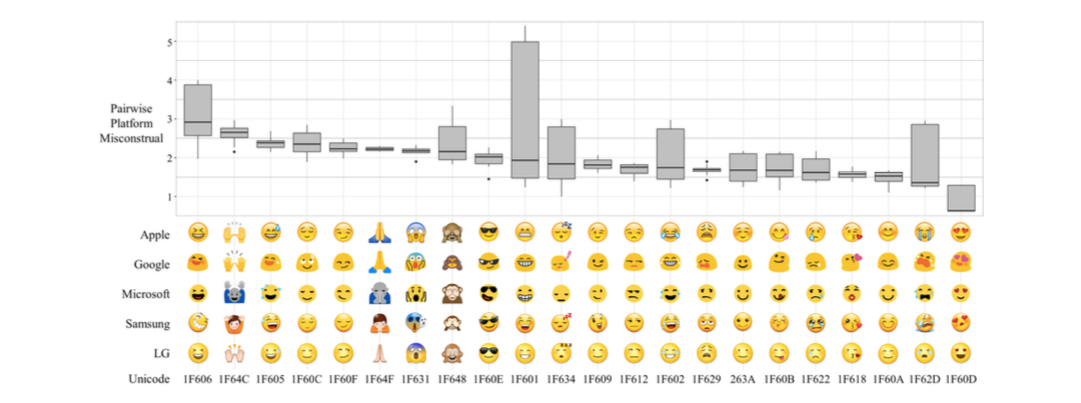 via GroupLens[/caption]
[caption id="attachment_52623" align="aligncenter" width="334"]
via GroupLens[/caption]
[caption id="attachment_52623" align="aligncenter" width="334"] via GroupLens[/caption]
[caption id="attachment_52624" align="aligncenter" width="363"]
via GroupLens[/caption]
[caption id="attachment_52624" align="aligncenter" width="363"] via GroupLens[/caption]
[caption id="attachment_52625" align="aligncenter" width="334"]
via GroupLens[/caption]
[caption id="attachment_52625" align="aligncenter" width="334"] via GroupLens[/caption]
[caption id="attachment_52626" align="aligncenter" width="334"]
via GroupLens[/caption]
[caption id="attachment_52626" align="aligncenter" width="334"] via GroupLens[/caption]
[caption id="attachment_52627" align="aligncenter" width="334"]
via GroupLens[/caption]
[caption id="attachment_52627" align="aligncenter" width="334"] via GroupLens[/caption]
[caption id="attachment_52628" align="aligncenter" width="334"]
via GroupLens[/caption]
[caption id="attachment_52628" align="aligncenter" width="334"] via GroupLens[/caption]
[caption id="attachment_52629" align="aligncenter" width="336"]
via GroupLens[/caption]
[caption id="attachment_52629" align="aligncenter" width="336"] via GroupLens[/caption]
[caption id="attachment_52632" align="aligncenter" width="334"]
via GroupLens[/caption]
[caption id="attachment_52632" align="aligncenter" width="334"] via GroupLens[/caption]
[caption id="attachment_52633" align="aligncenter" width="334"]
via GroupLens[/caption]
[caption id="attachment_52633" align="aligncenter" width="334"] via GroupLens[/caption]
[caption id="attachment_52631" align="aligncenter" width="800"]
via GroupLens[/caption]
[caption id="attachment_52631" align="aligncenter" width="800"]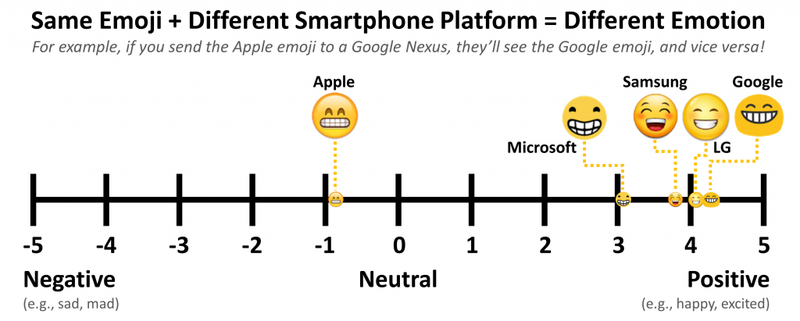 via GroupLens[/caption]
You can read the full, extensive study here.
via GroupLens[/caption]
You can read the full, extensive study here.


