




Fitness & Health

Share
Published 07:07 3 Oct 2016 BST
Updated 16:34 3 Oct 2016 BST

"If they are lactose intolerant I want to give them a whey isolate. Isolate just means they removed all the lactose. "If they are and they want to keep on the whey concentrate, we want to give them the enzyme lactase."
 Lactase basically helps the body process the lactose in milk and helps the body properly digest it - after all what's the point of having a whey protein, if you're not getting all the goodness?
This is where it gets interesting, as Lockhart revealed what protein he gives to his elite fighters that their bodies can utilise most efficiently to help them repair and build their muscles.
Lactase basically helps the body process the lactose in milk and helps the body properly digest it - after all what's the point of having a whey protein, if you're not getting all the goodness?
This is where it gets interesting, as Lockhart revealed what protein he gives to his elite fighters that their bodies can utilise most efficiently to help them repair and build their muscles.
"A lot of times I don't actually promote a protein, because I give kefir (a fermented milk probiotic) to a lot of people - kefir has the lactase. "It's got billions of probiotics which clean the system out and helps with the digestion process. "The one though that is digested the most proficiently is actually vegetable protein. Like pea protein. "Here's the kicker - the amount of vegetables you'd have to eat is astronomical. So when they actually make the protein itself, it's amazing stuff. It's good for your body and your body absorbs it very proficiently and I will actually give it to a lot of fighters."
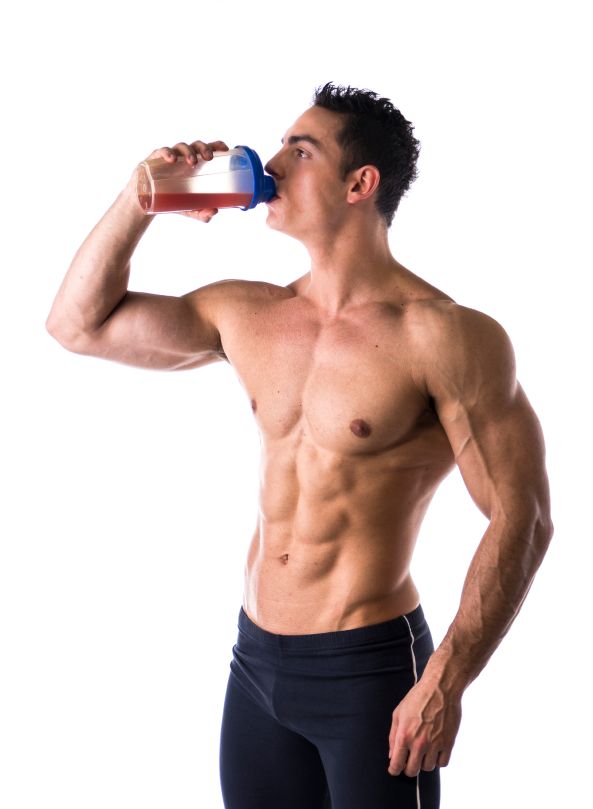 Pea protein has been gaining a lot of attention recently because of its incredible properties.
Contrary to popular belief, this plant based protein has a full spectrum of amino acids and holds its own against whey. It's particularly high in arginine and lysine.
It's fat free, allergen free and digests easily because it contains no gluten or lactose.
It also gave comparable muscle thickness gains to whey, according to this bicep study in The Journal of the International Society of Sports Nutrition.
But one thing that Lockhart goes on to say is that there is no comparison between using protein powders and consuming your protein from whole foods.
The bioavailability of nutrients from actual foods is greater than from protein drinks. According to Precision Nutrition, it takes just one and a half hours for protein in liquid form to pass through your digestive system, giving less absorption time of that protein.
It's a double-edged sword though as only 10g of protein per hour can be absorbed from whey. So if you do the maths on 50g of whey, that would be just 15g of protein absorbed before it's passed through your gut.
Pea protein has been gaining a lot of attention recently because of its incredible properties.
Contrary to popular belief, this plant based protein has a full spectrum of amino acids and holds its own against whey. It's particularly high in arginine and lysine.
It's fat free, allergen free and digests easily because it contains no gluten or lactose.
It also gave comparable muscle thickness gains to whey, according to this bicep study in The Journal of the International Society of Sports Nutrition.
But one thing that Lockhart goes on to say is that there is no comparison between using protein powders and consuming your protein from whole foods.
The bioavailability of nutrients from actual foods is greater than from protein drinks. According to Precision Nutrition, it takes just one and a half hours for protein in liquid form to pass through your digestive system, giving less absorption time of that protein.
It's a double-edged sword though as only 10g of protein per hour can be absorbed from whey. So if you do the maths on 50g of whey, that would be just 15g of protein absorbed before it's passed through your gut.
 Lockhart explains it like this...
"When it comes to drinking shakes, it's not giving my body exactly what it needs. The bioavailability of that protein is not going to be as effective as eating chicken or eating fish. My body actually needs to eat these foods to get those nutrients. "The big difference is the bioavailability. If I have a guy that's just having shakes his body is not getting the nutrients. Just because I'm taking in nutrients doesn't mean my body is getting them in the same way. "Imagine plumbing. Your intestines are like pipes and you've got sludge in your pipes, which a lot of people do because they don't take the right probiotics and clean out their system. "But just because I'm eating the foods doesn't mean they're getting absorbed. "A guy with clean pipes it's absorbed a lot more proficiently. "What I'm saying is if I'm taking those shakes, the way that my body does this, the time span and the amount of glycemic load it takes longer to digest so it's able to get more of those nutrients. "That's why eating fibre is so important for people because it slows the digestion process down so my body can digest it and use those nutrients more proficiently."So the bottom line is, try and get as much protein from actual food as possible and your body will take up more of the nutrients.

Fitness & Health
Fitness & Health

Fitness & Health
Fitness & Health
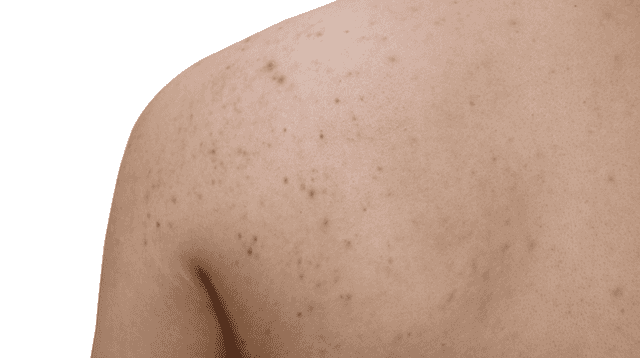
This is the perfect product to use if you suffer from stubborn body acne
If you’re finding it hard to get rid of body acne, then you need to try this Trying to find a product that’ll actually get rid of stubborn acne is never easy, but one has finally been launched that is about to make our lives a lot easier. Many of us are guilty of trying […]
Fitness & Health
2 months ago
Inside new ‘ballmaxxing’ trend where men inject scrotum to get bigger balls
Talk about appearance over comfort… A trend on the rise known as “ballmaxxing” is making men fill their testicles with litres of saline, to make them look bigger. Typically, a man’s testicles is the size of a plum or a small egg. But men now are inflating their scrotums to the size of grapefruits, an […]
Fitness & Health
3 months ago

Fitness & Health
Fitness & Health