








News

Share
Published 15:51 2 Oct 2026 BST
Updated 15:51 2 Oct 2026 BST

If you live in the UK, and own a mobile telephone, you're probably familiar with the call from a rather suspect sounding voice offering you a job that's too good to be true.
It seems to be a common occurrence these days and it perhaps doesn't come as a surprise that, in the current job landscape in the UK, scammers are choosing to prey on the promise of employment, when many industries feel impossible to get a break in.
With this in mind, it leaves many questions around where these calls are coming from, why so many are being targeted, and what can be done to stop them.
While many may feel like the number of scam calls is on the rise, Ofcom actually say that, overall, scam calls are on the decrease.
Will Pinkney, Principal of the Infrastructure and Communications group at Ofcom, and Project Director for the regulator's work on telecom scams, explained the difficulty of knowing "whether the overall number of scam calls that people are getting is going up or down from week to week or month to month."
Speaking to JOE, he said: "Overall, the trend that we observe in the proportion of people that actually report having received a scam message in the last three months, which is the stat that we track over time, has traced down a bit in recent years.
"In February this year, 37% of phone users have said they've received such a call in the last three months, and that's a bit lower than in previous years, but that's still troublingly high."
While the number of people reporting any kind of scam call appears to have gone down over the last year, there remains one specific type of call which people are noticing more and more - the offer of employment.
Even Pinkney himself admitted "personally, I can say I have received these calls."
He added: "From an individual's perspective it can appear like a spike. You can suddenly find that you're getting a lot of them, and you need advice about what to do."
One viral post on X got over one million impressions and thousands of replies which read: "Why is no one talking about the amount of spam calls people in the UK has been getting recently?
"There has to have been some sort of huge data leak because I KNOW it’s not just me"
The post suggested that the cause could be down to some kind of data breach.
While this remains purely speculation, it is not beyond the realms of possibility, with a number of high-profile data breaches in the last few months, notably a large one targeting Manchester Airport.
While scam calls are nothing new, the amount of calls offering people jobs has certainly attracted attention.
Pinkney explained: "I'm sure many other people have received a voicemail message saying, 'I've got information for you about a job offer. Can you add me on WhatsApp?'.
"A scammer in that case might want to make initial contact with someone to then have a conversation with them over an encrypted service which in their view, might be easier to escape detection of blocking or detection of what they're doing," he said.
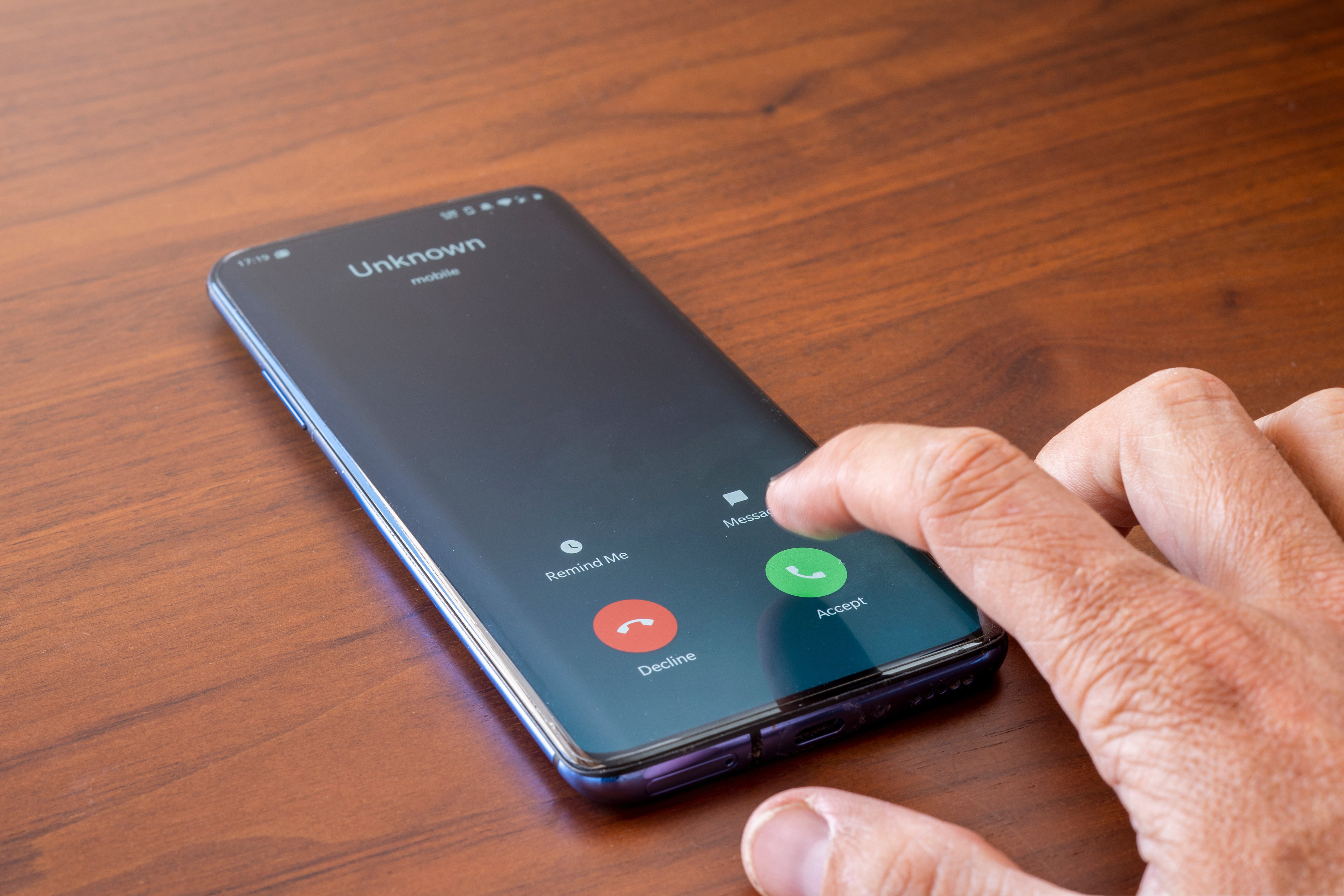
Image: Adobe Stock.
Another explanation might just be the currently increasing rate of unemployment, as well as youth unemployment, in the UK.
Since August 2022, unemployment has risen from 3.6 per cent to 4.9 per cent, as of July 2026.
While an unemployment rate of between 4 and 5 per cent is usually considered healthy, there has been an increase in people out of work - this is nowhere more obvious than amongst the youngest workers.
Current youth unemployment stands at 16.4 per cent, up 7.1 per cent from 9.3 per cent in July 2022.
This could suggest that scammers are looking to capitalise on a population looking for jobs.
With the nation batting away job offers left, right and centre, it begs the question where the calls are coming from in the first place.
"Overwhelmingly from outside the UK is our understanding that we get from the what law enforcement find and what the telecom sector find," Pinkney said.
"Scammers reach people by simply spoofing a number from abroad, so they use some software to make up a plausible-looking UK number and call into the UK with it, or alternatively, they might be able to get hold of a UK number, use it for a period of time, and then ditch it before it's stopped."
Asia is one of the major scam call hubs, and only last month the UK teamed up with Cambodia to try and take down scam call networks.
While Ofcom set out the rules and guidelines for communications in the UK, it cannot pursue people partaking in scam calling, as Director of Strategy and Delivery Amy Jordan explains.
"We work really closely with law enforcement and government and other partners because we don't have the powers to kind of go after the criminals," she said.
"What we can do is set the rules and the obligations on industry that they should follow to make sure that they are preventing access to their networks and are aware of the techniques and things that scammers are doing to try and access their customers."
Pinkney explained that if people in the UK are getting calls, then "it's made its way past the firewalls and protections which the industry has in place to try and stop it."
"In 2025, we introduced new rules that required extensive blocking of calls that come from abroad that appear to be from a UK fixed line number."
He added that new rules that are set to come into effect next year about how telecoms companies should now withhold the caller ID of calls that appear to come from a UK mobile roaming abroad, unless they can verify its validity.
While sometimes fighting the barrage of scam calls can feel like a losing battle, there are a number of measures that can be taken to help stop them.
Modern phones and networks often have a built in systems to help identify a scam call and label it with a message which says "suspected scam", scammers can still get round this with spoof UK numbers.
Jordan said: "I think our advice would be, if you've got any doubt, then hang up. Don't take any action. Don't add the number to WhatsApp and certainly don't kind of share any personal details."
Meanwhile, Pinkney also mentioned the 7726 service, which allows people to report scam texts and calls by forwarding the number sending a message to 7726 on your phone free of charge on all major UK networks.
This blocks the number for other people and flags it to the industry and potentially law enforcement too.
Many have reported that scammers often imitate the form of job search platforms, such as Indeed or Glassdoor.
Indeed said they are aware of scams and provided advice on how to avoid falling for scams.
A statement to JOE from Indeed read: "Job seekers are at the heart of everything we do, and their safety and trust are a top priority.
"We are aware of scams involving individuals falsely posing as “Indeed recruiters” offering fake jobs in an attempt to gain money or request personal information.
"These are in no way affiliated with Indeed, and we strongly condemn bad actors who exploit the trust job seekers place in our platform and brand."
Pinkney explained the role of Ofcom in going after communications providers that "aren't doing everything they should".
"We've publicly announced investigations into two companies that have given us reason to think they are not stopping scams in the way that they should."
As per a report released by Ofcom, the two companies being investigated are Vonage Business Limited and Voxbone SA.
It said that the investigation "relates to concerns that telephone numbers held by the companies are being misused, including to perpetrate scams."
This investigation remains open.

News
News

News

News
Diesel price breaks record as it hits £2-a-litre barrier across the UK
Petrol is averaging 174.71p in comparison For the first time, diesel price has topped £2 a litre in the UK, the RAC has revealed. This comes amid Iran war disruption which is pushing fuel costs higher for drivers. On Friday, the RAC motoring group confirmed that for a litre, the UK diesel price is now […]
News
just now
Olivia Dean accused of copying 1980s classic hit in new lawsuit
Here’s what the lawsuit says In a legal case filed in California, singer-songwriter Olivia Dean has been accused of copying parts of classic song Just The Two of Us. More specifically, the British pop star, 27, is accused of copying the melody of the soul classic by Bill Withers. Dean’s song I’ve Seen It, taken […]
News
51 min

News
Where the UK ranks as top 10 countries with best gender equality revealed
News