






News

Share
Published 13:23 11 Nov 2026 GMT
Updated 13:23 11 Nov 2026 GMT
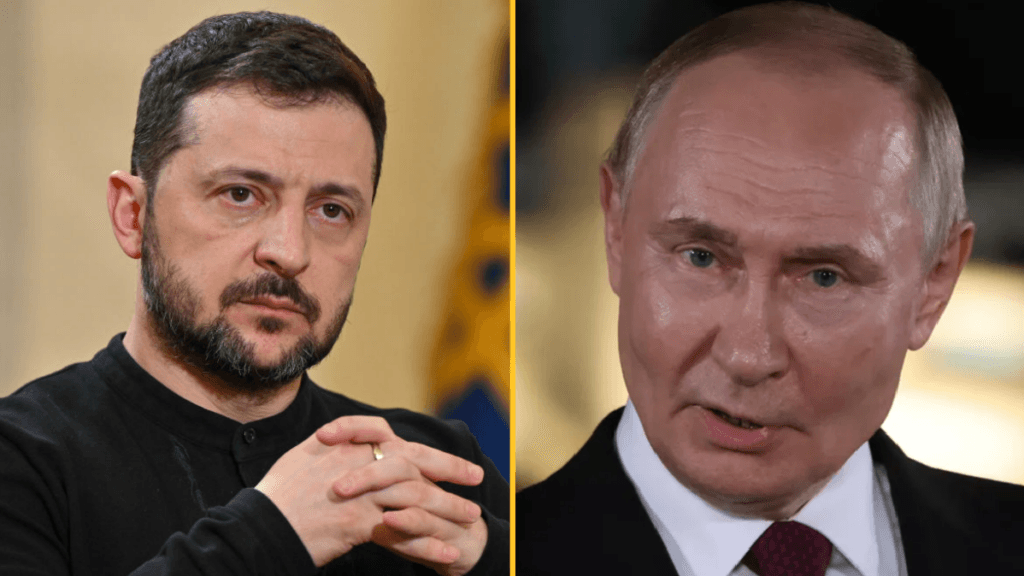
Two days of peace talks have wrapped up in Abu Dhabi, following participation of negotiators representing Russia, Ukraine and the United States.
As the talks concluded, the three parties gave differing positions on how productive they have been.
On the one hand, Russia says that a mutual understanding had been reached on some issues but not on others.
That’s according to Vladimir Medinsky, Russia’s chief negotiator in these talks.
As per usual with Russia, he accused Europe once again, this time of being “complicit in a collective deception” of the Ukrainian people.
They were more optimistic from the Ukrainian side, however.
According to Rustem Umerov, their lead negotiator, on the topics of security and prosperity there was “huge progress”.
And then there’s the US, with their special envoy, Jared Kushner, positioning himself between those two stances.
“Tough but productive”, is how Kushner described the last two days of peace talks.
He added that the biggest hurdle is that of territorial issues.
Russian news agency TASS reported that since the war started in early 2022, a planned, large-scale prisoner exchange between Russia and Ukraine could be the largest to date.
The agency, as they cited Russian General Alexander Zorin, said this could happen in the next two to three weeks, involving more than 1,000 people from each side.
The lead negotiator from Russia’s side echoed these statements, adding that it was during Wednesday’s peace talks that the two sides had agreed on the prisoner swap.
But this is hardly a major shift in the war, or any sign of it nearing an end.
Since the war started, already hundreds of prisoners have been exchanged in several PoW swaps that have taken place.
The Americans will travel on Thursday (12 November) to Moscow to meet Vladimir Putin, as the envoys plan to “go over what was discussed today and try to make more progress on some of the issues”, according to Kushner, who is US Special Envoy for Peace.
He will be joined by United States Special Envoy to the Middle East, Steve Witkoff, for talks with the Russian president.
They will then travel to Dublin to meet with Ukraine’s president, Volodymyr Zelenskyy, and “further explore some of the ideas”.
According to Kushner, Russia wants to see “more progress made” before a Putin – Zelensky face-to-face meeting.
He added that “clearly there's not great trust or love between the leaders”.
Former cabinet secretary and long-serving UK national security adviser, Mark Sedwill, has suggested that Britain and its NATO allies should consider going “on the offensive” to defend against Russia.
As per Sky News, Sedwill said that the UK should put pressure on the Kremlin, cause them a dilemma and create jeopardy, rather than leaving the initiative with Moscow and defending against whatever Russia does.
According to the former cabinet secretary, the UK could do this by using conventional or hybrid defences.
Recently, the UK military chief raised alarm over potential Russian threat.
Air Chief Marshal Sir Richard Knighton told the Financial Times that Britain needed to “catch up with our European allies”.
He warned that the country is not keeping pace with other European nations in preparing for the growing threat from Russia.
Knighton also believes the public needs to understand the risks facing the country, particularly as the government considers increasing defence spending.
He has called on households to make basic preparations for possible disruption, following government advice to keep supplies of food and water at home.
Explore more on these topics:
News
News
News
News
Mass school evacuations across UK after ‘large number’ of bomb threats
The email was headed ‘death is near’ Mass school evacuations have taken place across the UK after numerous of bomb threats were sent to institutions by email. Numerous schools in Scotland and Northern Ireland were evacuated this morning, as per reports from the Mirror, following threats sent by email headed “death is near”. As a […]
News
2h
UK city named most likely to have a white Christmas this year
47 years of weather data analysed gives us the answer. There’s something about waking up on Christmas morning, looking out of the window and seeing everything covered in snow. For many in the UK, though, a white Christmas has become something we see more often in films than outside our own homes. But if you’re […]
News
2h

News
David Walliams named as celebrity in case over sexual misconduct allegations
News