



News

Share
Published 16:31 8 Apr 2025 BST
Updated 16:31 8 Apr 2025 BST
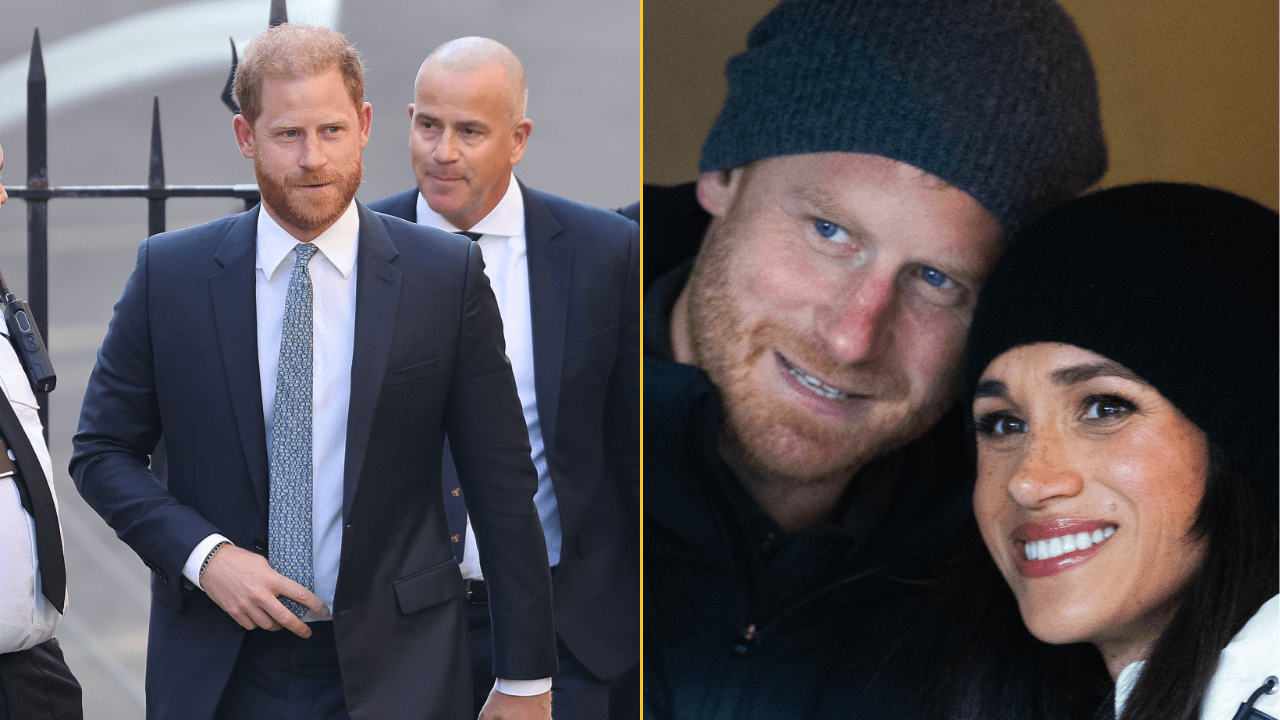
Prince Harry believes he was 'singled out for inferior treatment' and 'forced to step back' from royal life as he makes another court bid to have his taxpayer-funded security reinstated.
The 40-year-old made a surprise appearance at the Royal Courts of Justice in London today after secretly travelling to the UK.
On his way into court, he brushed off questions about his father King Charles.
Reports suggest that the pair did not meet despite them both being in the country for several hours together yesterday.
Harry is challenging the dismissal of his High Court legal action against the Home Office over the decision of the Executive Committee for the Protection of Royalty and Public Figures (Ravec) that he should receive a different degree of taxpayer-funded protection when in the country.
At a previous hearing, the High Court was told that Harry believes his children, Prince Archie and Princess Lilibet cannot 'feel at home' in the UK if it is 'not possible to keep them safe' there.
Last year, retired High Court judge Sir Peter Lane ruled that Ravec's decision, taken in early 2020 after the Duke and Duchess of Sussex quit as senior working royals, was not irrational or procedurally unfair.
However, opening Harry's case today at the Court of Appeal, his barrister Shaheed Fatima KC said the Duke had been 'singled out for different, unjustified and inferior treatment'.
She said: "When Ravec made its February 2020 decision about the appellant's protective security, it did not apply its own terms of reference to that decision-making process."
She continued to say Ravec did not get an assessment from an 'expert specialist body called the risk management board, or the RMB' and came up with a 'different and so-called bespoke process'.
She continued: "The appellant does not accept that 'bespoke' means 'better'. In fact, in his submission, it means that he has been singled out for different, unjustified and inferior treatment. Not only does this bespoke process not involve the RMB, it also involves Ravec considering the reason why the appellant is attending a particular event, even though that is plainly irrelevant to the question of security.
"The appellant's case is not that he should automatically be entitled to the same protection as he was previously given when he was a working member of the royal family. The appellant's case is that he should be considered under the terms of reference and subject to the same process as any other individual being considered for protective security by Ravec, unless there is a cogent reason to the contrary.
"This appeal concerns the most fundamental right: to safety and security of person."
Shaheed Fatima KC said that back in January 2020, the Duke of Sussex and his wife was forced to step back from the role of full-time official working members of the royal family as they considered they were not being protected by the institution, but they wished to continue their duties in support of the late Queen as privately funded members of the royal family.
She added: "(His) security does not appear to have been discussed at any formal Ravec meeting and there are no official notes or detailed minutes recording the approach to be taken to (his) security and the rationale for it."
In February 2020, it was decided that Prince Harry and his family would receive a different degree of taxpayer-funded protection when in the country, after they moved to the US.
In 2023 though, the High court heard that an offer from Harry to pay for security himself had been refused, with the duke's lawyers claiming he 'does not feel safe' when visiting under the new security arrangements.
Barristers for the Home Office claimed that the committee decided that Harry would not be provided protective security 'on the same basis as before' due to him no longer being a working member of the royal family and living abroad most of the time, and that decisions were taken on a 'case-by-case' basis.
Sir Peter dismissed Harry's claim in February last year, and initially denied him permission to challenge the decision at the Court of Appeal.
However, the appeal court gave him the green light to challenge the decision in June last year.
The Home Office is defending the appeal and has asked judges to dismiss the challenge and award costs.
Explore more on these topics:

News
News
News
News
Tommy Robinson comes out in support for Ed Sheeran in career low for singer
Just when Sheeran probably thought things couldn’t get any worse. As Ed Sheeran continues to be the subject of anger over the Macklemore-Palestine controversy, the singer has received the last endorsement he needed. Sheeran has been mired in controversy this week after rapper Macklemore was removed as a support act for expressing solidarity with Palestinians on stage. […]
News
1 day ago
Earl Spencer claims Charles said Diana would be forgotten ‘soon enough’
Earl Spencer shares words Charles uttered after the Diana’s death Earl Spencer has claimed that King Charles told him “we’ll forget her soon enough” in the days after the death of his sister, Diana, Princess of Wales, a claim Buckingham Palace has strongly pushed back against. The allegation appears in an extract from Spencer’s upcoming […]
News
1 day ago

News
UK zoo offered ‘child predator tour’ in ticket promotion
News