







News

Share
Published 15:32 2 Nov 2025 GMT
Updated 14:56 6 Nov 2025 GMT
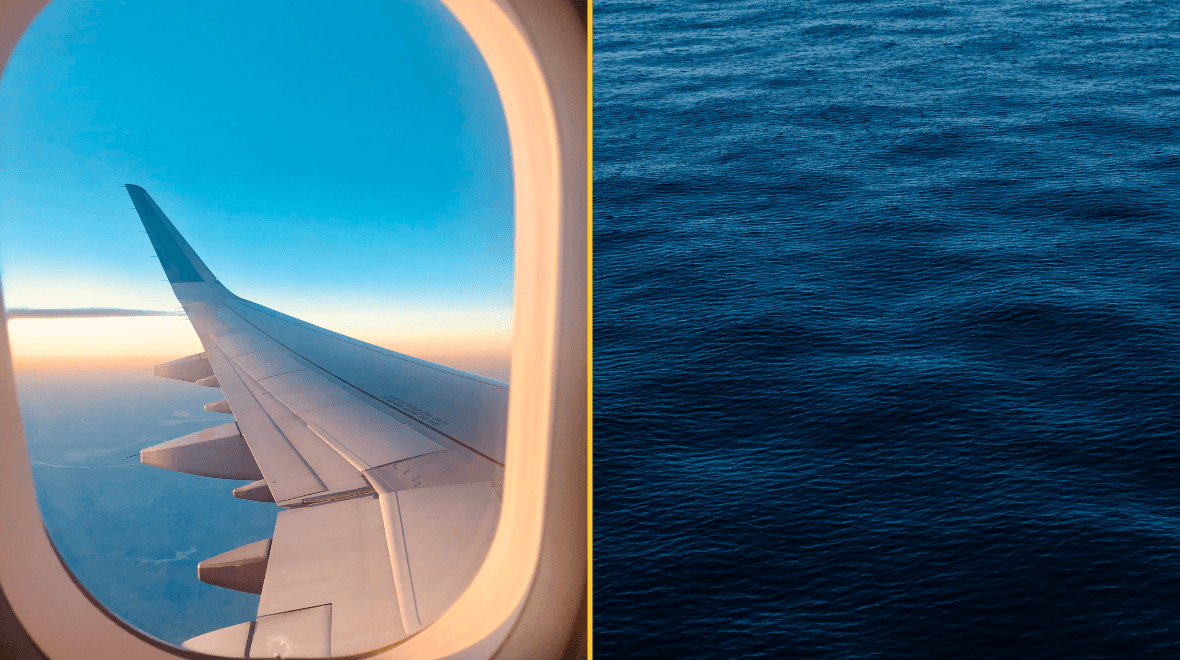
A pilot has shared what really happens if there’s an emergency while flying over open water.
It can be a bit unsettling when the map on your seat screen shows nothing but a vast stretch of blue, so here’s what pilots are trained to do in case something goes wrong mid-flight.
Veteran pilot Steve Schreiber has built up a large following online by answering common passenger questions, aiming to ease the worries of nervous flyers.
When he was recently asked about what might happen during a problem over the Atlantic, he offered his professional insight.
“I’ll be flying from London to Florida – what happens if there’s an issue halfway across the Atlantic when there’s nothing nearby?” one of his followers asked.
Captain Schreiber explained that pilots are constantly training for exactly these situations. He went on to say that every aircraft crossing the Atlantic is assigned a specific ‘track’, ensuring safe separation from other planes, not just ahead and behind, but also to the sides, above and below.
@captainsteeeve Ask The Captain- what happens if there’s an emergency over the ocean?? #olebrandselect #fyp #foryou #pilot #flight #captainsteeeve #aviation ♬ original sound - CaptainSteeeve
While these tracks mainly help keep aircraft safely apart, they’re also positioned so that planes are always within reach of suitable diversion airports along the route.
“Some of those tracks go way up north, near Iceland and Greenland, so there are diversion options there. You’ve got Scotland or Ireland to turn back to as well,” he said.
“Then, on the other side, there’s the Maritimes and Newfoundland. So you’re never more than about two hours away from a suitable alternate airport.
“If you’re on a more southerly track, the Azores are also never really more than two hours away.”
“The middle of the North Atlantic is around 30 West – that’s where we switch from one oceanic controller to another. That’s about as far from land as you’ll ever be,” he added.
While it might feel like the most isolated part of the flight, pilots are constantly monitoring and preparing for any potential issues, Captain Schreiber explained.
“We’re always checking fuel, keeping an eye on systems – that’s what we’re doing during the quieter part of the flight,” he continued.
“I’m always reviewing alternates, checking the weather, thinking: if I needed to divert, how would I do it in the most efficient way? It’s all part of our training. So sit back, relax, enjoy your Diet Coke – you’ll be just fine.”
Well, that’s rather reassuring, isn’t it?

News

News
News

News
Rejoining EU could boost UK economy by £150bn – Goldman Sachs
Analysts from the bank reckon a ‘Breturn’ would boost the UK economy by 2-5% by the start of the next decade. Goldman Sachs has said rejoining the European Union could boost the UK economy by as much as £150 billion. In a note to clients, the Wall Street bank voiced its support for Andy Burnham’s […]
News
14h
Travel chaos across Italian airports after air traffic control failure
Air traffic management capacity has been slashed in half Travel chaos has struck Italy’s major airports after an air traffic control failure left capacity halved on Friday. Hundreds of flights across Italy have been delayed and over 100 cancelled due to “anomalies” with air traffic control (ATC) services. The Italian air navigation service provider, ENAV, […]
News
19h

News
Abu Dhabi Royal was found passed out on street in London after ‘cocaine binge’
News