






News

Share
Published 12:49 27 Oct 2024 GMT
Updated 13:00 27 Oct 2024 GMT
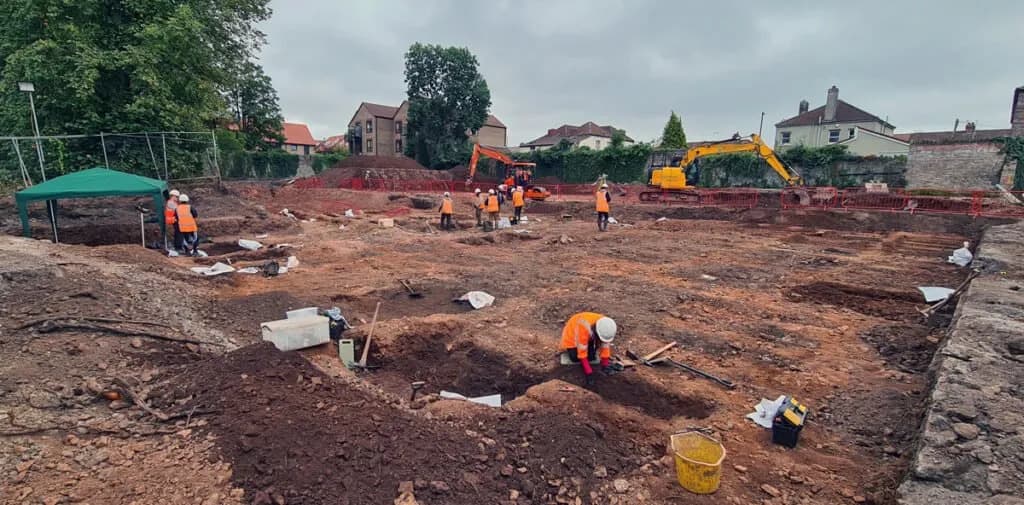
A mass grave has been uncovered in a UK city reflecting the dark history of the site's past.
The findings from the dig was revealed as part of a summary by Cotswold Archaeology detailing the work they have been undertaking on a site in Bristol between 2018 and 2023.
The location in the Stapleton are of the city was set to be redeveloped, but first had to be dug up by archaeologists.
Last being known as Blackberry Hill Hospital, the site had previously been Stapleton Prison and has a long history.
Beginning as a prison in the late 18th century, many prisoners of war from Spain, France, the Netherlands and America were held captive in its walls.
The site was then transformed into a hospital following a cholera outbreak in 1832 before being made into a workhouse in 1837 and eventually back into a hospital.
The hospital closed in 2007.
Rossana Price, Engagement Manager for Cotswold Achaeology wrote in a report: "One of the most striking elements of the excavation is the discovery of a significant number of graves.
"These primarily date from the workhouse period, from 1837 to the late 19th century. Some burials may even date back to the site’s earlier function as a prisoner-of-war camp."
She also said that the site "reflects a dark chapter in Bristol’s social history".
Bristol Live claimed that the site was home to a mass grave of "more than 4,500 bodies".
Archaeologists working on the site described the dig "as complex as it is fascinating" and that it provided "an intimate window into the lives of ordinary 19th-century Bristolians".
Rosanna Price wrote: "The workhouse served as a refuge for the city’s poor, offering shelter to those who had fallen on hard times. Many of the individuals buried here had faced extreme poverty and illness before their deaths.
"Examination of their remains, along with personal items found during excavation, helps archaeologists and historians piece together their life stories—highlighting the societal struggles of the era.
"Through these burials, we gain a rare insight into how the poorest Bristolians lived and died, offering a stark reminder of the challenges faced by many during the 19th century."
Richard Leaman, Diocesan Secretary of the Diocese of Bristol, said: “The removal and reinternment of human remains have been carried out in a reverential and lawful manner, with a marker to bear witness to the new gravesite.”
The complete findings of the dig will be published in 2026.


News

News

News

News
Christmas now costs 54% more than it did last year, according to new figures
Season’s spendings. This year’s Christmas festivities could cost people in the UK a great deal more was typically spent a decade ago, according to new insights from credit card experts Zable, reported on here by The Mail. When the costs of new gifts and decorations, as well as food and drink are all tallied up, […]
News
1 day ago
Everyone is buying wind-up radios and this is one of the cheapest ones we’ve spotted
The cheapest wind-up radio we’ve spotted online The UK Government’s new Be Ready campaign is asking every household to be prepared for multiple days of disruption, with a battery or wind-up radio, a torch and a charged power bank all on its emergency checklist. We have found a radio for under £20, and thousands are […]
News
2 days ago

News
UK nuclear submarine sparks concern after staying underwater for record seven months
News