









News

Share
Published 09:50 23 Jul 2025 BST
Updated 09:50 23 Jul 2025 BST
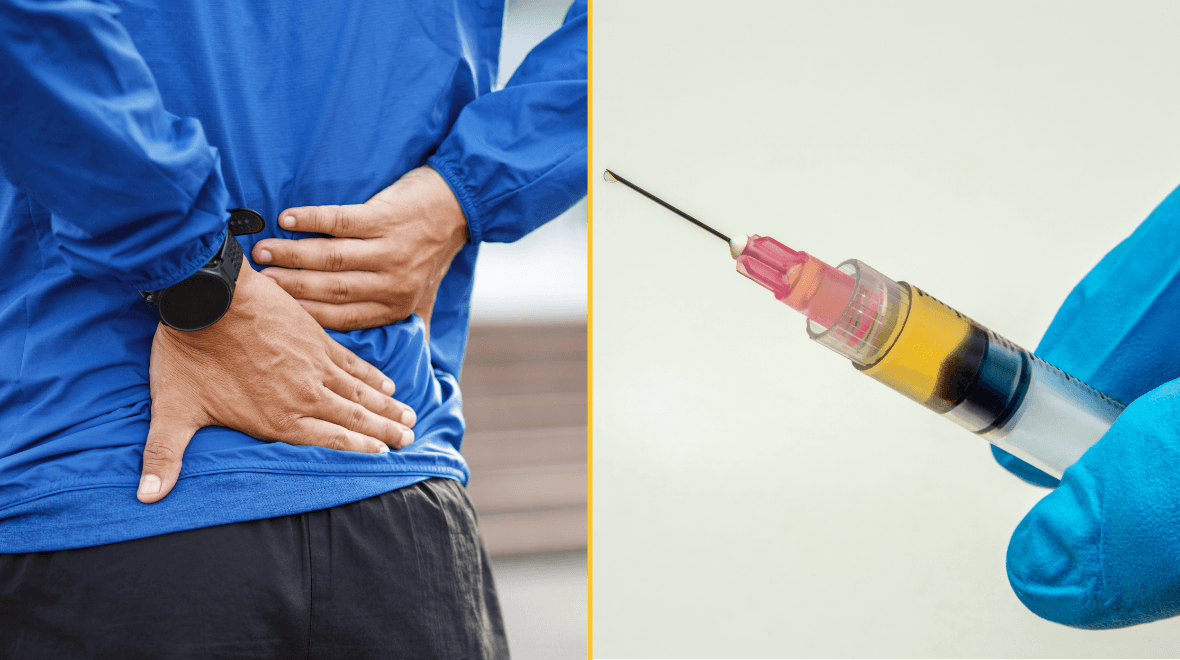
A man has suffered terrifying side effects after injecting himself with his own sperm.
So many questions...
The bizarre case emerged in Ireland in 2019 when a 33-year-old attempted to ease his back pain by injecting himself with his own semen.
The DIY ‘treatment’ resulted in severe complications, from which he ended up in the hospital, prompting medical experts to issue serious warnings.
When he presented to the hospital, the man said he suffered lower back pain after lifting a heavy steel object; however, while being examined, doctors noticed that his arm was unusually swollen.
When quizzed about the inflammation, he revealed that he had been injecting himself for a year and a half with his own semen as an experimental treatment.
The medical team was stunned, as they had never encountered such a case.
Shortly before being admitted to the hospital, he had administered three doses in one single session using a needle he had purchased online.
An X-ray showed that the patient had developed an uncommon condition where air becomes trapped beneath the skin called subcutaneous emphysema.
There was also a visible buildup of sperm within the soft tissue of his arm.
Immediate antibiotic treatment was required, with Dr Lisa Dunne, the lead author of the Irish Medical Journal (IMJ), writing: “Upon further interrogation of this alternative therapy, he revealed he had injected one monthly ‘dose’ of semen for 18 consecutive months using a hypodermic needle that had been purchased online.”
While there had been reports of similar procedures in animals, the IMJ concluded that it was the first case of its kind in humans.
“A search of more eclectic internet sites and forums found no other documentation of semen injection for back pain treatment or other uses,” the report revealed.
The report ended urging people of the 'dangers of enepuncture when carried out by the untrained layperson are highlighted as well as the vascular and soft tissue hazards surrounding the attempted injection of substances not intended for intravenous use.'
Additionally, it warned people of the significant risks of experimenting with treatments that have not undergone rigorous scientific research and clinical trials.
Explore more on these topics:

News

News

News

News
Rejoining EU could boost UK economy by £150bn – Goldman Sachs
Analysts from the bank reckon a ‘Breturn’ would boost the UK economy by 2-5% by the start of the next decade. Goldman Sachs has said rejoining the European Union could boost the UK economy by as much as £150 billion. In a note to clients, the Wall Street bank voiced its support for Andy Burnham’s […]
News
1 day ago
Travel chaos across Italian airports after air traffic control failure
Air traffic management capacity has been slashed in half Travel chaos has struck Italy’s major airports after an air traffic control failure left capacity halved on Friday. Hundreds of flights across Italy have been delayed and over 100 cancelled due to “anomalies” with air traffic control (ATC) services. The Italian air navigation service provider, ENAV, […]
News
1 day ago

News
Abu Dhabi Royal was found passed out on street in London after ‘cocaine binge’
News