


news
Share
Images show damage to moon after SpaceX rocket crashes into the moon at 5,400mph
Published 14:51 6 Aug 2026 BST
Updated 14:51 6 Aug 2026 BST
Homenews
It left a large crater
The first images have been released showing the impact and damage made by the SpaceX rocket that crashed into the moon at 5,400mph.
It comes after part of SpaceX's Falcon 9 rocket was reported to have ‘unintentionally’ crashed on the moon after a year of drifting in space.
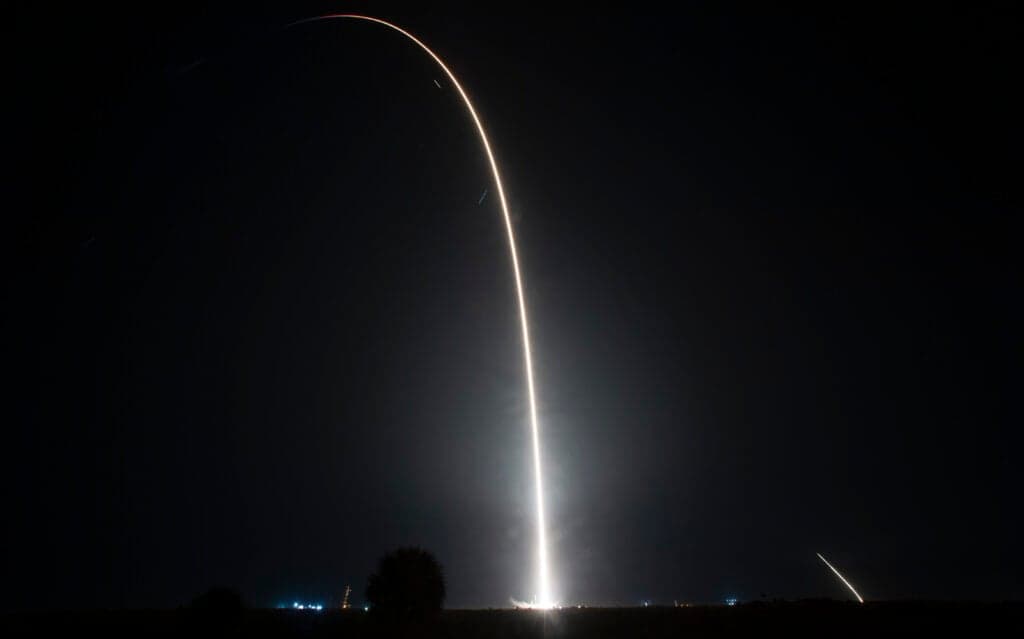
A piece of the rocket detached from the SpaceX structure, as planned. It is said to have been floating in space ever since launching in January 2025.
The four-tonne piece from Falcon 9 is said to have collided with the moon and was captured at speeds of 8,690 kilometres (5,400 miles) per hour.
Although the piece is approximately the size of a building, the collision does not pose any direct danger to Earth.
However NASA has said that the blast carved an 18 metres (60 feet) wide and 4 metres (12 feet) deep crater into the moon.
“The impact poses no danger to Earth and NASA scientists are planning to collect lunar data from the event and refine techniques for tracking objects in space,” said NASA’s spokesperson, Jimi Russell, on Tuesday.
Speaking about this crater, an image has now been shared showing the impact site of the Falcon 9 rocket part.
Released by the Korea Aerospace Research Institute, the image appears to show the damage caused to the moon by the impact, which was predicted to be equivalent to an explosion of three tonnes of TNT.
A South Korean lunar probe detected changes in the lunar surface from before and after the crash.
On Thursday (6 August) the Korea AeroSpace Administration captured images following Falcon 9's upper stage colliding with the moon.
As per MeilBusiness, the Korea Pathfinder Lunar Orbiter adjusted its orbit to pass the collision site and collect images before and after the impact.
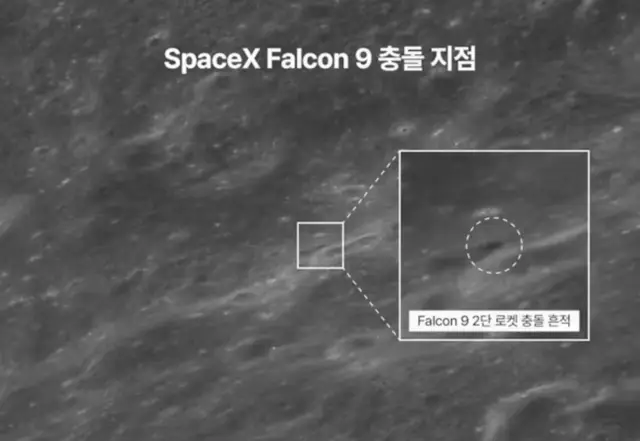
The space agency added that their observation has "identified signs of topographic changes and spread of explosives near the impact site."
What exactly crashed into the moon?
These rocket parts are known as ‘stages’, they detach from the rocket one by one as the module goes deeper into the sky and into space.
The stages are meant to fall back onto earth, typically in oceans or vast plains and deserts where they cause minimum impact to life.
Because Falcon 9’s launch mission necessitated more thrust power, the stage in question detached later than usual launch missions.
The four-tonne stage had been floating aimlessly above Earth in a sea of space debris, an ongoing issue for active satellites that have to steer clear of.
Falcon 9’s stage was not discovered until earlier this year by astronomers. It unfortunately could not be controlled either due to all of its fuel being dumped prior to the discovery.
Julianna Scheiman, SpaceX’s director of NASA science, told reporters on Monday: “What has happened is essentially a mixture of solar activity and gravity forces that have put it on a path toward the moon.”
Space debris impacts on the moon are rare, however they have become more common over the years.
China in 2022, Russia in 2023 and India in 2019 are notable events of moon collisions with space debris.
However, the Falcon 9’s latest impact has been the cause of open discussions amongst NASA and SpaceX to prevent future collisions, according to Scheiman.