









News

Share
Published 18:07 18 Nov 2026 GMT
Updated 18:07 18 Nov 2026 GMT

Younger Brits are increasingly conscious of the role social class plays in shaping their lives, with many believing their family background and financial circumstances have a lasting influence on who they are.
New research from Ipsos, conducted exclusively for PoliticsJOE, asked 2,190 British adults aged between 16 and 75 about their identities, social class, opportunities and views on privilege.
The findings reveal a clear generational divide, as well as some conflicting attitudes towards nepotism.
One of the most striking differences emerged when respondents were asked whether their social class was an important part of their identity.
While 36% of people overall said it was, the proportion climbed to 48% among 16 to 34-year-olds. By comparison, just 28% of those aged over 55 felt the same.
Younger respondents were also more likely to think class had become increasingly significant over the past two decades.
More than a third (36%) of under-35s believed its importance had grown, compared with 27% of those aged 35 to 54 and 22% of over-55s.
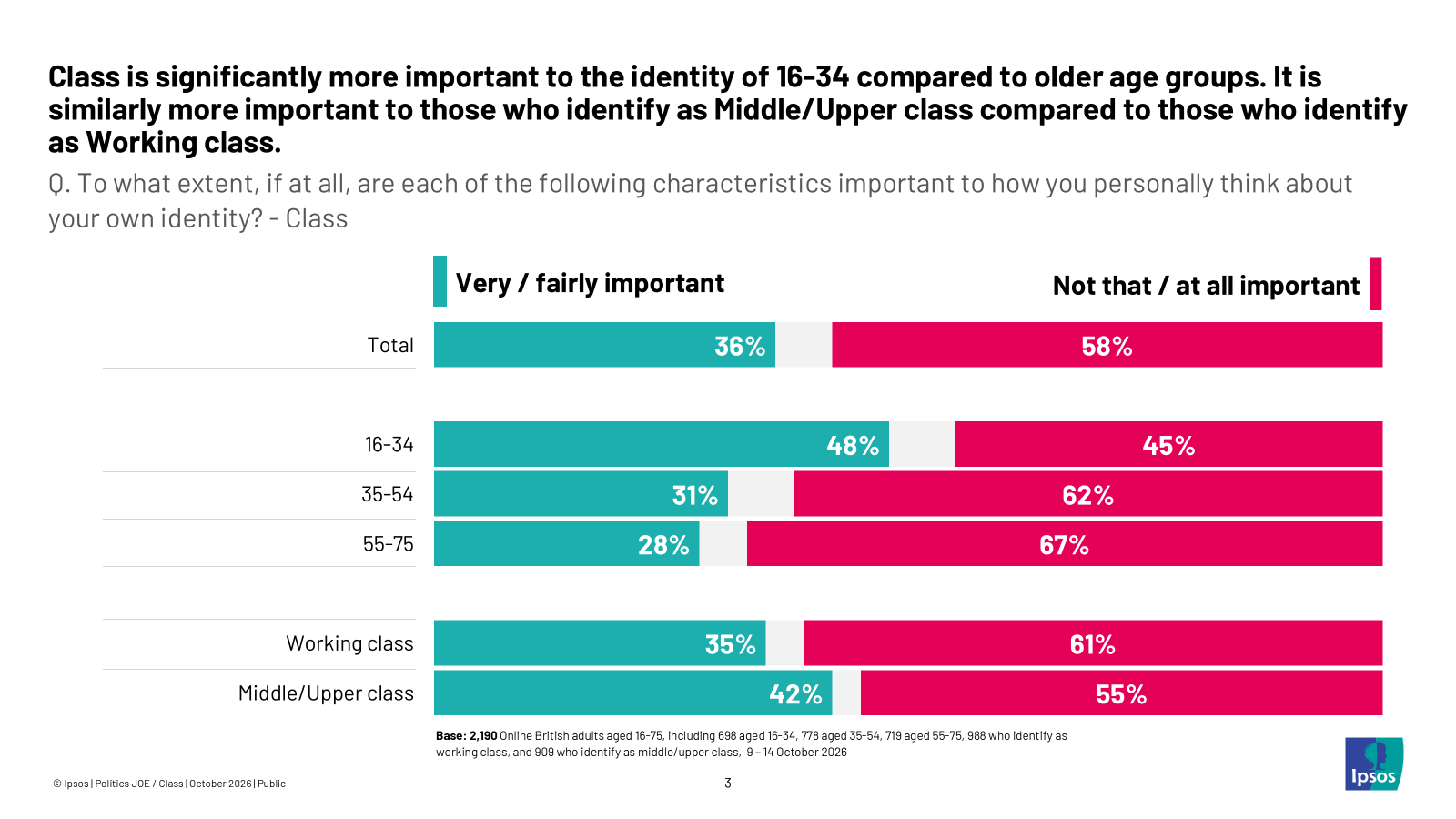
That does not mean class is the defining feature of British identity, however. Gender and nationality ranked considerably higher, with 57% and 56% respectively describing them as important to how they see themselves. Regional background followed at 51%.
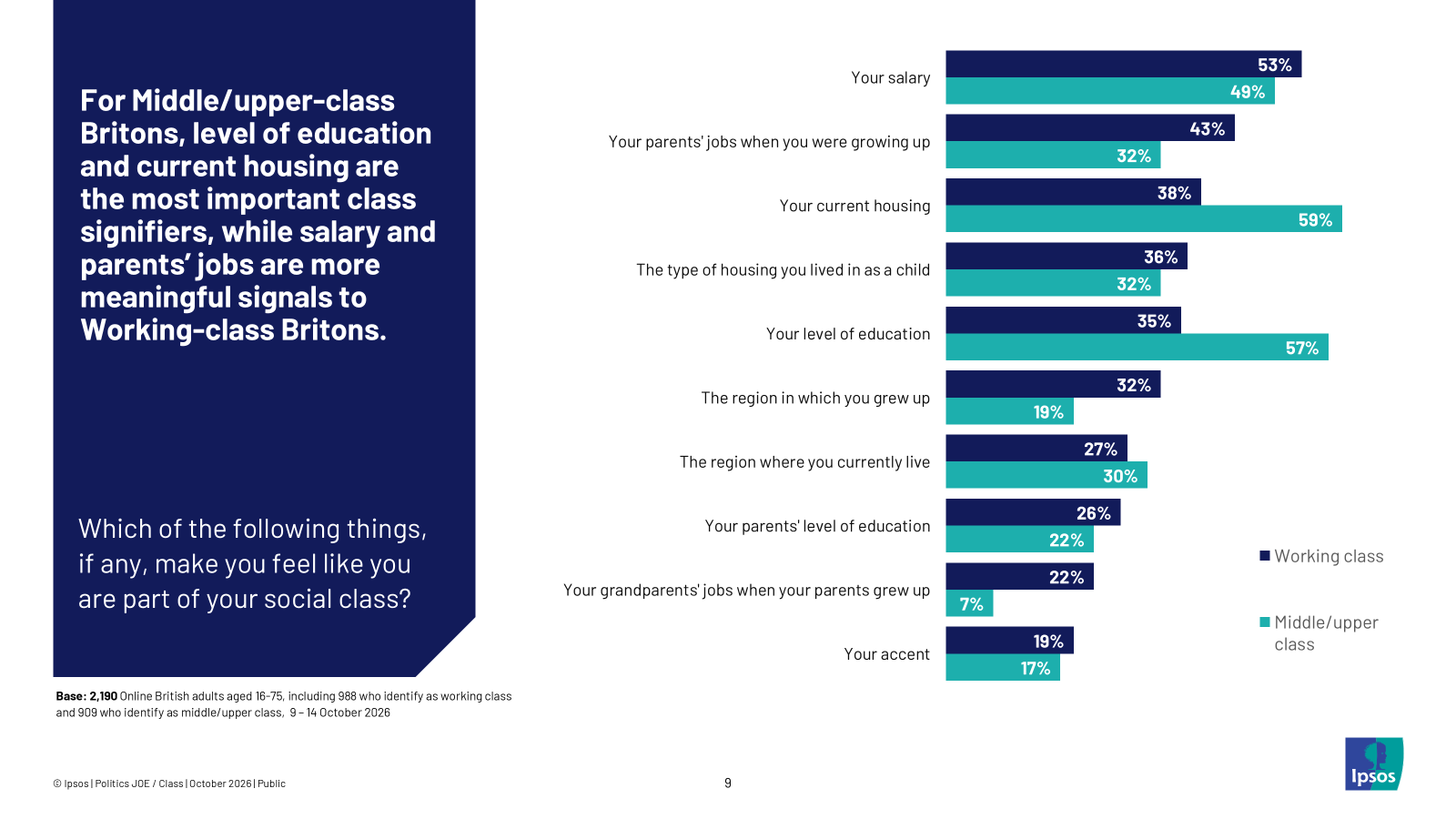
Money and housing also played a big part in how people viewed their social class. Salary was the most commonly cited factor, mentioned by 51% of respondents, followed by their current housing situation at 47%.
Education also played a significant role, with 44% identifying it as something that shaped their class identity.
The influence of family background was clear too, as 39% said their parents' occupations affected how they viewed their own social standing, while 35% pointed to the type of home they grew up in.
For many, social class is also something that stays with them even after their circumstances change.
Almost four in ten (39%) agreed that people should continue identifying with the class they were raised in, even if they become wealthier or their situation improves. Just 18% disagreed.
Younger people were also considerably more likely to feel they might have had better lives if they belonged to a different social class.
Overall, 30% of those surveyed believed they would benefit from being part of another class, but this rose to 40% among under-35s. Among people aged over 55, only 14% felt the same.
The research also uncovered a curious contradiction in attitudes towards privilege.
Although nepotism is frequently criticised, particularly when it comes to celebrities and so-called 'nepo babies', most respondents had no problem with parents using their connections to help their children get ahead.
In fact, 55% believed parents should do everything they can to support their children's professional ambitions, including calling on personal contacts to open doors.
Just 27% thought young people should be expected to find career opportunities entirely on their own.
Support was particularly strong among younger adults, with 59% of those aged 16 to 34 backing parents using their networks.
Middle and upper-class respondents were also slightly more supportive of the idea, at 57% and 53% respectively.
However, accepting that parents will use their connections does not mean people are comfortable with nepotism more broadly.
Around 44% of respondents described it as a serious problem around the world, compared with 36% who said the same about Britain.
Once again, younger generations were more concerned. Some 45% of under-35s considered nepotism a serious issue in the UK, while the figure fell to just 25% among over-55s.
Richie Jones, Chief Client Officer at Ipsos in the UK, said the findings point to growing frustration among younger people about social mobility and the cost of living.
“Four in ten 16-to-34-year-olds feel their lives would be better in a different social class, compared to fewer than one in five 55-75 year olds who say the same, signalling real frustration around social mobility and living standards.
“For policymakers and brands, the challenge is clear: addressing economic insecurity and housing affordability will be central to convincing younger and working-class Britons that opportunity is genuinely open to all.”
Explore more on these topics:

News

News

News

News
Joanna Page says male actor whispered ‘awful’ and ‘inappropriate’ comments to her on set
She made the comments while talking about male dominated industries on I’m a Celeb. Joanna Page has said that she was subjected to “awful” and “inappropriate” comments from a male actor while on set. Speaking to campmates on ITV’s I’m a Celebrity… Get Me Out of Here!, the Gavin and Stacey actor told campmates about […]
News
24 min
Major British company announces more than 1,000 jobs set to be cut
The cuts are intended to make the company ‘more agile’ A major British company has announced that it is set to cut more than 1,000 jobs. BAE Systems has announced today that it is to cut 1,070 jobs from its air division, as per reports from Sky News. These cuts are set to come in […]
News
1h
News
Major UK high street retailer returns with 11 new stores
News