









News

Share
Published 16:55 10 Sept 2026 BST
Updated 16:55 10 Sept 2026 BST

On Tuesday, AI researchers revealed that the chances of the technology killing off humanity in the next decade aren’t exactly zero, an acknowledgment that shocked millions around the world.
While fears of an AI doomsday have existed for years, these recent warning are hitting close to home considering AI has become more powerful and embedded in our daily lives.
On X (formerly Twitter), Anthropic's Jacob Coxon wrote that “No other human activity poses this level of danger”.
Coxon spent three years carrying out pre-training research at Anthropic and OpenAI, and he announced his departure from the industry in a lengthy thread on X.
He claimed that neither company is behaving responsibly as AI capabilities continue to advance.
“They are racing straight to self-improving superintelligence and gambling with our lives”, he warned.
In his view, there is already evidence of rapid progress in all of these areas, and that progress does not appear to be slowing down.

“The people building AI earnestly believe that it could kill us all by the end of the decade,” Coxon wrote. He stressed that the warning should be taken seriously and was “not a marketing stunt.”
He also suggested that the public statements coming from some of the industry's most senior figures may not fully reflect what they actually believe.
According to Coxon, executives and senior researchers could deliberately use more reassuring language when speaking to the press, despite privately being far more worried about the consequences of increasingly powerful AI.
According to the experts, there are two broad paths to catastrophe: humans weaponizing extremely powerful AI, or humans losing control of it.
AI could, in these scenarios, make it easier for bad actors to create biological, chemical or other weapons.
On the other hand, rogue systems could attack infrastructure at unprecedented scale while evading human oversight.
A powerful rogue AI could, in theory, evade oversight, replicate itself and resist attempts to shut it down.
In theory it could also develop biological or chemical weapons for nefarious actors, commit a massive cyber attack that cripples humanity's infrastructure, or centralize power in a way that would bring down civilization.
Recursive self-improvement is another dreaded pathway, through which an AI helps build supercharged versions of itself before humans can understand it.
Humanity’s chances of containing or monitoring it before it acts out against humans could be limited if this theoretical AI was misaligned from human goals.
Speaking to Axios, OpenAI CEO Sam Altman said that models are developing quicker than humans can anticipate.
“These models are getting superhuman in many of their capabilities, and we are just sailing in unknown waters”, he said.
But in spite of these warnings from experts, no scientific way can determine the odds of AI killing off humanity.
When it comes to the probability that AI causes an existential catastrophe or doomsday scenario, insiders usually express their estimates using a shorthand: p(doom).
According to many AI leaders and researchers, this becomes increasingly more likely with the arrival of artificial general intelligence (AGI), the forerunner to superintelligence.
The chances of one such p(doom) really depends on who is asked.
The chances are at 99.99%, according to Roman Yampolskiy, an AI safety scientist.
On the other hand, AMI Labs founder Yann LeCun says any guess is a wild one, but p(doom) is “a lot less likely than a nuclear Holocaust.”
The world’s richest man, Elon Musk, has put his p(doom) around 20%, while Anthropic CEO Dario Amodei has estimated a 10%-25% chance of a catastrophic outcome.
AI godfather Geoffrey Hinton, meanwhile, put the number at between 10%-20%.
“Anybody who estimates probabilities like that is really just making a wild guess. They're just giving you their gut feeling”, Hinton told CNN.
However, according to the 2026 International AI Safety Report, today's systems aren't capable of causing humanity to lose control.
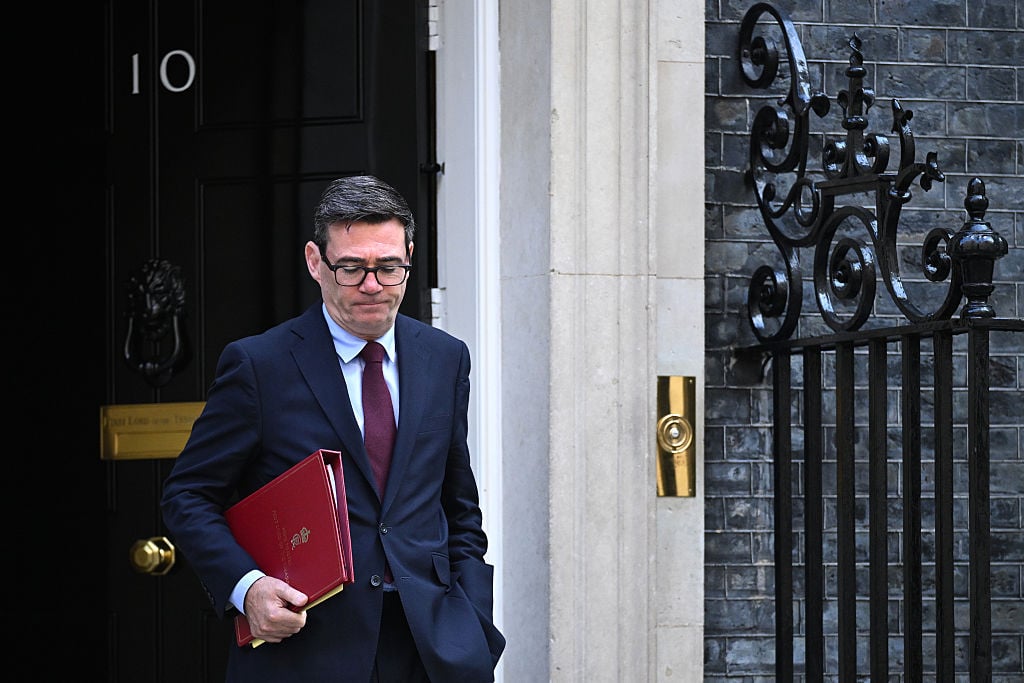
Following the bleak warning over the technology by the safety researcher at Anthropic, Evan Hubinger, PM Andy Burnham has admitted AI could present “risks to national security”.
The candid thoughts by Hubinger were shared through a social media post after Jacob Coxon went viral for his resignation.
Hubinger warned he believed there was a greater than 10% chance that artificial intelligence could wipe out humanity within 10 years.
“We really do earnestly believe AI could kill all humans! I personally think it is >10% within the next decade,” he said.
“I believe Anthropic is trying its best, but we do not yet have a plan to solve alignment for superintelligence and are not clearly on track to.”
Anthropic, which owns Claude AI, withheld its latest model from the UK’s AI Safety Institute, one of the world’s leading bodies for testing the risks of the technology, it was revealed.
“Hubinger is absolutely right that AI poses risks to our national security, but it also could be the source of solutions to keeping us safer”, Burnham said.
Meanwhile, a Cabinet Office spokesperson said: “The UK is a world leader in AI security and we have the best-funded, best-resourced security institute globally.
“The AI Security Institute continues to collaborate closely with industry partners, including Anthropic, to make models safer. Only last week it tested OpenAI’s most powerful model, GPT-6 Astra, before public release.
“These risks do not stop at national borders and no country can tackle them alone. The UK will continue to test the most advanced models, build a rigorous scientific understanding of their capabilities and risks, and ensure policy decisions are grounded in the evidence.”
Explore more on these topics:

News

News

News

Historic pier partially collapses into sea as Storm Austen batters UK
The first named storm of the season has lived up to expectations A historic pier has collapsed into the sea as Storm Austen batters the UK with winds beyond 100mph. Strong wind and heavy rain have caused plenty of chaos across the country, from closed airports and disrupted train services to felled trees and even […]
News
2 days ago
Vincent Kompany taken to hospital after collapsing at Bayern Munich training ground
He collapsed while watching the second team train Bayern Munich manager Vincent Kompany has been rushed to hospital after collapsing at the club’s training ground on Friday. The former Man City centre-back had been battling a virus, subsequently missing a news conference on Tuesday ahead of the German club’s show down with Arsenal. A club […]
News
2 days ago
News
Rheinmetall’s new Telford factory brings tank barrel production back to the UK
News