








News

Share
Published 17:16 9 Oct 2025 BST
Updated 22:23 9 Oct 2025 BST
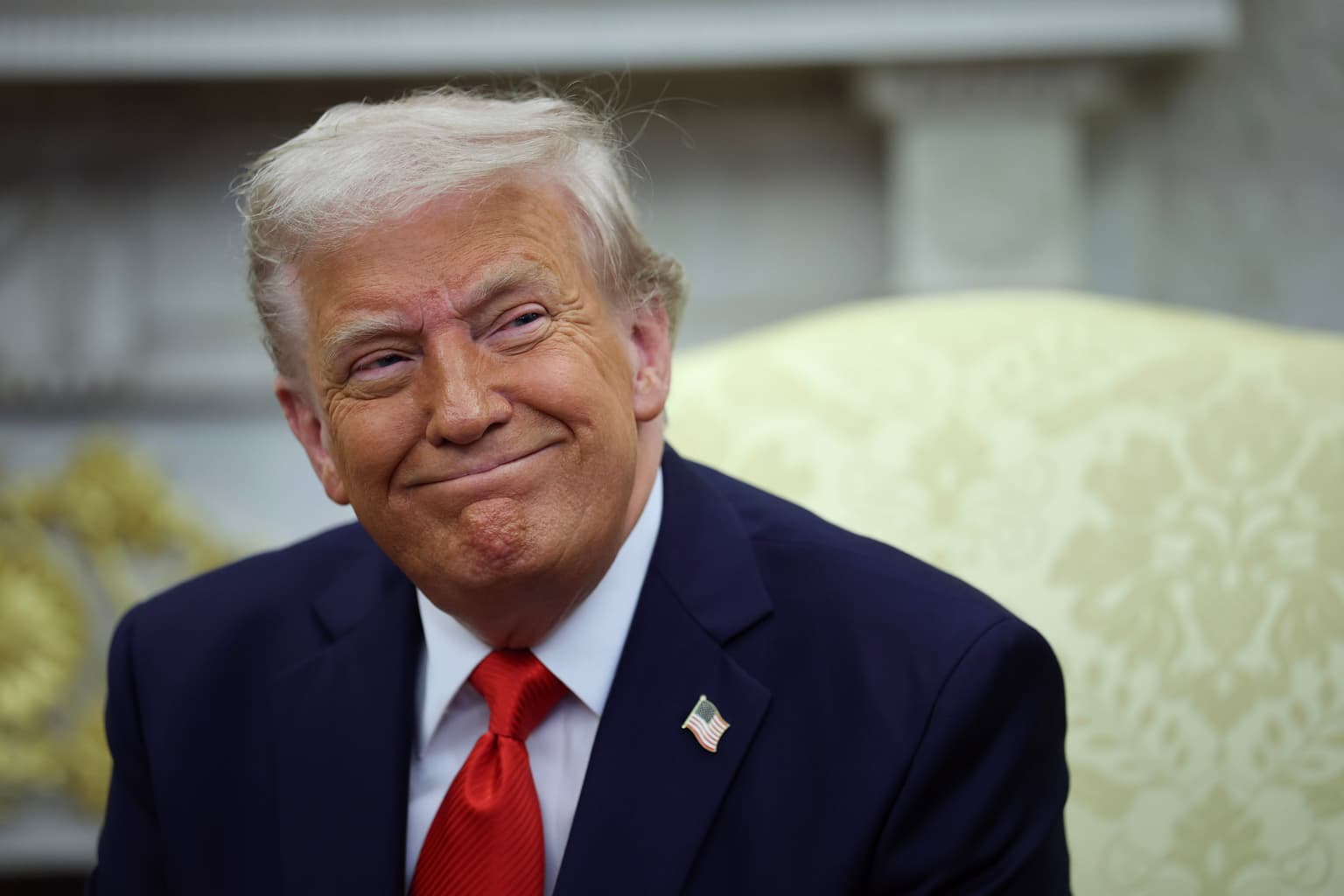
The world is a pretty mental place right now, and nothing is more indicative of that than Donald Trump being the frontrunner for one of humanity's most prestigious awards, the Nobel Peace Prize.
First established in 1895 and first awarded in 1901, the Nobel Peace Prize is one of the five awards established by the will of Swede Alfred Nobel, which rewards people and groups for progressing humanity.
The categories are in Peace, Chemistry, Physics, Physiology or Medicine, and Literature.
The rumours have been swirling for some time that Trump could have a rather sizeable foot in the door for the award, notably after being nominated by multiple world leaders, credited with ending at least seven wars.
These include Hun Manet and Government of Cambodia, Benjamin Netanyahu and the Government of Israel, and Asim Munir and the Government of Pakistan.
Cambodia nominated Trump "for his crucial role in restoring peace and stability at the border between Thailand and Cambodia".
Pakistan put his name forward for "his attempts to de-escalate the 2025 India-Pakistan conflict, seeking a resolution through dialogue and backchannel diplomacy, while emphasizing the principles of restraint, regional stability, and the prevention of armed escalation, despite India's stated refusal of third-party mediation and its insistence on bilateral engagement".
Meanwhile, Israel nominated the US president "in recognition of his pursuit of peace and security in the Middle East and Trump’s role in brokering the Abraham Accords and the ceasefire and hostage releases in Gaza".
Trump himself has even suggested his deserving nature of the award, claiming to have ended at least seven wars during his premiership.
At the end of August Trump said: "I've done six wars, I've ended six wars.
"If you look at the six deals I settled this year, they were all at war. I didn't do any ceasefires."
The following day, in an interview with Fox News, he revised the number to seven wars.
Donald Trump has claimed to have ended seven wars with a peace deal between Israel and Hamas reportedly close to happening too.
While the claim to have "ended" seven wars is slightly hyperbolic from Trump's camp, there is no denying that he has genuinely brought peace to multiple countries around the world.
Whether it be through sheer pig-headed force or clever, well-thought out negotiations, he has certainly made a difference in a number of places (just maybe not in the US).
Below are the countries claims to have brought peace to:
Thailand and Cambodia have been quarrelling over a 500-mile stretch of border for over 100 years which sparked up again earlier this year, leading to some fighting on the borders.
Trump used social media to call out the nations and "request a Ceasefire, and END the War", using tariffs as economic leverage which ultimately dampened tensions.
However, it was Malaysia that hosted peace talks in this instance.
The conflict between Armenia and Azerbaijan is arguably Trump's greatest success, despite little coverage compared to the other 'wars' on this list.
The former Soviet nations have been warring for 40 years with the most recent fighting taking place in 2023 over the disputed status of Nagorno-Karabakh.
However, Trump, to his credit, managed to sit both leaders down and work out a peace deal, seeing both leaders nominate him for the Nobel Peace Prize.
Whilst Trump did indeed host delegates from Rwanda and the Democratic Republic of Congo at the White House, there was no deal struck with group responsible for reigniting historic hostilities between these African nations, the Rwandan-government backed rebels, M23.
However, representatives of these nations did sign a deal to honour the ceasefire struck in 2024 at a meeting in Washington DC.
Israel and Iran is probably the most high-profile conflict which remains in the recent memory of most people.
Notably it is the only conflict where Trump used military force.
While the fundamental issues surrounding Iran and their polarising nuclear programme still remains, Trump did manage to quieten down the eruption of fighting which saw the exchange of hypersonic missiles, notably with significant breaches of Israel's iron dome.
The conflict which held potentially the most jeopardy while also failing to ever really materialise into much was without doubt between India and Pakistan.
Two nuclear-armoured nation, disputing over borders drawn up by the British during partition in 1947.
Kashmir was at the centre of the tension, and while little direct combat happened, the threat was real and, as claimed by Trump himself, he was a key part in mediating talks to help put out the fledgling conflict.
The conflict most fitting of the term 'dispute' in this list is Ethiopia and Egypt, which Trump says he helped mediate by claiming the US had funded a dam in Ethiopia.
Effectively, Ethiopia has constructed a dam of high national importance on the River Nile, cutting some water supply to Egypt, leading to tensions.
After Trump claimed (somewhat dubiously) that the US had helped fund this dam the dispute seemed to quieten down.
Finally, there is Serbia and Kosovo, a long-running and deep-cutting conflict which led to the independence of Kosovo from Serbia in 2008.
Being neighbours, the nations have often quarrelled since and following a flare up earlier this year, Trump claims to have once again used economic leverage as a way to calm things down.
He posted online: "Serbia, Kosovo was going to go at it, going to be a big war. I said you go at it, there's no trade with the United States. They said, well, maybe we won't go at it."
Meanwhile, it is of course worth remembering efforts to host Ukraine and Russia in talks about that ongoing war.
Furthermore, with a stoppage time peace deal reportedly agreed between Israel and Hamas, Trump could soon be claiming an eighth war ended on that list.
While it's pretty undeniable that, despite the fact that much of this peacekeeping was done from behind the guise of social media, Donald Trump has certainly been influential on the world stage and has brought peace to many hot spots around the globe.
The very fact both parties in many of these quarrels have nominated Trump for a Nobel Peace Prize is proof of that, love of loathe the guy.
However, ironically for once, the world isn't just everywhere outside the US, but also includes inside the world's most powerful nation.
While Trump has been making buddies abroad, the same cannot be said for his domestic policy which has seen his government shutdown, thousands of workers at risk of losing their jobs and the deployment of the National Guard to major US cities such as Washington DC.
This latter has truly been controversial, suggesting an overreaching of power likened to dictatorship and has been unpopular amongst many - after all, using the military to try and bring supposed needed order to your nation's capital is not exactly the best example of a peaceful coexistence.
While the official list of nominees is kept confidential, if the nominator makes the nomination public, reported lists can be found.
This leaves for fascinating reading, with this year's nominees featuring the likes of former Pakistani cricketer-turned-politician Imran Khan and Trump's former first buddy Elon Musk who has been nominated by Slovenian politician Branko Grims for "his consistent commitment to the fundamental human right to freedom of expression, and thus to peace."
Meanwhile organisations also feature such as the Campaign for Uyghurs and the Children of Gaza.
A full list can be viewed here.
Short answer, yes (probably).
It is likely Trump will win the award, and looking on the grand scheme of things, it's hard to say he does not deserve it either.
The US president is the bookies' favourite at evens, and while the other nominees have done great things, none hold the profile or the calibre of the achievements as Donald Trump.
So, just this once, it might be worth giving it to Trump and calling it a rare win for a man who certainly has brought plenty of controversy to his second term in charge of the famous U, S of A.
Explore more on these topics:

News
News

News

News
If the Union came to an end, would England be the winners, losers, or both?
What would be the outcomes from a Union breakup Lots of questions are rising over the ongoing talks between Scotland, Northern Ireland and Wales in a potential break of the United Kingdom as we know it. This comes as leaders from all three countries have signed an agreement of cooperation in Cardiff, on Monday, calling […]
News
9h
Hayden Panettiere’s ‘cause of death revealed’ after actress’ death aged 36
Her cause of death was a mystery Reports have revealed the cause of death of Hayden Panettiere, who died last month. Panettiere died aged 36 on 16 August after she was found responsive at her home. Speaking to TMZ, law enforcement sources said that she allegedly took oxycodone laced with fentanyl. She was provided with […]
News
9h
WATCH: Moment Russian drone strikes close to Boris Johnson’s train in Ukraine
News