




News

Share
Published 18:04 9 Oct 2025 BST
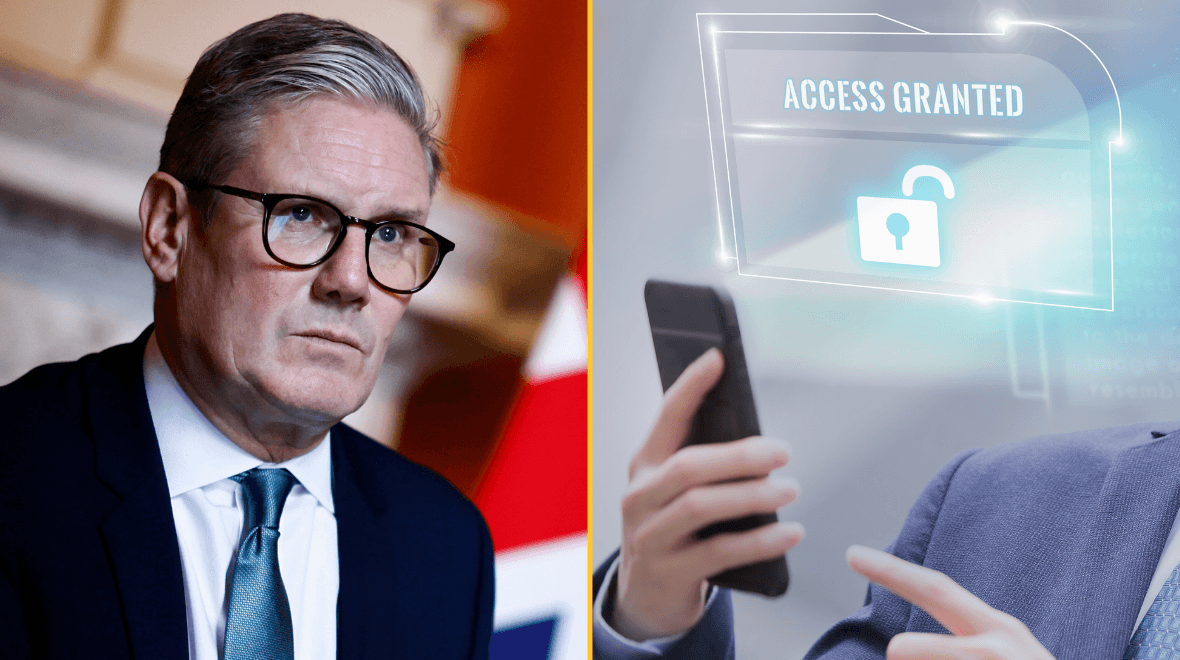
Digital IDs could be mandatory for anyone on benefits, the Prime Minister has suggested.
After meeting with the architect of India’s national identification system, Sir Keir Starmer said the system could work similarly to the one in place in the country.
It was announced last month that the new digital ID system would come into play by 2029 and would be mandatory for people working in the country as part of a bid to tackle illegal migration.
Originally, photo IDs were set to be stored on smartphones in a similar way to digital bank cards and would contain information on the holder’s name, residency status, date of birth, and nationality: however, such plans have faced major opposition.
During his recent trade mission to Mumbai, the PM suggested his desire to expand beyond current plans to a voluntary national ID which would manage public services such as benefits and bill payments.
As he led the mission, he met Nandan Nilekani, founder of the Indian technology company Infosys, to discuss India’s voluntary digital ID, which is the largest of its kind in the world, covering all but a fraction of India’s population.
While it is technically a voluntary system, concerns have been raised that those without an Aadhaar number have been left locked out of access to benefits.
Privacy and security concerns around the IDs have also highlighted.
Prior to the meeting, Starmer told reporters that he believed the Government’s work on mandatory ID was a 'really important' factor in tackling migration.
“I think there is a case to be made about the benefits for voluntary ID into other areas, and obviously we need to make that case," he added.
“I think it’s a really important discussion for us to have. So on the one hand, it’s mandatory for work, but I actually think it would be a good passport.
"You know, I don’t know how many times the rest of you have had to look in the bottom drawer for three bills when you want to get your kids into school or apply for this or apply for that. Drives me to frustration.”
An official spokesperson for the PM revealed that the half-hour meeting had given him a chance to hear about how the Indian system had been 'useful' for managing welfare services.
Additionally, the spokesperson explained how the private sector has also managed to 'dock' into India’s system, but signalled that the UK system would be run by the public sector.
He went on to say how the UK's digital ID would not necessarily be a copy of India’s as it was not 'directly applicable nor comparable'.
The spokesman also defended the Government against the backlash of the public, when he was asked about the 2.8 million signatures on a petition against the measures.
“When you set out radical, ambitious public service reform it is natural for people to have thoughts and we obviously acknowledge them,” he said.
Explore more on these topics:
News
News
News
News
Trump announces ban on a number of media organisations from White House
‘Other news outlets to follow’ Major traditional news media organisations such as the CNN, MS NOW and Politico have been “immediately” banned from the White House, as per US President Donald Trump. Trump said on Friday in posts made on Truth Social and X (formerly Twitter) that they “constantly write or report fiction or lies”. […]
News
1h
Trump claims to have reached agreement with Denmark over Greenland
‘This is a dream come true for the United States of America’ Donald Trump has claimed to have reached an agreement with Denmark over Greenland. The US president has long coveted the Danish autonomous territory which sits just to the north east of continental North America, and now it looks like he has got – […]
News
13h

News
No 10 leak reveals how Keir Starmer planned to stay in power as PM before stepping down
News