


Fitness & Health

Share
Published 12:50 6 Dec 2018 GMT
Explore more on these topics:
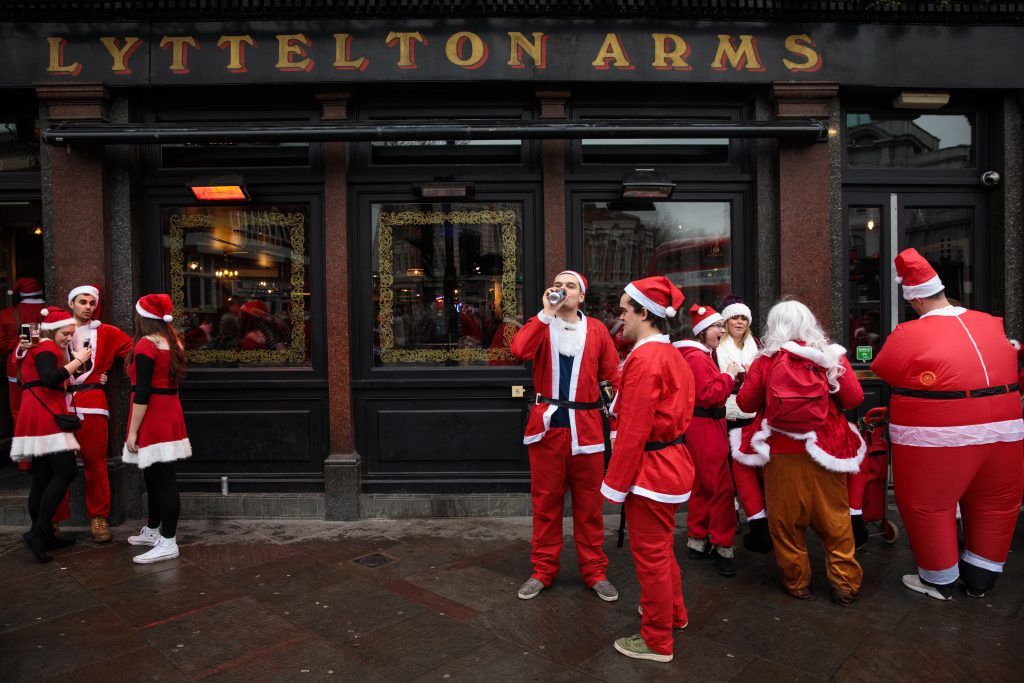 LONDON, ENGLAND - DECEMBER 10: Revellers taking part in Santacon stop for a drink outside the Lyttelton Arms pub on December 10, 2016 in London, England. Santacon is an annual parade taking place in cities around the world and sees revellers dressed in Father Christmas costumes take to the streets to spread seasonal cheer. (Photo by Jack Taylor/Getty Images)[/caption]
Staying true to New Year's resolutions also seems to be quite a sticking point. Two thirds (67%) of those polled admitted they find these promises hard to maintain throughout the whole year, with a quarter of Brits admitting they tend to give up before January is over. A third (29%) confessed it’s hard to suddenly cut out all the treats and indulgences that December brings.
In fact, eight out of ten people (83%) say that they feel December and January are months of two extremes, with two thirds (67%) claiming they believe they’d feel better and be happier if they could practise moderation and balance in what they eat and drink throughout the year.
It seems as if we are being influenced by Christmas fomo.
According to Clinical Psychologist, Rachel Andrews: "We have so many unrealistic expectations about Christmas - idealised images from films, TV and social media - which lead us to think that we should be celebrating Christmas in a certain way."
"When we can’t achieve these ideals, it triggers concern that we aren’t ‘living our best lives’ which can lead to feeling pressured into trying to do everything - which is exhausting and unsustainable."
And as much as we would like to go big or go home, Andrews says this doesn't have to be the case: "We need to feel confident that we can make individual choices about how we want to spend the festive period and the new year to ensure we find a balance that works for us - it doesn’t have to be all or nothing."
LONDON, ENGLAND - DECEMBER 10: Revellers taking part in Santacon stop for a drink outside the Lyttelton Arms pub on December 10, 2016 in London, England. Santacon is an annual parade taking place in cities around the world and sees revellers dressed in Father Christmas costumes take to the streets to spread seasonal cheer. (Photo by Jack Taylor/Getty Images)[/caption]
Staying true to New Year's resolutions also seems to be quite a sticking point. Two thirds (67%) of those polled admitted they find these promises hard to maintain throughout the whole year, with a quarter of Brits admitting they tend to give up before January is over. A third (29%) confessed it’s hard to suddenly cut out all the treats and indulgences that December brings.
In fact, eight out of ten people (83%) say that they feel December and January are months of two extremes, with two thirds (67%) claiming they believe they’d feel better and be happier if they could practise moderation and balance in what they eat and drink throughout the year.
It seems as if we are being influenced by Christmas fomo.
According to Clinical Psychologist, Rachel Andrews: "We have so many unrealistic expectations about Christmas - idealised images from films, TV and social media - which lead us to think that we should be celebrating Christmas in a certain way."
"When we can’t achieve these ideals, it triggers concern that we aren’t ‘living our best lives’ which can lead to feeling pressured into trying to do everything - which is exhausting and unsustainable."
And as much as we would like to go big or go home, Andrews says this doesn't have to be the case: "We need to feel confident that we can make individual choices about how we want to spend the festive period and the new year to ensure we find a balance that works for us - it doesn’t have to be all or nothing."
Fitness & Health

Fitness & Health

Fitness & Health

‘Amazing’ air cooler drops to under £40 ahead of the next UK heatwave
This article contains affiliate links. We may earn a commission on any sales generated from it.
Fitness & Health
6 days ago
‘People called us stupid over 40-year mortgage – now we plan to retire in our 50s’
“There were quite a lot of offensive comments telling me I was ‘stupid’ or ‘why don’t you understand this” A young couple who took out a 40-year term mortgage still plan to retire in their fifties. Bryony Clarke, 27, purchased her three-bed semi-detached house in December 2023 for £247,500 with partner Charlie, 27. They put […]
Fitness & Health
6 days ago
Fitness & Health

Fitness & Health
Fitness & Health


