fitness & health
Share
We spoke to Muslim bodybuilders to ask how they maintained muscle mass during Ramadan
Published 12:06 6 Jul 2016 BST
Updated 15:03 6 Jul 2016 BST
Share
Published 12:06 6 Jul 2016 BST
Updated 15:03 6 Jul 2016 BST
 Hey Sarmad, tell me about how you train normally...
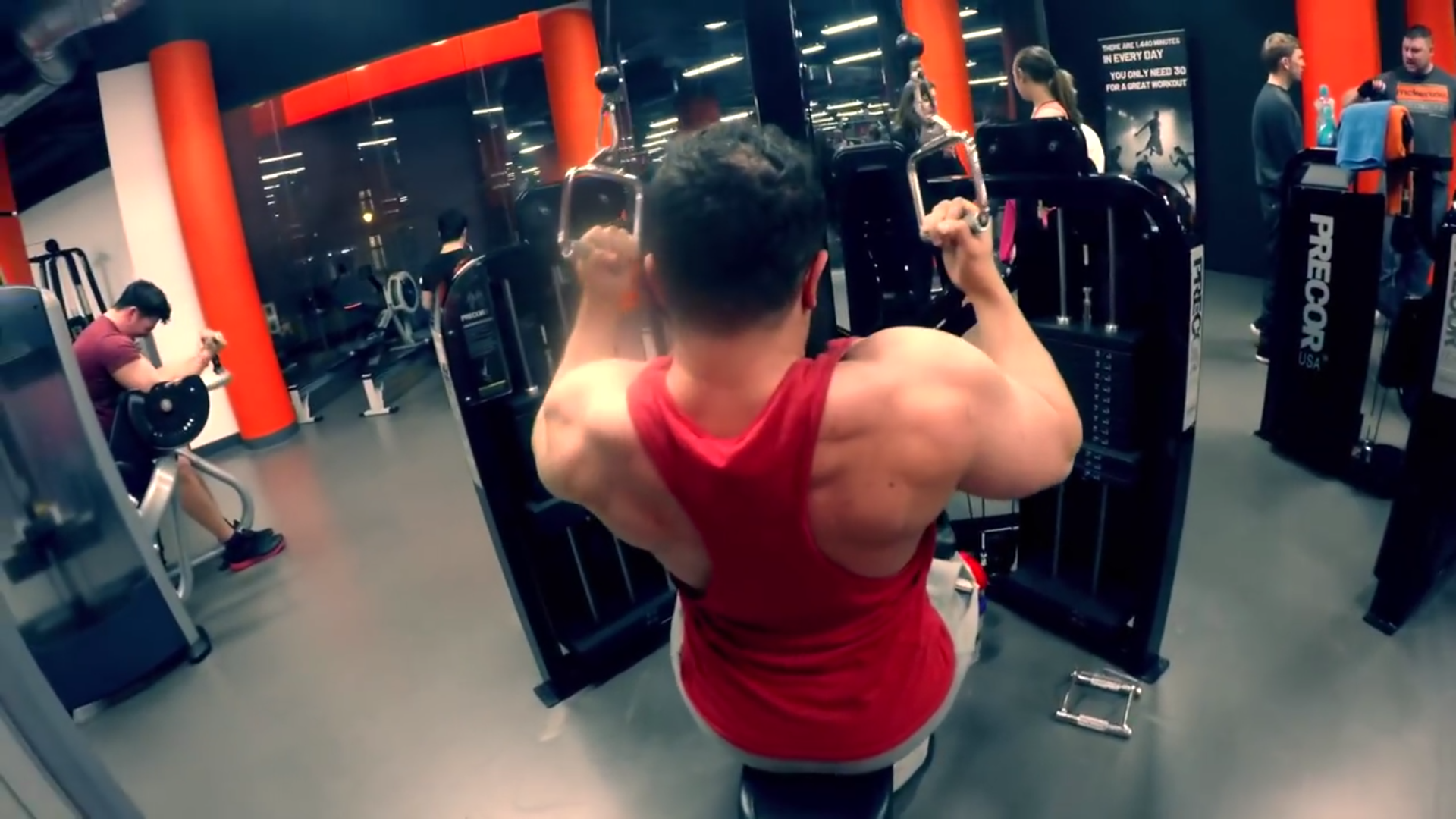
I have been training for about four years consistently now, prior to that I use to train from when I was 18, however it was inconsistent, I'd do six months of training then fall off, but now as a qualified personal trainer and powerlifting coach I train five-six days a week.
In terms of my goals, I basically train primarily on strength. I work towards increasing my maxes on the bench press, deadlift, squat and overhead press. However more recently I've gone back to working more on my bodybuilding and intertwining both my strength training and bodybuilding together.
I also do Mixed Martial Arts (MMA), mainly for my love for the sport, self defence, increasing my flexibility, fitness and reaction time. It’s always good to be a jack of all trades especially when it comes to keeping the body healthy and strong.
So how does your training regime change during Ramadan?
Hey Sarmad, tell me about how you train normally...
I have been training for about four years consistently now, prior to that I use to train from when I was 18, however it was inconsistent, I'd do six months of training then fall off, but now as a qualified personal trainer and powerlifting coach I train five-six days a week.
In terms of my goals, I basically train primarily on strength. I work towards increasing my maxes on the bench press, deadlift, squat and overhead press. However more recently I've gone back to working more on my bodybuilding and intertwining both my strength training and bodybuilding together.
I also do Mixed Martial Arts (MMA), mainly for my love for the sport, self defence, increasing my flexibility, fitness and reaction time. It’s always good to be a jack of all trades especially when it comes to keeping the body healthy and strong.
So how does your training regime change during Ramadan?
 During Ramadan I've been training after my shifts as a personal trainer and fitness instructor, a few hours after Iftar, or half an hour before Iftar (breaking fast). I try to keep my training short (between 20-30 minutes) as my goal within Ramadan is not so much making gains but to keep what I have gained over the previous months and maintain and then to further go on after Ramadan to break through that maintenance stage.
I train on the 3 compound lifts mostly during Ramadan (bench press, squat and deadlift), and I train 3 days a week. I do not want to make my training days intensive but manageable so that I am not losing muscle tissue due to the lack of nutrition. What I mean by not having intensive training days is that I keep my set ranges short (between 2-5 sets) and my rep ranges low (between 3-5 reps) while doing a heavy amount of weight, something to hit my central nervous system hard enough but making sure it's low in volume so that the intensity of the training session is not taking me into over training during Ramadan.
Usually my normal training days last 1-2 hours as I include other accessory exercises such as bicep curls, shoulder raises, leg extension etc. I spend 5-6 days a week in the gym normally but during Ramadan it is shortened to three just to maintain my strength.
I usually work out my caloric intake, and try to stick to it, however during Ramadan it was pretty much impossible to try to hit the same calories I was taking in before. This is due to stomach shrinkage, loss of appetite and lack of time.
What I do is add supplements like whey protein, protein pancakes and multivitamins. This ensures that I get a good spectrum of nutrition as well as a high amount of protein. I usually take my protein shake straight after my gym session with a few dates and just before the dawn prayer. It is hard trying to get in the amount of calories to gain muscle but what you can do is add these supplements to make it easier to retain what gains you have made.
I really do implore Muslims who train to take whey protein and multivitamin tablets to get a better intake of nutrition. My plan in terms of eating is breaking my fast with whey protein & dates if I train just before Maghrib (evening prayers), going home and eating one wholesome meal, protein pancakes an hour or so later, fruit and then another protein shake with multivitamins… oh and water!
https://www.youtube.com/watch?v=3FD0vy47uJQ
With the rise of social media it's not surprising that muslims now are more self conscious, however I don't believe that is always the case. Some or many Muslims train for the simple fact that they (myself included) must look after the vessel that God has given us, so that we may worship God to best of our ability and having a healthy and strong body helps with that. Our body has a right over us and we must always try our best to look after it.
I think that social media has had the most influence, especially Instagram, YouTube and Twitter. Most Muslims want to gain a physique like the ones they see on such platforms and it inspires them to go out and do so.
More information on training is readily available as well, whereas when I first started it was difficult to find such information. This has also played a part in increasing the number of Muslims now training.
I've been training for about two and a half years, and my general goals are around strength with a focus on powerlifting.
Training frequency is significantly reduced in Ramadan so where outside of Ramadan I would be training 3-4 times a week, the maximum I do in Ramadan is 1-2 days. Additionally, the focus in those sessions is purely on the three main lifts; squat, deadlift and bench. Usually combining two of them in a single session.
Outside of Ramadan the training would be supplemented by accessory lifts to bring up any weaknesses however in Ramadan any accessory lifts are dropped.
The big challenge in Ramadan is trying to not gain fat mainly due to the types of food we associate with iftar time (carby, starchy, greasy foods). Training isn't the main challenge in Ramadan, it's the diet!
In Ramadan, during suhoor I eat slow energy releasing foods such as oats, casein, yoghurt, chia seeds etc. For iftar, it's pretty similar but chicken, legumes, whey protein etc. The temptation of a samosa is never too far though.
I don't think it's just Muslims that have been training more, we're just following the general trend.
Much like the general trend and it applies to Muslims as well, people started getting into fitness and then found their own thing, whether that's powerlifting, bodybuilding, Olympic lifting or even CrossFit.
Muslims by and large however still prefer bodybuilding for aesthetic reasons though.
During Ramadan I've been training after my shifts as a personal trainer and fitness instructor, a few hours after Iftar, or half an hour before Iftar (breaking fast). I try to keep my training short (between 20-30 minutes) as my goal within Ramadan is not so much making gains but to keep what I have gained over the previous months and maintain and then to further go on after Ramadan to break through that maintenance stage.
I train on the 3 compound lifts mostly during Ramadan (bench press, squat and deadlift), and I train 3 days a week. I do not want to make my training days intensive but manageable so that I am not losing muscle tissue due to the lack of nutrition. What I mean by not having intensive training days is that I keep my set ranges short (between 2-5 sets) and my rep ranges low (between 3-5 reps) while doing a heavy amount of weight, something to hit my central nervous system hard enough but making sure it's low in volume so that the intensity of the training session is not taking me into over training during Ramadan.
Usually my normal training days last 1-2 hours as I include other accessory exercises such as bicep curls, shoulder raises, leg extension etc. I spend 5-6 days a week in the gym normally but during Ramadan it is shortened to three just to maintain my strength.
I usually work out my caloric intake, and try to stick to it, however during Ramadan it was pretty much impossible to try to hit the same calories I was taking in before. This is due to stomach shrinkage, loss of appetite and lack of time.
What I do is add supplements like whey protein, protein pancakes and multivitamins. This ensures that I get a good spectrum of nutrition as well as a high amount of protein. I usually take my protein shake straight after my gym session with a few dates and just before the dawn prayer. It is hard trying to get in the amount of calories to gain muscle but what you can do is add these supplements to make it easier to retain what gains you have made.
I really do implore Muslims who train to take whey protein and multivitamin tablets to get a better intake of nutrition. My plan in terms of eating is breaking my fast with whey protein & dates if I train just before Maghrib (evening prayers), going home and eating one wholesome meal, protein pancakes an hour or so later, fruit and then another protein shake with multivitamins… oh and water!
https://www.youtube.com/watch?v=3FD0vy47uJQ
With the rise of social media it's not surprising that muslims now are more self conscious, however I don't believe that is always the case. Some or many Muslims train for the simple fact that they (myself included) must look after the vessel that God has given us, so that we may worship God to best of our ability and having a healthy and strong body helps with that. Our body has a right over us and we must always try our best to look after it.
I think that social media has had the most influence, especially Instagram, YouTube and Twitter. Most Muslims want to gain a physique like the ones they see on such platforms and it inspires them to go out and do so.
More information on training is readily available as well, whereas when I first started it was difficult to find such information. This has also played a part in increasing the number of Muslims now training.
I've been training for about two and a half years, and my general goals are around strength with a focus on powerlifting.
Training frequency is significantly reduced in Ramadan so where outside of Ramadan I would be training 3-4 times a week, the maximum I do in Ramadan is 1-2 days. Additionally, the focus in those sessions is purely on the three main lifts; squat, deadlift and bench. Usually combining two of them in a single session.
Outside of Ramadan the training would be supplemented by accessory lifts to bring up any weaknesses however in Ramadan any accessory lifts are dropped.
The big challenge in Ramadan is trying to not gain fat mainly due to the types of food we associate with iftar time (carby, starchy, greasy foods). Training isn't the main challenge in Ramadan, it's the diet!
In Ramadan, during suhoor I eat slow energy releasing foods such as oats, casein, yoghurt, chia seeds etc. For iftar, it's pretty similar but chicken, legumes, whey protein etc. The temptation of a samosa is never too far though.
I don't think it's just Muslims that have been training more, we're just following the general trend.
Much like the general trend and it applies to Muslims as well, people started getting into fitness and then found their own thing, whether that's powerlifting, bodybuilding, Olympic lifting or even CrossFit.
Muslims by and large however still prefer bodybuilding for aesthetic reasons though.


